Feeds:
Posts
Comments

CHAPTER TWO

Her second thoughts about Jim Mitchell began the moment she walked out of Trend, and they continued as she rang the bell at his Pacific Beach bungalow the following night. The house stood out from its beige stucco neighbors in a fresh coat of olive green paint with bright red begonias smiling from the flowerbeds. Not only did he seem strong and wise, seasoned in the ways of the world and his own man, he also appeared to have an artistic streak. She liked him; but, at the same time, she questioned her decision to hire him. This was a new experience for her. She had advanced in the competitive world of Craig, Weller because she was smart and because she had excellent judgment. She rarely had any reason to think twice once she’d made a decision.

But Jim presented a number of challenges beginning with his dark hair, decisively dimpled chin, and firm, square-jawed good looks. He was six feet, two hundred pounds of well-honed muscle that any woman would have found attractive, and she never dated or slept with anyone she worked with. It was a rule set in stone. And even though Jim’s background meant he knew his way around the tough world of criminal defense, he had the kindest brown eyes she had ever seen; and their empathy tempted her to open up about herself in a way she would never have considered with anyone else. But never looking back was another implacable rule. Finally, his honesty about his responsibility for the loss of his marriage and his love for his former wife, surprisingly tugged at her heart, an organ that was nearly impossible to touch after years spent turning herself into one of the toughest lawyers on Wall Street. So Sarah considered telling Jim Mitchell the deal was off as soon as they had settled down to dinner on his charming patio in the ocean-scented remnants of the soft summer evening.

But she hesitated. He was not the average private detective. Even his dress that night was not average California casual. No slouchy knit shirts and faded jeans. Instead, he wore an I-mean-business blue Oxford cloth shirt, sleeves rolled back to the elbows, and impeccable tan linen slacks. Everything about him broadcast confidence and professionalism. If she searched the entire west coast for an investigator to work on behalf of Alexa Reed, she couldn’t do better than Jim. And loyalty to her client was, according to the cannons of legal ethics, her top priority.

“Where did you learn to cook like this?” She had just tasted the lamb chops in a delicate mustard cream sauce with tiny spring peas and braised leeks.

“You were expecting steaks from the butane grill.” His eyes teased her.

“Most definitely. You do not look like a sous chef.”

He grinned. “Thank you, I think. My mother came from old money. Her father was an investment banker and a Cravath client. She insisted on having a professional chef. I liked hanging out in the kitchens to learn about cooking. Drove my old man nuts because he was afraid I’d go to culinary school.”

“You’d have been very successful.”

“Doubtless. But in the end, I wanted to catch the bad guys more.” He smiled. “My cooking skills came in handy when I was living on a government salary and couldn’t afford five-star restaurants.”

“And now you can?”

“In theory. My father died three years ago and left me, his only child, his fortune along with my mother’s money. In trust, of course. But the monthly payments have made me financially independent. It’s unlikely I’ll ever need to touch the capital.”

“So why keep working? And on the side of the bad guys?”

“I keep working because I love doing investigations. Every one is a new story, with a new plot, and new characters. And the clients aren’t ‘bad guys.’ They’re innocent people I’m keeping out of prison. I’m still on the side of justice.”

“Well, then, you may not want to work on Alexa Reed’s case. She’s very guilty.”

“Tell me about it.”

Sarah sighed and traced patterns on the base of her wine glass with one finger. “In the interests of full disclosure, I should let you know that I didn’t want this case.”

“How’d you get it, then?”

“When I left Craig, Lewis and set up shop out here alone, I brought a few clients with me who are based in Los Angeles. One was accused of masterminding a Ponzi scheme, two others were indicted for insider trading, and the fourth was on the hook for racketeering.”

“Isn’t defending clients under the Racketeer Influenced and Corrupt Organizations Act a speciality of yours?”

She felt herself stiffen and hoped he didn’t notice. “I’ve done a few RICO cases, that’s true.”

“But you won one of the most influential and toughest cases of all time, the Joey Menendez case.”

Sarah’s mouth went dry at the name, and she gulped a sip of wine to make her tongue work. “How’d you know about Menendez?”

“It’s famous throughout law enforcement. You persuaded a jury to acquit the head of the Menendez drug cartel of six counts of murder for hire and twenty counts of extortion. No one ever thought that would happen, including the U.S. Attorney who opposed you. What’s wrong? You look upset.”

“No. Of course not.” But she gripped the base of the wine glass to keep her hands from shaking. He was violating one of her iconoclastic rules: don’t look back. She needed to change the subject quickly. “Anyway, I didn’t want the Alexa Reed case.”

“So how’d you become counsel of record then?”

“In a word: blackmail. Last month I settled all but one of the four cases I started with. I’ve picked up one or two new ones as I’ve gone along, but they are all out of L.A. I haven’t developed any business in San Diego. So I put my name on the list of attorneys willing to accept trial court appointments for indigent defendants. Yesterday morning, Hal Remington, who heads the appointments panel called and insisted I come to his office at 10 a.m.”

“He couldn’t offer you the case on the phone?”

“Apparently not.” Her hands had stopped shaking, and she paused to fortify herself with a sip of wine.

“So what happened?”

“I found his office in the basement of the old Justice Building on the third try. They’ve hidden it pretty well. Remington turned out to be a scruffy version of Ichabod Crane, slouched behind a desk so covered in paper, I doubt he’s ever filed anything in his entire career. He told me he was appointing me on Alexa Reed’s case, and I said no.”

Jim leaned over and poured more Australian Shiraz into her class as he asked, “And then?”

“And then he said if I didn’t take the case, I’d never work in this town. He’d personally guarantee it.”

“I didn’t know whether to believe him or laugh in his face.”

“I hope you believed him.”

“What do you mean?”

“People have their own way here. Money and influence talk.”

“But surely they follow the state bar’s ethical rules just like everyone else?”

“Some do. Some don’t. Have you ever heard of Patrick Frega?”

She shook her head.

“He was a San Diego attorney. Back in 1992, he was caught by us feds bribing two very willing superior court judges. They all three got disbarred and sentenced to federal prison. What did you tell Remington after he threatened to blackball you?”

“I told him I couldn’t take the Reed case because I’m not death qualified in California. Alexa is facing the death penalty because it was a double murder.”

“And then what?”

“Remington said my death qualification in New York was enough, and I’d better take the case. Then he leaned over his desk and said, ‘For a woman who graduated number three in her class from Yale, you’re kind of dense. You’re getting this case because you aren’t qualified, and you’ll lose it because that’s exactly what Coleman Reed wants. He wants the woman who killed his son to die by lethal injection as quickly as possible. You and twelve citizens of this city are going to oblige him. You were hand-picked because you look qualified, but you aren’t.”

“He actually said that?”

“I wish I’d been wearing a wire. I asked him what made him think I’d lose; after all, I did graduate number three, and I’m a quick study.”

“And?”

“And he said, ‘Yeah, you were editor of the law review at Yale. Big f’ing deal. That means nothing in this town. I’m It when it comes to handing out defense work. You want to survive professionally? Better not win Alexa Reed’s case.’

“When I reminded him that was unethical, he laughed and said, ‘Then go tell the state bar. You’ll never prove a word out of my mouth. There’s only me and you in this room, and I’ve been appointing lawyers for twenty years. Everyone knows me, but you’re some New York hot-shot who doesn’t belong here. It’s my word against yours, and mine will win. Why don’t you go back where you belong?”

“Wow. So you took the case?”

“He made me angry. I wasn’t going to let anyone treat me like that.”

“Who had the case before you?”

“Trevor Martin. He represented her at the preliminary hearing. I picked up her file from his office yesterday, but I didn’t get a chance to talk to him. I read his withdrawal motion. He claims his mother has inoperable brain cancer, but I think he just doesn’t want to lose a high-profile case.”

Jim reached over to refill her glass one more time, but she put her hand over it. “No, thanks. I’m driving.”

“You can stay here. I have a guest room.”

She looked through the open french doors into his living room, full of an eclectic mix of old and new furniture, antiques and Ikea pieces. Maple and mahogany and a few painted chairs and chests here and there. Cozy and comfortable. The kind of room you’d be tempted to put your feet up in and snuggle into a soft throw on the sofa. Jim was probably like that, too. Safe and comforting. She reminded herself she didn’t get close to men who were like that. She had one-night stands with married men like David, and men she’d never see again. But men like Jim, who were capable of relationships, were dangerous to the self-contained, tightly controlled world she had created.

Her dark eyes locked onto his mellow, softer ones. “No, thanks. And let’s get one rule very clear: I never sleep with anyone I work with.”

“I wasn’t inviting you into my room. There really are two.” He grinned, and the tension broke. “Now, tell me why we’re going to lose.”

She shrugged. “Simple really. She did it. June 2 was a Sunday night. Meggie, who’s six and Sam, who’s five, were with their father at his house on Mount Soledad in La Jolla. Alexa was alone in her rented place in Pacific Beach. Ronald Brigman, who lived about ten minutes away from Michael, had a surveillance camera recording traffic at his front door. The video footage shows Alexa arriving alone at 9:00 p.m. but doesn’t show her leaving. Brigman was killed around 11:00 that night and Michael was shot about twenty minutes later. Meggie called Alexa on her cell phone around 11:15, and the call pinged off a tower that shows Alexa moving from Brigman’s to Michael’s. The Glock .9 millimeter used in both murders was registered to her and was found next to Michael’s body. Ballistics show five bullets in Brigman, and four in Michael, all from her Glock.”

“A Glock magazine in California only holds ten rounds. So I’m assuming there was one left in the magazine?”

“No idea. I haven’t read anything other than Trevor Martin’s motion to withdraw. I’m going to look over the police reports and ballistics evidence tomorrow. I’m meeting with Martin at 10:00 on Monday morning.”

“Do you want me there?”

“No. I don’t expect him to be a witness in her case, and he’ll open up to me better if we’re alone. But I’m going to the jail to see Alexa Tuesday afternoon. I’ll need you then. Two o’clock.”

download (11)

I’ve spent the week writing blog posts for Dance For a Dead Princess for blogs that didn’t happen. Sigh. Oh, well. And I’ve been working on novel three (novel two being in the editing stages), so since I haven’t had time to write for my own blog, I’m sharing the first chapter of Dark Moon with you this week.

CHAPTER ONE
August 2013

She was sitting at the bar, staring at the full moon over the glass smooth, night-black Pacific. Her back was toward him, but Jim Mitchell could see her reflection in the mirror behind the bar. Her dark hair was very short like a child’s pixie cut, and she was all eyes. They were the saddest brown eyes he had ever seen as they gazed through the window at the blank ocean.

Judging by her long elegant legs and graceful posture, he guessed she was a model or a dancer. But no, he told himself. Models and dancers don’t hang out at La Jolla’s exclusive Trend Bar in conservative black couture suits and impossibly expensive white silk blouses. She was obviously a business woman. A retired model, he decided who now ran her own modeling agency. He was glad he’d worn his business casual tan chinos and thrown his navy sport coat over his white knit shirt. She didn’t look as if sloppy have appealed to her.

She was lost in thought, and she didn’t turn when he slid onto the stool beside her. He wondered what such a beautiful woman was doing alone on a bar stool at 9 p.m. on a Friday night, and he wondered how many of the losers several stools away had tried to gain the seat he now occupied. And he wondered how long she would let him hold it.

“Mind if I sit down?”

“Help yourself.” Her eyes riveted on his, still sad but now guarded. He noticed a long scar snaking across her left cheek. He guessed it must have ended her career in front of the camera. She watched him glance down at her left hand.

“If I were married, I wouldn’t be here.”

“Me, either.” The bartender shifted from one foot to the other, waiting for his order. “Martini, two olives. And may I get something for you? Your glass is just about empty.”
“Another one of my usual.”

Satisfied the bar tender scurried away to earn his tip.

“If he knows your usual, you must come here often.”

“Not an original pickup line. Besides, you had me at ‘mind if I sit down.’ My office is just down the street. I like to come by on Friday night to wind down.”

“But happy hour is long over.”

“I don’t do happy hour. Too crowded.”

“Me, either.”

“Is you office just down the street?”

“No. I work out of my home in Pacific Beach.”

“Then why aren’t you in a bar in Pacific Beach?”

“Too loud. Too noisy. And I’m too old.”

He saw the first glint of amusement in her dark eyes as she appraised him. “You don’t look too old.”

“I’m forty-two. That’s too old for twenty-something coeds.”

She laughed, a deep honest laugh that he liked. “I know plenty of men your age who wouldn’t agree with that.”

“They have their preferences. I have mine. If I feel like a drink on Friday night, I drive up here. What about you? You could be down in PB with the party crowd.”

Her eyes darkened slightly, but her tone remained light.

The bar tender appeared with their drinks, and he noticed her “usual” was red wine.

“To Friday night! I’m Jim Mitchell, by the way.” He held up his glass.

“Sarah Knight,” and she lightly touched his glass with hers.

Afterward he said, “I’m not believing the ‘too old’ stuff about you.”

“Thanks, but it’s true. I’m four years ahead of you.”

“You look ten years behind me.”

She smiled. “I’ve finally reached the point in life where that’s an advantage. When I first started out as an attorney, no one took me seriously.”

“You’re an attorney?”

“Don’t sound so surprised. Lots of women are these days.”

“No, no. I didn’t mean that. I took you for a former model, now head of her own agency.”

Sarah threw back her head and laughed. “Now that’s a first. Thank you. I think.Ever heard of Craig, Lewis, and Weller?”

“Sure. They’re big time rivals of my old man’s stomping grounds, Cravath, Swain, and Moore.”

“Well, I went with Craig, Lewis out of law school– ”

“Which was Harvard, I bet.”

“Wrong, Yale. And I became a partner in their white collar crime section eleven years ago.”

“A woman who looks like a model and who does white collar crime.This has got to be a movie. I would never have guessed.”

She smiled. “I think looking like a kid gave me an advantage in front of juries, particularly with the female jurors.”

“So what brought you back to San Diego?”

“I grew up here, and I got tired of New York winters.”

“I can relate to that.”

“If your dad was a Cravath partner, you obviously grew up in New York.”

“Well, not in the city. We had the regulation big house in the Connecticut burbs.”

“And you are Jim, Junior, and your father wanted you to follow in his footsteps.”

“Now, I think you’re psychic. James Chapman Mitchell, III. He sent me to Andover because it was his prep school, and he sent me to Brown because it was his college, but then I rebelled and went Georgetown because it wasn’t Harvard, his law school.”

“And did you go to work for Cravath?”

“For one miserable year. And then I joined the FBI.”

“It’s difficult to see that as an act of rebellion.”

“As far as my father was concerned, it was.”

“Why’d you pick the FBI?”

“I wanted to put the bad guys away. I thought it would give some meaning to my life.”

“And did it?”

“Too much meaning as it turns out. I got very caught up in my work. Finding a lead in a cold case was like an addiction. But my partner, who was single, had no trouble leaving work at six o’clock to hang out with my wife, who was tired of sleeping alone. Seven years ago, Gail handed me the divorce papers and put Josh’s ring on her finger instead of mine.”

“Sounds tough.” Her eyes were unreadable again.

“The toughest part is being away from my son Cody. He’s thirteen, and I only get a few weeks with him every summer. He’s just gone back to Baltimore where his mother lives. What about you? Ex-husbands? Children?”

“No time. Remember I made partner at a Wall Street firm at thirty-five. I couldn’t date my clients, and I don’t like office romances. That left the dry cleaning delivery boy and the kid who brought Chinese takeout when I got home before midnight. And I don’t do younger men.”

“Darn. And I was just getting ready to proposition you.”

“An ex-FBI agent propositioning a criminal defense attorney? In what universe?”

“This one. I’m a private investigator now. I had to leave the Bureau after Gail married Josh. I saw and heard too much, and I couldn’t take it. I’m still in love with Gail, in case you haven’t noticed.”

“I noticed.”

“I moved out here two years ago to get a fresh start. I literally closed my eyes and stuck a pin in the map. And San Diego it was. Here’s my card. I’m really good. You never know when you might need an outstanding gumshoe.”

She took the card in her long, graceful elegantly manicured fingers and studied it for a moment. She seemed to be thinking something over. Finally she said, “Actually, I do need someone.”

“I can’t believe my luck.”

“You might not think that when I tell you about the case.”

“Try me.”

“Do you know who Alexa Reed is?”

“Sure. The daughter-in-law of United States Supreme Court Justice Coleman Reed. She was arrested here in June for the murder of her husband, Michael, and a local psychologist, Roland Brigman. She and Michael, who was a partner at Warwick, Thompson, and Hayes were locked in a custody battle for their two children. Brigman seems to have been on Michael’s side. The papers say Alexa was losing custody even though she had given up her career at Warwick, Thompson to be a stay-at-home mom. She snapped and killed Brigman and her ex.”

“I was appointed to represent Alexa today.”

“Wow! That’s going to be a tough one.”

“You have no idea. There’s a lot more, but I can’t talk about it here in public.”

“Of course not.”

“Are you in?”

“Definitely. Hey, I know a great little restaurant where we can talk. Tomorrow night at seven.”

“Ok. And where would that would be?”

“My place. Here’s the address.”

download (11)

I started life as a listener, became a writer, worked as an editor, and drifted into being a lawyer. While a listener, I learned to love stories. While a writer, I learned to tell them. While an editor, I learned to tell them well.

It never occurred to me until I became a lawyer that the process of writing is a mystery to many people. Law schools have something called “law reviews” where students edit each other’s “case notes.” “Case notes” are not notes at all but are long deadly dull treatises on legal subjects not even a lawyer can love. The point of being on the law review is to learn how to pick a subject, write about it, and use a legal style manual to make sure all the citations and use of punctuation throughout the deadly dull case note are consistent. The theory is that later on, when lawyers write trial memoranda and appellate briefs (intended to keep the reader awake, unlike case notes), their written work will look professional instead of sloppy and haphazard. A legal brief with correct grammar and punctuation and consistent citation style is the equivalent of putting on a suit to go to court instead of appearing in your pajamas.

In the book publishing world, everyone knows traditional publishers have editors and proofreaders and copy editors. Their function is to make the fiction and nonfiction books the house publishes look professional. Like lawyers, publishers set standards for their written work by designating the style manual or manuals and the rules for punctuation, grammar, and citations that will make the house’s book internally consistent and appealing to readers. The point is not that every publisher uses the same style manual or follows exactly the same rules. Rather, the point is consistency within the works the house offers for sale.

One of the last steps in producing a brief for the court of appeal is editing and proofreading it. Proofreading yourself accurately is nearly impossible. Back in my editor days, we used to take turns acting as proofreaders for other editors’ projects because after anyone has read and re-read a document a number of times, the accuracy rate for proofreading slips into the toilet. Since I work without staff, I have to proofread my own work; and I have found that reading aloud and taking the sections of the brief out of order help me find my errors. And because I used to teach writing and grammar and punctuation, I do know where those pesky commas go. (They are logical little beasts; and no, they don’t go where you pause to breathe when reading out loud.)

This has always been my world. First, the story. Second, the writing. Third, editing the work. Whether writing poetry, fiction, non-fiction or legal briefs (a sometimes blend of fiction and non, but never mind), I never thought of deviating from this routine. And I’m not going to stop now.

But after I published my novel and began to read author discussions on various forums, I was surprised to discover that many who call themselves authors do not respect the process of editing. They see it as optional. That, in my mind, creates a problem in the world of self-publishing. Whereas a reader can rely on a traditionally published book to be edited and internally consistent, buying a self-published book can be a crap shoot. It might be presenting itself to the world in its professional dress. Or it might have been let loose still wearing its pajamas. I’ve downloaded a few of those books, and I haven’t gotten beyond page twenty-five in any of them. And failing to respect the editorial process leads to a divide among reviewers. A lot of them either won’t consider a non-traditionally published book, or they demand assurances a self-published book has been edited.

Treating editing as optional hurts everyone in the self-publishing community. Ignoring the editorial process is a mistake. A good editor has the art of cleaning up a manuscript while preserving the authentic and individual voice of the author. Good editing is never, ever optional. No reader wants to buy a book still in its pj’s.

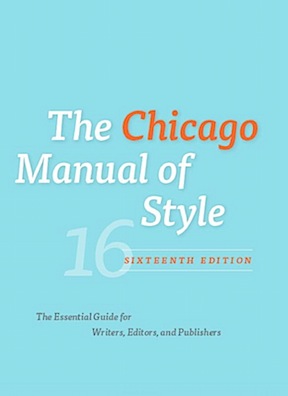
Chicago Manual of Style

The Grandaddy of Style Manuals

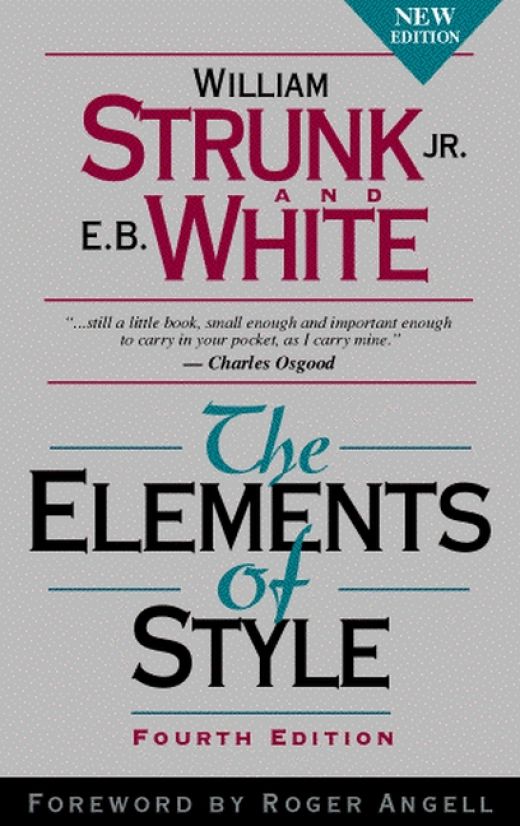
Another Icon

Another Icon

Legal Style Manual:  Dreaded Blue Book

Legal Style Manual: Dreaded Blue Book

California's Answer to the Dreaded Blue Book

California’s Answer to the Dreaded Blue Book

It all began in Costco with Gwyneth Paltrow. I hit Costco about twice a month because one of my dogs has to have prescriptions filled in the pharmacy. Otherwise, I might not be much of a Costco shopper because the warehouse is off my beaten path, and I can wrangle most things I want out of Vons and Trader Joes now that we’ve become a household of one or two.

Fortunately I have never been afflicted with Costco Syndrome. I have never gone into a warehouse planning to spend a hundred bucks and come out with a five thousand dollar hot tub or a monster flat screen. I know people who’ve done that and cut up their membership cards immediately afterwards. (Good thing, too.)

No, I put my consumer blinders on whenever I enter those massive doors and buy the prescriptions and the boring stuff like enough paper towel, TP, and garbage bags to last through a ride on Noah’s Ark; a mega box of Clif Bars for my son who lives on them; and two bottles of my favorite zin, twelve bucks and under, for nights when I’m ready to unwind from writing unbrief briefs and my current novel in progress.

But I admit I have one weakness: I browse the book table after I’ve munched through the samples (and resisted buying of all the preservative laden convenience foods Costco is pushing that particular day). The book table, however, is my Armageddon. Like most word-obsessed people, I have a weakness for books. And I’m a foodie on top of that, so a cookbook is not to be resisted. Not long ago, I staged a personal intervention in which I promised my rational self not to buy another cookbook until I had cooked at least one thing from all the others I’ve been acquiring after visits to Anthropologie. BUT THEN . . . .

That day, “It’s All Good,” Gwyneth Paltrow’s latest cook book sang its siren song to me in all it’s glossy picture laden, healthy food glory. I didn’t buy her first one – maybe because I didn’t find it at Costco dirt cheap – but “It’s All Good” became my extravagance of the day.

I sat up nights reading it along with the other cookbooks languishing in the Give Us Attention Pile. Soon I was concocting Gwyneth’s warm mustard lentil salad (a major yum) for lunch and her olive oil fried eggs for breakfast. (I added my own sprinkle of crisped prosciuto on top.) AND THEN I discovered “Avocado Toast.” As she says, it isn’t really a recipe. You stick some sliced up avocado (or mashed up) on some toast with Vegenaise and maybe sprinkle on some chili flakes.

Being Ms. Paltrow, she puts her avocados on gluten free bread. But I took one look at that stuff at Vons and decided bread made from sawdust is not my thing. So I began to browse the bread aisle, a low-carb dieter’s nightmare.

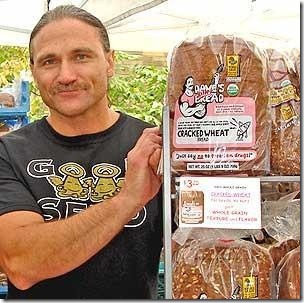
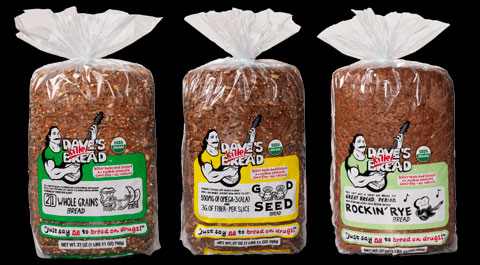
And that’s when I met Dave’s Killer Bread. The picture of the ex-con on the package was riveting, along with his statement, “ I was a four-time loser. I spent fifteen years in and out of prison.” Now, I write unbrief briefs week after week for more than four-time losers, and I was intrigued by anyone who could leave that life behind and bake bread. In fact, lots and lots of bread. There were so many varieties with seeds and sprouts and no bad things in them (ok, Gwyneth, they did have gluten, but it’s not a problem for me) that I thought I’d died and gone to Foodie Carb Heaven.

As soon as I got home with my loaf of Dave’s Lite Killer Bread, I made a beeline for the website. And here’s what I found:

Dave Dahl is the son of Jim Dahl, who purchased a bakery in Portland, Oregon in 1955. Jim worked extremely hard to develop bread made with whole grains and no animal fats. His bread from the 1960’s, “Surviva,” is still popular today. All of Jim Dahl’s children, including Dave, worked in the family business as they grew up. But Dave, who suffered from severe depression, didn’t appreciate his father’s work ethic, and went on to a life of drugs, assault, armed robbery, and burglary. And to terms in prison in Oregon.

But after fifteen years, Dave decided to be treated for his depression, and he learned drafting design while in prison. He expected to continue with that work, but after he got out his brother Glen, who now ran the bakery after Jim’s death, welcomed him back. Dave put everything he had into developing “Dave’s Killer Bread,” and the family business quickly had a hit.

Here is a link to a great video of Dave telling his story. You want to see this, I promise. http://www.daveskillerbread.com/daves-story/video.html

Dave believes in giving back in lots of ways. One third of his work force consists of ex-felons like himself. And he returned to the prison where he was incarcerated to tell the others they, too, could turn their lives around if, as Dave puts it, they had the humility to ask for help.

Having seen so much hopelessness in my “day job,” I was overwhelmed when I read Dave’s story. And the bread – by the way – makes the most divine Avocado Toast.

“Dave’s Killer Bread – Just Say No to Bread on Drugs!”

Dave

Dave

The Killer Bread

The Killer Bread

Haunted

Last week I had a happy story to tell. This week, I have been haunted by a tragedy in a case that I am working on.

A lot of the work I do as a lawyer involves street gangs. No matter how many times I read expert testimony about their habits and culture, I come away shaking my head and wondering how anyone would want to be involved with them. The women who associate with gang members as wives and girlfriends are always the ones I particularly wonder about.

The tragedy that has haunted me this week goes like this: In 2008, a woman I’ll call Rosanna, witnessed the murder of another woman by three gang members. Rosanna, who was twenty three at the time, had a son named Tommy, who was six years old. She testified at the trial of the gang members, and they were convicted. One got life without parole, but the other was sentenced to death.

Because of her testimony, Rosanna was targeted for death by the gang, and the police put her in witness protection. But she didn’t stay far enough away. Her mother lived in a neighborhood close to the gang’s territory, and her sister was dating a member of the gang. Rosanna still hung out with her sister, her sister’s boyfriend, and his gang member friend a year after testifying and being targeted for death.

On Mother’s Day 2009, her sister’s boyfriend and his gang member companion used Rosanna’s son, now seven years old, to lure her to her death. They put the child in their car and called Rosanna to say Tommy was sick, and they were coming to get her. After they picked her up, they took Tommy back home and then drove to a dark area with Rosanna and her sister, Maria, in the car. Now here is the part that I have thought about over and over.

On the drive to the remote, dark area, Rosanna confessed she knew she had “screwed up” by testifying. Then, as the car stopped, she noticed a security guard in his marked car nearby. Did she, the mother of a seven-year-old, call out for help? Did she try to escape? No. She pointed out the presence of the security guard to her captors, and they drove her to yet a more secluded location where they forced her out of the car and killed her while her horrified sister looked on.

I have thought about this over a million times this week. What mother wouldn’t fight for her life, knowing she was leaving a child behind? But Rosanna seems to have accepted the crazy gang logic that she deserved to die because she had been a witness against them. She seemed to accept her execution the way a prisoner, legitimately tried and convicted, would. She told her sister’s boyfriend to shoot her in the heart, not the head. She gave him all the money she had with instructions to give it to her sister, Maria, to use for Tommy, and she knelt obediently when told to and then was shot to death. I can’t fathom why she didn’t try to save her own life.

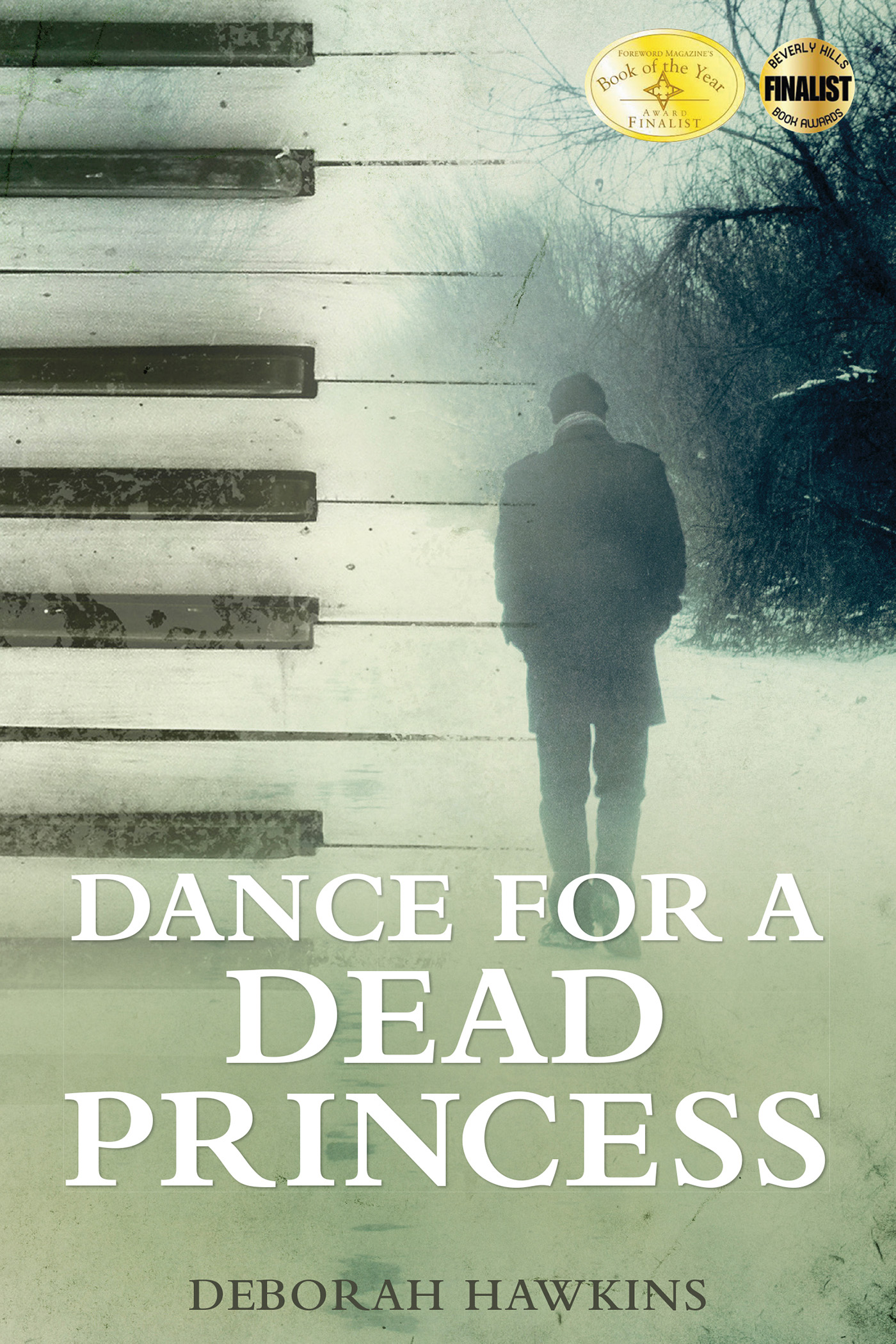
This story haunts me the way the story of Princess Diana did, when I learned she recorded a video tape in January 1997 after receiving a death threat that ultimately was carried out eight months later in Paris. Of course Diana didn’t accept assassination as being inevitable as Rosanna seems to have done. Diana fought back by preserving a record of the event. In the novel that I wrote, Dance For A Dead Princess, which was inspired by Diana’s tape, my heroine listens to the princess’ voice on that tape as she talks about arrangements for her children. Of course, that part is fiction. But no mother would willing leave behind her children, and no mother would fail to state her wishes for them if tragedy intervened.

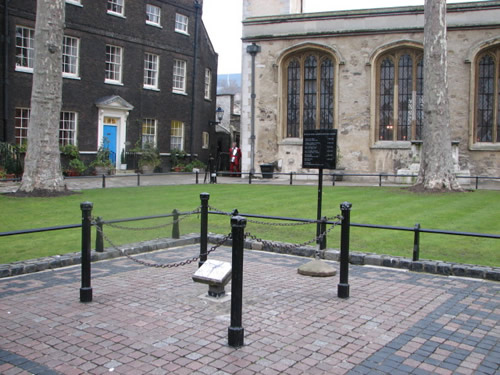
Even in Tudor times, mothers fought for their lives to remain with their children. Just days before being transported to the Tower of London for trial and execution, Anne Boleyn walked under Henry’s window at Greenwich Place with her two-year-old daughter Elizabeth in her arms.

So why didn’t Rosanna summon the security guard for the sake of her son Tommy? Why didn’t she fight against death just a few hours after Mother’s Day ended?

Where Anne Boleyn died

Where Anne Boleyn died

I wanted to have this post up by the Fourth of July, but life intervened. The machine at my local FedEx that binds my unbrief lawyer briefs sputtered and died for the third time in the last month. Although I am one of the biggest accounts at that store, corporate FedEx is hemming and hawing about fixing the machine or firing me as customer. In the meantime, I am driving across the county to get the unbrief briefs copied and bound.

But enough corporate soap opera. Even if it’s after the Fourth, this is the kind of story that will make you smile any day of the year.

On September 11, 2001, when Carmen Footer, Joanne Miller, and Elaine Greene heard that America had been attacked, they felt they had to do something. So they grabbed their flags, walked up to Main Street in their hometown of Freeport, Maine, and began to wave Old Glory. The response was so overwhelming they pledged to be there every Tuesday for a year. Now, twelve years later, the Freeport Flag Ladies, as they are now called, are still there. And they haven’t missed a Tuesday since 9/11.

In a recent ABC news feature, Elaine Green explained their mission. People drive by and wave and honk every Tuesday because, “They’re happy to have that gentle reminder, this is their country. Freedom is not free.” The Flag Ladies make everyone who passes by “feel more connected to their country.”

The Flag Ladies’ mission has grown since that first tragic day in our country’s history. They now go to schools, churches, and community events with their patriotic message. And they travel five hours to greet military flights leaving and returning from overseas.

Elaine met a solider heading to Iraq in 2004 whom she will never forget. “His father called me about three to four months later to thank me. He said, ‘My son was killed. When he left, he was in a very dark place but I got a call when he arrived in Iraq and he said, I met some ladies and dad, and I’m going to be okay became I met people worth dying for, if it has to be.’ His father was calling to thank us because we gave his son his dignity. He didn’t die in a dark place. If I never did another thing in my life, it’s all I ever had done, it would have been enough,” Said Greene.

On September 11, 2001, Carmen, Joanne, and Elaine set out to be three tiny sparks of light in the darkness. They never knew how their lights would grow and shine and touch so many others. See? A story that will make you smile on any day of the year.

The Flag Ladies

Toni Morrison explained, “I wrote the novel I wanted to read.” And I did the same thing when I wrote Dance For A Dead Princess. Here’s why:

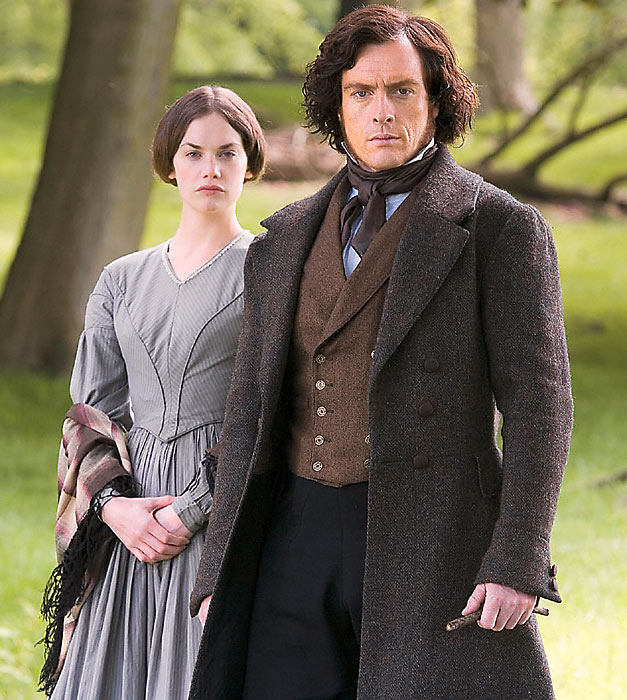
Jane Eyre, as I’ve said before, is one of my favorite novels. I can’t count the number of times I’ve read it. And I’m not alone. It is so popular that other authors have tried to replicate its magic in books like Jean Rhys’ Wide Saragaso Sea, or Mary Stewart’s The Ivy Tree, or fairly recently, The Flight of Gemma Hardy by Margot Livesey.  And now me, in Dance for a Dead Princess.

I was nostalgically wishing for another Jane Eyre experience over the weekend, as I was hunting for a book I really wanted to read. As I surveyed the offerings and was disappointed, I began to imagine what a modern day literary agent would say about Jayne Eyre:

From the Desk of the World’s Most Important Literary Agent to Miss Charlotte Bronte:

Dear Miss Bronte,

Thank you for the opportunity to consider the manuscript of your novel, Jane Eyre. Unfortunately, I am unable to represent it at this time. Some words of wisdom if you decided to submit it elsewhere: your story is definitely not a Romance Novel. If you are unwilling to make changes in the present draft, you should look for an agent who specializes in Contemporary Women’s Fiction or Mystery.

That said, you do have a very promising, if flawed, story here. With some changes, you could have a bestseller on your hands. (And I’d love the commission I’d earn from representing it.) To that end, and our mutual financial benefit, some suggestions. First, sex sells. Historical and contemporary romances have to be hot, hot, hot. I realize you’ve devised quite an ingenious plot line here, and Jane and Mr. Rochester (really, Miss Bronte, a romance novel hero called Mr. Rochester and not Trevor, Tray, or Brandon?) are quite convincingly in love by the time of their ill-fated marriage attempt. But they only TALK to each other. Where are the smoldering sex scenes? Jane never once mentions Mr. Rochester’s six-pack abs (I assume he has them, yes?), or his alpha male swagger (he is an alpha male, right?) and, for all the times he meets Jane in the lane he never once cops even the tiniest little feel. (On second thought, since he never gets her in the sack, he can’t be an alpha male, therefore he can’t be a Romance hero.)

And then there is Jane, herself. Really, Miss Bronte, Romance heroines are not “plain.” After all, when your book hits the big screen, which big name actress is going to want the role of a “plain” heroine? Jane should have masses of chestnut hair, down to her waist that Edward (or better yet, Trevor, Tray or Brandon) can bury his face in at the, ah, appropriate moment. In addition, a regulation Romance heroine must also be equipped with (at a minimum) an exquisite heart-shaped face, a perfect cupid’s bow of a mouth, and flashing dark eyes.

Your book, Miss Bronte, is all PLOT and no SEX. And it begins with Jane’s dreary life in an orphanage when it should start with Mr. Rochester undressing Jane in his imagination the moment he meets her at Thornfield Hall. I realize you must have taken a Creative Writing course in which some dreary professor taught you all about character, plot, voice, and point of view. But when it comes to writing a best selling Romance Novel, throw out all that Literary Stuff. Sex, Sex, Sex, sells. That’s all you need to know.  The only PLOT you need is how to get from one sex scene to another.

Here are some suggestions, then, for transforming Jane Eyre from its current status as a Romance novel loser to a New York Times bestseller. Plot: As soon as Mr. Rochester meets Jane, he asks her to enter to a “pretend” marriage to keep the unwanted attentions of Blanche Ingram at bay. Soon their “marriage” is anything but pretend, yet Mr. Rochester is still engaged to Blanche.

Or you could take a leaf from E.L. James and Syliva Day and install Mr. Rochester in his own “red room” at Thornfield where he and Blanche teach the virginal Jane all about sex, sex, sex. Terrified, she flees to her cousin St. John (horrible name, by the way for a Romance novel sub-hero) only to be pursued by Mr. Rochester and taken back for her well-deserved punishment.  At the end, she falls in love with Mr. Rochester (Trevor, Tray or Brandon) or at least she’s in love with his millions.

Or finally, if you don’t like either of those plot ideas, instead of fleeing an orphanage, Jane should flee from an abusive first husband. Through sex, sex, sex, Mr. Rochester teaches her to TRUST again; and now armed with CONFIDENCE  in herself, she becomes a millionaire when representatives of Betty Crocker discover her tea shop in the village and purchase her secret recipe for blueberry scones.

Any of these plots and some really hot, hot, sex scenes would rocket your manuscript straight to the top. Otherwise, you might self-publish and sell a few copies to friends and relatives.

Sorry to send disappointing news, Miss Bronte.

Wishing you all the best,

The World’s Most Important (And Infallible) Literary Agent

A "plain" heroine, Miss Bronte, really?

A “plain” heroine, Miss Bronte, really?

The self-growth community, which likes to clutter my inbox with fantastic offers for $10,000 worth of free life changing bonuses if only I will divulge my e-mail, vociferously insists we must all LET GO of the Past. I sometimes wonder if the induction ceremony for an authentic, card carrying self-growth guru is to have his or her memory wiped like a malfunctioning hard drive.

Personally, I would miss my Past. Not all of it, you understand. But even the terrible, terrorizing moments taught me things that, having sweated blood and endured raw fear to learn, I would not want to forget. And aren’t we doomed to repeat the Past until we finally learn what It is trying to teach us?

The thing is, what would artists make their art out of if they didn’t have their Pasts? Sylvia Plath, without her miserable, doomed love-affair with Ted Hughes, would never have become a Great Poet. Ditto for W.B. Yeats who made a highly successful poetic career out of mourning his loss of the ever elusive Maude Gonne. And then there is the mysterious woman of Shakespeare’s sonnets. No lost love, no great sonnets. Thank goodness for the rest of us Plath, Yeats, and Shakespeare lived before the onslaught of self-growth emails insisting you can’t be Anybody until you LET Go of the Past.

And in my case, wiping my personal hard drive would be a rather long affair, since I have memories back to a very, very early age. Now, I am not one of those people who can cite chapter and verse every day of every week of my life. (I think that much recall would be boring.) But let’s just say I have some vivid and accurate recollections of certain major events before age three. And I’d miss them like I’d miss an arm or a leg if they vanished.

On the other hand, Too Much Past is the equivalent of those hoarding reality TV shows that I never watch. You know the ones, where some poor soul stills owns every McDonald’s wrapper and styrofoam Big Mac container that ever came into his or her life? The literary equivalent is poor Miss Havisham in Great Expectations.

I began to meditate upon the proper balance for The Past in my life this weekend when I finally rebelled against another Saturday and Sunday spent writing unbrief briefs and invited the sky to fall if it wanted to because I was LEAVING MY COMPUTER for the weekend. Something about rebelling against the lawyer’s code which says “real men work weekends” (note, I know I’m not a man and maybe I’m not real), always brings out the Tidy Up, Throw It Out impulse in me.

After tackling my guest room, which needed considerable tidying and spiffing, my eyes lit upon my garage floor, covered in boxes of files in pending, but not currently active cases, which were supposed to go to offsite storage weeks ago. My MiniCooper had been complaining that His garage was too full of things besides Himself. And he was right. So after bribing my Stronger-Than-Me son to move the boxes, I suddenly spied a shelf filled with old calenders dating back ten years.

When I retired from law practice and became full-time Mommy in 1986, I used to order those calenders from the Smithsonian and National Geographic that came as little coil bound books, week on one side, breathtaking photo on the other. I scribbled things like pediatrician appointments, play dates, and my few-and-far-between babysitter relief afternoons in them. But mostly I loved the ever changing artwork.

But then, the divorce settled like ash from Vesuvius over our world. My beautiful little calendars became part of my family law attorney’s files – alibis to prove what I’d been up to for the last eight years. And I had to once again put on the great grey mantle of law practice. In place of my lithe little photographic calendars, I had to order those big clunky green-striped DayTimers, six inches thick, which arrived each year with their own grey coffin of a box to store them in. Forever, apparently.

Then on Saturday afternoon I looked at those boxes as they sat on my garage shelf, neatly labeled like Old Father Time with the year of his reign on the spine, and I asked myself when was the last time I’d opened any of them. Answer: on December 31 of the year they had passed into oblivion. In fact, all the briefs’ due dates they had chronicled were long past. The cases were closed out, and I could barely remember the clients’ names. Here was my chance, I realized, to throw out a cumbersome Past that really was THE PAST. Here was a hard drive that had long needed wiping. Joyfully I seized each and every one and gleefully threw them away.

Green-Lined Day Timer

Green-Lined Day Timer

They come with their own coffins

They come with their own coffins

Smthsonian Engagement Calendar

Smthsonian Engagement Calendar

Smithsonian Calendar

Smithsonian Calendar

My lower back has not been happy with me for sometime. I try to take excellent care of it, but I do sit at a computer for a living. And sometimes the lower back says ENOUGH!

I have a series of stretches that I learned from Peter Egoscue’s book, Pain Free at Your PC that my lower back and I just adore. They have kept us out of the company of orthopedic surgeons, physical therapists, and cortisone injections for years. My back and I swear by them.

But last August, after walking around hilly Seattle one afternoon while vising my youngest child who was interning for Microsoft, my lower back said I HATE YOU by shooting pain spasms through my left hip and left leg. Not wanting to be a kill joy (I hate to travel with complainers) I said nothing to Michael, but did my magic stretches as soon as I was back at the hotel. Only this time, they didn’t seem to work against my back’s Major Rebellion. No amount of cajoling and reminding my back of the dangers of orthopedic surgeons and of the negative attitudes of physical therapists (as a breed, they tell you EVERYTHING is YOUR fault) would persuade my back to stretch itself out like a good little kitty and go on with life.

So began my five-month journey to two Orthos and to two groups of physical therapists. Ortho One said sciatica and sent me to some monumentally grumpy physical therapists. After two visits, I switched to a group of three very cheerful PT’s, who happily beat on my back and disagreed among themselves and with me about what was wrong. Like vampires sucking blood, they happily gobbled up my insurance-paid physical therapy sessions and then threw me back in the pond, not much better. Ortho Two offered cortisone injections (at the height of the injections that killed people with meningitis) and looked crestfallen when I said no, thanks, I’m not into Russian roulette.

Christmas came and I didn’t want to think about it. I zumba’ed when I could but had to give up the elliptical at the gym for the BORING treadmill that doesn’t give me much of a workout.

Then last month I hit upon the bright idea of asking my family doctor for a referral to a scoliosis specialist because I’ve always known that was the problem. No one found the curve in my back until I was quite grown up and until it had curled up and settled in nicely for life. All I had to do was look into the mirror and see how the curve was getting worse. It wasn’t rocket science. I was in pain because my left and right halves were matching less and less all the time.

Grudgingly Fam Doc gave me the names of some specialists, but he said, look, what you’re looking for is physical therapy to make it better. True. And, he said, there’s this great chiropractor. WAIT! A WHAT? No, no. Not like in chiropractor. She’s more of a physical therapist.

So that was how I came to have a two and a half hour session of pure terror last Tuesday in the chiropractor’s office. And she definitely was not a physical therapist.

She spent the first half hour telling me scoliosis horror stories and impressing upon me how I could no longer live without her. She mentioned “adjustments” and when I asked her what that meant, she said, Oh, I’ll show you later. She used two big, loud scary machines to pound my poor little back until I got off the last one and hid in the bathroom for a while. I should have just walked out the front door, but I was waiting for the physical therapy to begin.

It never came. Instead, she wrenched my poor neck around so hard she reinjured it. I fell out of a tree when I was a kid and damaged some vertebrae and the one thing I tell every massage therapist before they touch me is DON”T TOUCH MY NECK! And after she wrenched it the first time and I told her to stop, she repeated her performance.

I dashed home, grabbed the ice packs, and was upset for the a rest of the day. To win my freedom from being held hostage in her office, I had promised to come back on Thursday.

Ha! Fat chance that was going to happen.

I was so angry, I started to do the unprofessional thing, and not even call on Wednesday to cancel the appointment, but I did. How I wish I hadn’t. She clearly had some sort of major mental problem. She called me four times screaming at me on the phone because I wasn’t coming back. The fifth and sixth times she called, I just raised the receiver a notch and threw it back into the cradle.

On Thursday night I woke up in a cold sweat at 4 a.m. You know the kind that lets you know you’ve done something REALLY STUPID, but at least you are STILL ALIVE. I turned on the light and took some deep breaths and thought about it for a while. What I had encountered in the chiropractor’s office had been violence. She had been violent when she wrenched my spine this way and that. The machines had been violent when they pounded on my back. But I hate violence of all kinds. For me, healing is about being positive and gentle.

Then I kicked myself. The answer was Egoscue. They have a clinic here, and they treat scoliosis. The stretches I knew how to do had never let me down. I just needed a bigger arsenal of gentle weapons to get better. I hadn’t needed to go looking for the answer. It had been staring me in the face since Day One of my back’s Major Rebellion in Seattle.

Today I’m headed off to the Egoscue clinic. If I had listened to myself all along, I would have known that was the answer. But I let the chatter of all the other people I had seen – the two Orthos, the grumpy and cheerful PT’s – become so loud in my head that I forgot the true path to healing is always listening to what’s inside ourselves.


images

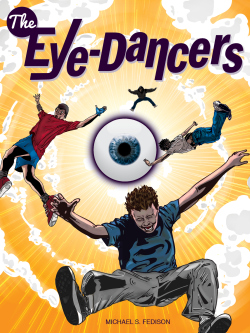
Twelve year old Mitchell Brant can’t sleep. A seven-year-old “ghost girl” haunts his dreams and begs for help. Soon he learns his friends, Joe and Ryan, are having the same dream. But for the three, what they see in sleep seems much more than a dream. When they wake up, the scraped knee is still scraped, the hurt wrist still hurts.

They turn to their friend Marc, who scoffs at their belief in the reality of the supernatural. He takes it upon himself to watch over Mitchell, Joe, and Ryan as they sleep in Mitchell’s basement. Only that night, the four wake up in an entirely different world. Cars, money, food, history are eerily the same but different. And the “ghost girl’s” picture is all over town; she’s Monica Tisdale and she’s been kidnapped. She has brought them to her world to be her rescuers.

As the boys work to solve the mystery of their new surroundings and to figure out how to help their new friend, each is faced with his own personal challenges and lessons. For Marc, the rationalist, the challenge is to accept the unexplainable. For Mitchell, his family problems and speech difficulties present hurdles. For Joe, his unstable temper is his enemy. Ryan realizes what his social isolation costs him.

The Eye-Dancers taps into the best and most entertaining archetypes of Young Adult Fiction. Like the Wizard of Oz, the four heroes are suddenly transported to a strange land and presented with a villain who must be stopped. Like Dorothy and her friends, each main character emerges transformed by his experiences. And like Dorothy and Toto, the four heroes of Eye Dancers long for home and wonder if they will ever return.

Michael Fedison has lovingly crafted a Young Adult sci-fic/fantasy/mystery novel with wide appeal. His prose is thoughtful and elegant. Not only will young readers, middle school and older, love this book, but adults will enjoy it, too. In her bestselling book, The Happiness Project, Gretchen Rubin talks about her love for juvenile literature; and she forms a book club with some adult friends to read and discuss juvenile fiction. The Eye-Dancers would be just the book for them. It keeps you on the edge of your seat as you root for Ryan, Mitchell, Joe, and Marc. Will they save Monica? Will they return home? But, at the same time, The Eye-Dancers also poses some deeper and very satisfying philosophical questions. What role do our thoughts play in creating our world? Can everything be explained? I highly recommend it.

The Eye-Dancers by Michael S. Fedison

The Eye-Dancers by Michael S. Fedison