Feeds:
Posts
Comments

Posts Tagged ‘storyteller’

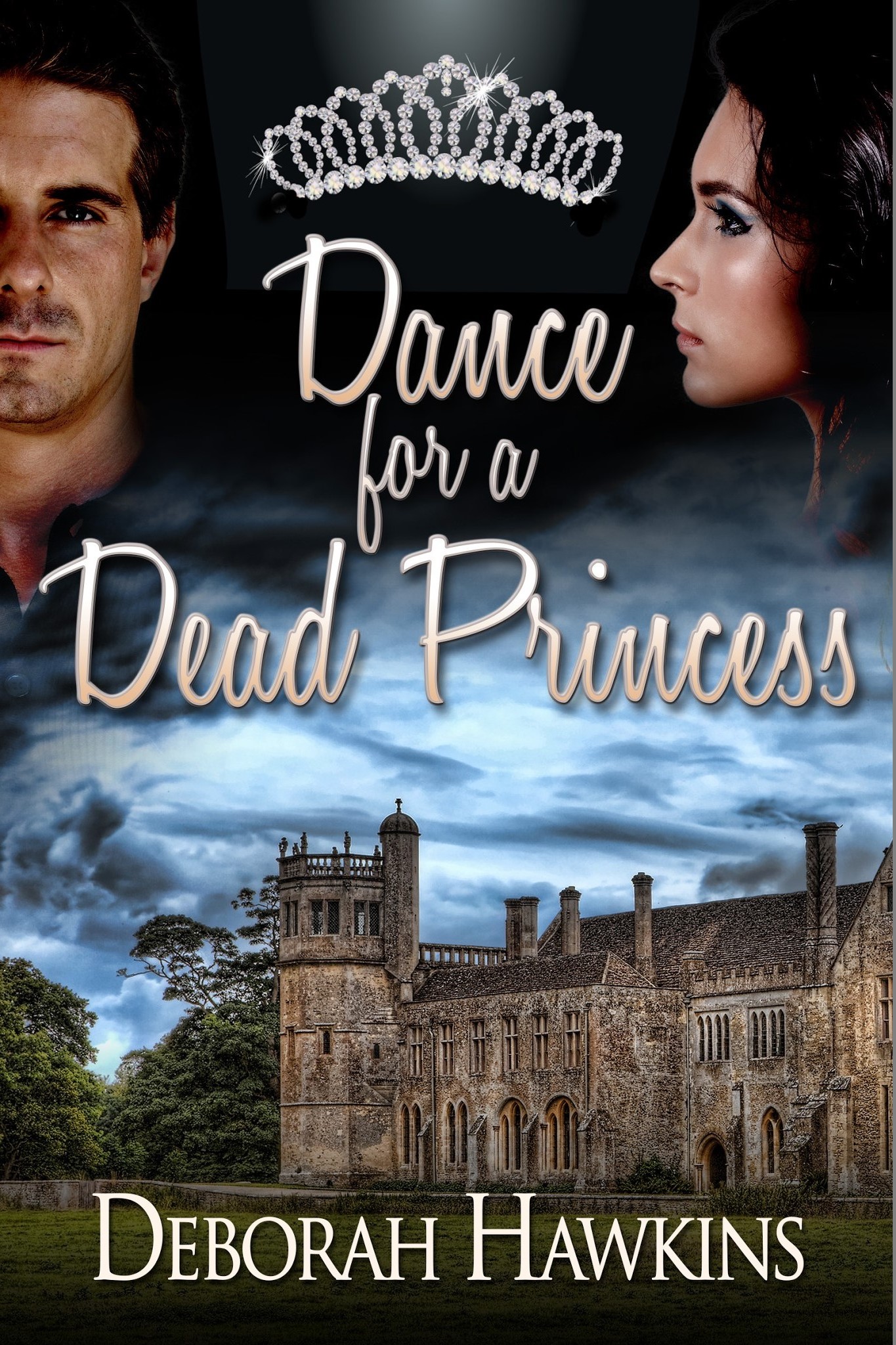
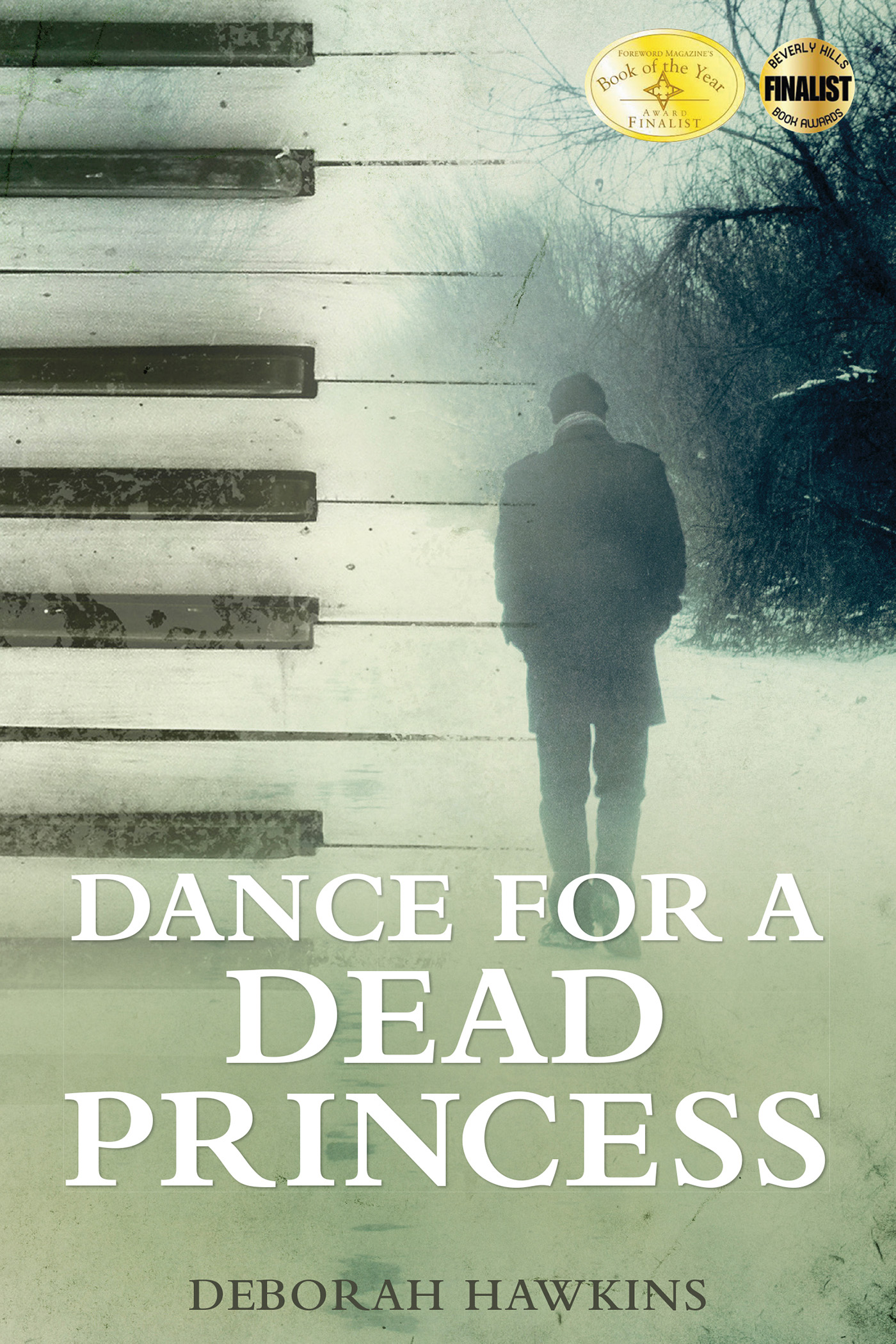
Hi, Everyone, Two bits of exciting news for Dance For A Dead Princess this week. First, at long last, it is available in paperback at Amazon.com!

Second, below is a preview of the review of Dance For A Dead Princess that will be in the October edition of the Midwest Book Review!

Dance for a Dead Princess is a work of fiction loosely based on facts surrounding Princess Diana’s life, and opens with the premise that Princess Diana received a death threat shortly before her accident, recorded the phone call, and gave the information to a close friend in America who subsequently died under mysterious circumstances.

Diane’s close (and rich) friend Duke Nicholas, the second richest man in England, would seem to have more than enough resources to track down this missing information, (which seems to have wound up at a Wall Street attorney’s office), but though he can lure Taylor to England with the promise of selling his ancestral estate to one of her clients, he can’t force her to turn over the tape. Nor can he control the unexpected: his sudden infatuation with her.

On Taylor’s part, she views Nicholas as a spoiled, selfish rich man and only wants to represent her client as quickly as possible and return home. She’s recovering from a broken engagement and the last thing she needs is another romance. But then, the last thing she also needs is involvement with a piece of evidence that could and place her in jeopardy while providing the definitive word about Diana’s death.

The plot becomes even more complex with the discovery a document which relates a history that gives her more compassion for Nicholas, who is battling to save his drug-addicted ward. Add an arrest for murder and Taylor finds herself more than immersed in a wildly twisting affair that moves between romance and murder mystery.

Now, I almost hesitate to mention the romance factor: too many romance novels are insipid, predictable, and shallow writings. And I even hesitate to bill this as a ‘mystery’ (even as a ‘historical mystery’) because so much genre writing in this area is also too dry.

Not so Dance for a Dead Princess, which maintains a vivid set of protagonists, clearly outlines motivations built upon their realistic personalities, and adds the backdrop of romance and mystery to create a complex and ever-evolving story line that’s anything but predictable.

For one thing, the historical references run the gamut from past to present. This lends a realistic background to the novel which clearly shows connections between timeline events and what motivates the protagonists. British history is offered as a real force affecting not only past, but present events.

For another, motivations for actions are clearly drawn. Nicholas is drawn to investigate Diana’s death not because she’s a famous personality, but because she was his friend – and his last connection to his wife, also deceased. So his drive to investigate her death comes from a personal, not a political, connection: “How many nights had he spent talking to Diana about his marriage, about her marriage, about his guilt over Deborah, and about the impossibility of being in love? Too many to count. He ached to tell her now how empty his life had become without either of them.”

The connections between Nicholas and Taylor are forged from a number of motivators; from shared feelings to an overall event that ties them together, and are thoroughly explored in a plot ripe with high drama, tense scenes, and realistic twists and turns throughout.

Fans of good solid fiction writing will find Dance for a Dead Princess is clearly more than a cut above genre writing, and will relish the definitive conclusion which leaves nothing hanging and much to enjoy.

D. Donovan, Senior eBook Reviewer, Midwest Book Review

Dance-for-a-Dead-Princess-Final

Read Full Post »

CHAPTER FOUR

A jail is nothing but gray, Sarah thought on Tuesday afternoon. She and Jim had been sitting in gray metal chairs at the gray metal table in the attorney-client interview room for a half hour without any sign of Alexa Reed. Sarah looked around to keep from being mesmerized by Jim’s gentle eyes, studying her from his seat at the end of the table. He looked good in a suit. She’d never seen him in one before. Feelings would complicate things; she couldn’t have feelings. But his eyes tempted her to have them. She needed a night with David and soon to make her forget about Jim. Hadn’t he said his wife was in Cabo this week? She’d call him after work, and see if he was free that evening.

She took in the dust-gray walls, the gray chairs and the table where they were seated, the gray door they had come through and the metal bars over the peek-hole window. A guard in a gun-metal gray uniform peering at them through the large glass security window directly in front of her completed the set. Sarah hadn’t been in a jail in a long time. Her clients were all wealthy business executives who bypassed lockup with millions of dollars worth of bail.

“I think she’s standing us up,” Jim said.

“Maybe. Trevor said she’s been curled up in a fetal position and hasn’t spoken since the preliminary hearing.”

“So she’s incompetent to stand trial.”

“I’d say yes for sure, but there’s a hearing September 3 to make that determination. I’m going to interview the psychologist who’s evaluating her as soon as I can get an appointment.”

“You’ll want me there in case he lies on the stand at the hearing.”

Despite her best judgment, Sarah’s eyes darted to his and remained fixed on their brown depths longer than she’d intended. “Yes, I will. Definitely.”

The gray metal entrance door began to slide to the right, extremely slowly, creaking as it moved. She and Jim turned toward it, thinking Alexa was about to appear. Instead, they saw only a portly fortiesh woman guard with a sour look on her face.

“Are you Sarah Knight?” she demanded. “Where’s you bar card?”

Sarah tried to stifle her annoyance, knowing a rise from her was what this nameless jail official wanted; but she’d shown her state bar identification card more times in the last half-hour than she had ever displayed it in her entire career. She was tired of dragging it out of her wallet.

But she did, and the guard scanned it for several minutes as if she thought it was counterfeit.

“And you? “ she demanded of Jim. “Where’s yours?”
Without a word, he patiently handed over both his California bar card which showed he was on inactive status as a lawyer, and his private investigator’s license. Sarah noticed he fumbled with his ex-FBI agent’s association id card for the grumpy guard’s benefit.

“You used to be an agent?”

“Yeah.”

“Then why are you working for defense lawyer scum?”

“Have to make a living.” Jim gave her a half-smile and put his credentials away.

“Well, bad news. Your client won’t get up to talk to you. She’s lying on her bunk, eyes open, saying nothing.”

“And this has gone on for some time?”

“Since they brought her back from the prelim on June 17. Somehow she eats enough to stay alive. But that’s it.”

“I’d like to go down to her cell and introduce myself,” Sarah said. “She’s never met me.”

“It’s against jail policy.”

“I can get a court order if you’d rather.”

The guard frowned at them both, delaying the moment when she’d have to admit defeat.

“You don’t have to. I’ll escort you down there.”

The interior corridors were even grayer, Sarah reflected a few minutes later as she and Jim followed the woman to Alexa’s cell. They twisted and turned through narrow hallways with the astringent smell of lemony disinfectant until they reached the tiny space Alexa Reed occupied.

Their sour guide dialed a combination lock on the door of the cell, and then used a key to complete opening it. Sarah and Jim stepped inside when it swung open, but there was barely room for both in the tiny dark space lit only by a three by three window high up on the outside wall.

She was a tiny bag of bones, Sarah reflected as she looked down at the woman in the navy blue prison scrubs curled up on the single cot. Her blonde hair was matted and uncombed, and apparently unwashed for weeks. Her large light blue eyes stared straight ahead, unfocused and distant. She was about five feet tall, Sarah guessed, and must have weighed all of ninety pounds.

She knelt by the cot. “Alexa, I’m Sarah Knight, your new attorney. And this is my investigator, Jim Mitchell. We’ve come to hear your side of things. Will you go down to the interview room with us where we can talk?”

No response. Alexa’s blue eyes remained blank and fixed on the opposite wall.

Jim leaned over and took one of Alexa’s small hands in his much larger one. Sarah couldn’t explain why she didn’t like that. She thought she saw a flicker in Alexa’s otherwise vacant blue eyes when Jim took her hand, but it might have been her imagination.

“She isn’t going to talk to you,” the hostile guard announced. “You’re going to have to leave.”

Jim let go of Alexa’s tiny fingers and stood up. He really did look good in a suit, Sarah thought once more, and then wondered why she was thinking about Jim’s looks and Alexa’s hand in his.

Sarah stood also and turned toward the door. Suddenly, on impulse, she paused and fished one of her business cards out of her brief case. She pressed it into Alexa’s unresponsive hands.

“Here’s my card, Alexa. We’re here to help you.”

* * *

That night, Sarah found herself standing in front of Jim’s olive green bungalow at seven thirty. He’d insisted on making dinner again to give them a chance to talk over the day’s events. She had called David as soon as she’d gotten back to her office, ready to cancel the evening with Jim if he was free. But his wife had unexpectedly backed down from her Cabo trip, so seeing him was out of the question. Had Tessa guessed about their relationship? That possibility nagged at Sarah as she thought of calling Jim to set up a meeting at a restaurant where she would feel more in control. But the need for confidentiality trumped her scruples about being alone with him.

He put a glass of cabernet in her hand and motioned for her to take a seat on one of the tall stools around the island in his kitchen.

“I was in the mood for burgers, although not the ones you burn over a gas grill. Feeling the French bistro vibe tonight, so I’ve made grilled onion confit and Bearnaise sauce and shoestring sweet potato fries.”

“I’ll have to work out tomorrow for sure.”

He turned from stirring the onions and gave her a once over. “I doubt that. You look very Audrey Hepburn tonight in those black skinny pants and black shirt with your hair cut short like hers. Do people ever tell you that you look like her?”

“Once in a while. When they don’t otherwise know my ‘day job.’”

“I have to admit you had me fooled that night at Trend.”

Was it really less than a week since they’d met, Sarah reflected. Why did she feel as if she’d always known him?

“That was tough today at the jail,” Jim observed, turning back to his onions.

“Yes, it was.” Sarah paused to take a long drink of her wine, wondering if she should have asked for scotch instead.

“She’s barely alive.”

“Trevor Martin warned me, but it was much worse than I’d pictured.”

“She’ll be declared incompetent to stand trial. She’s completely incapable of assisting with her defense.”

“Yeah, that’s blatantly obvious. Still, I want to interview Percy Andrews to find out what he’s going to say at that competency hearing. I’ve got an appointment with him on Friday at 9 in the morning.”

“I’ll be there with bells on.”

* * *

They ate in Jim’s small dinning room at a small antique maple table. He dialed the lights down, and lit candles in clear glass holders. Sarah wondered if he considered the evening a business or personal occasion.

“How long have you been in San Diego?” He asked as he put the plates on the table and motioned for her to take the seat opposite his.

“Since January. What about you?”

“Two years, now. It’s easier being on the opposite coast.” His eyes darkened as he spoke, but he gave her that gentle, honest smile that she found hard to resist. “Do you miss New York?”

“Sometimes.”

“Why didn’t you go with a big firm here like Warwick, Thompson?”

“I thought about it. I talked to Alan Warwick. In the end, I was tired of working for someone else.”

Jim smiled. “I can understand that. Any broken hearts left behind in New York?”

“Only the ones I mentioned the other night, the dry cleaning delivery boy and the Chinese food messenger. But I doubt they miss anything but the tips. I was always generous. What about you?” Why was she picturing him holding Alexa Reed’s tiny fingers?

“I’ve tried. No luck. Still head over heels for Gail.”

Jealousy was an inappropriate emotion Alexa reminded herself as he refilled her wine glass. “What is she like?”

“Funny, smart, beautiful. Taffy hair, big blue eyes. Knockout figure. Grew up in Boston. She teaches third grade and loves it. Cody has a half-sister, Brittany, whom he adores.”

Sarah studied him across the table. A white knit shirt tonight with navy linen pants. Such a kind, gentle face. Hard to believe he hadn’t found someone else by now.

“Penny for your thoughts.”

“My hourly rate is a lot higher than that.”

“Guess I can’t afford them, then.”

“I thought you were a trust fund baby.”

He laughed. “I tend to forget about the old man’s money. I did without it all those years. Ok, I’ll pay your hourly rate if you tell me why you’re looking at me like that.”

“Like what?”

“As if you were reading my mind.”

“Now that would be a useful skill for a defense attorney. But I don’t do mind reading. I was just thinking a guy like you should have hooked up with someone by now.”

“I could say the same about you.” The tone of his voice made her tummy flutter, and she decided this conversation had to end and quickly.

“I do see someone. From time to time.”

Did he look disappointed? She wasn’t sure.

“Lucky him. What’s he like?”

“A busy important, CEO of a commercial real estate firm. His brother, who works for him, had a minor problem with the Securities and Exchange Commission last winter, just after I got here.”

“And you took care of it for him?”

“Made it all go away.”

Jim studied her in the candlelight. “There’s something you’re not telling me.”

Sara traced the circle of the bottom of her wine glass. “Now you’re reading minds.”

“I’ve interviewed hundreds of witnesses. I know when someone’s holding back.”

Her dark eyes met his, and she smiled. “You’re really good. I’ll give you credit. David Scott is very married.”

“Ah, I see.” He crossed his knife and fork on his plate in a gesture of finality before bringing his eyes back to study hers. “Then why waste your time?”

“He’s witty, well educated, and charming.” And I can’t fall in love with him. But Sarah would never say that out loud.

“Does the wife know?”

She frowned as she thought of the defunct Cabo trip. “I don’t think so.”

“But you’re not sure.”

“She was supposed to be in Cabo tonight.”

“And he was supposed to be with you?”

“But she cancelled. I don’t think it had anything to do with me and David.”

“Well, my luck that she stayed in town.” He leaned over and started to refill her glass, but she put her hand over the top.

“I’m driving, remember?”

“And I’ve got that guest room, remember? This was a tough day. You need it. Let me put the plates in the sink and then join you in the living room. I’ve learned a lot about Alexa Reed since this afternoon. I think you’re going to be interested in what I’ve found out.”

download (11)

Read Full Post »

Earlier this week, Scotland Yard announced it was investigating new information about the death of Diana, Princess of Wales. A former member of the British Special Air Services the (SAS) boasted to his former wife that the SAS had brought about her death. His former parents-in-law reported the claim to the military police who passed it on to Scotland Yard.

The original announcement was appropriately neutral. Scotland Yard informed the public of the information and indicated the police would assess it for credibility. But Scotland Yard also said it would not reinvestigate Diana’s death at this time, a wise conclusion since no one yet knows if the new information can be believed.

The press, however, have transformed this simple bit of factual reporting into a speculative circus. Some commentators insist all possible “conspiracy” theories have been debunked and only crazy people believe them while others see a plot lurking in every corner. Rather than the wait-and-see position of Scotland Yard, most press reports require the reader to take a position: believe or disbelieve. The press’s approach to the new information illustrates the rule that human beings like to organize data and reach conclusions just as they prefer to return to the tonic tone in melody. In other words, we don’t like unanswered questions.

But it isn’t likely that the “truth” of the princess’ death will ever be resolved. Or, if it is, the answer will be revealed a lifetime or so later. Think about it. If powerful governmental and multinational forces brought about her assassination, they have every tool on the planet available to perpetuate their cover up. They aren’t going to make any dramatic confessions based upon the ex-parents-in-law’s letter. And, if Diana’s death was a tragic accident, people who love a conspiracy are going to continue to spin their own yarns.

This whole controversy reminds me of speculation about the fate of Tsar Nicholas of Russia’s youngest daughter, Grand Duchess Anastasia. When I was growing up, a German woman named Anna Anderson made out a case that convinced many people she was the grand duchess and had miraculously survived the cellar execution in Ekaterinburg. Anna Anderson appeared to have information only the real Anastasia would have known. Some who had known the grand duchess believed Anna, but many others dubbed her an impostor. She wound up married to an eccentric professor of history in Charlottesville, Virginia, where she died in 1984. In 1956, Ingrid Bergman stared in a movie loosely based on Anna Anderson’s life and claims. Litigation to determine whether Anna was the real Anastasia never reached a conclusion.

In 1977, two investigative journalists, Anthony Summers and Tom Mangold, wrote a book called The File on The Tsar, claiming that not all of the royal family died at Ekaterinburg and the survivors became pawns in an international power game. They claimed Lenin, the Kaiser, the British royal family, and British intelligence were all involved. I read it at the time, and found it interesting and persuasive.

But The File on the Tsar illustrates how facts can be manipulated to fit the end the writer wants to believe. In 1991, the bodies of the Tsar, his wife, and three of their daughters were found in a mass grave near Ekaterinburg. DNA testing confirmed their identities. Then, in 2007, Alexi and the remaining daughter were found, and DNA testing confirmed that all seven Romanovs had died in the cellar that day. By that time, Anna Anderson had been established as an impostor because in 1984, when she died, DNA testing showed she was not related to the Romanovs.

The deaths of famous people hold our attention, especially when they happen under odd or mysterious circumstances. In fact, our fascination with these stories lies in our inability to know exactly what took place. If the facts were known and settled, we would go looking for another more interesting tale whose facts were not resolved.

Scotland Yard had it right in its neutral announcement; and the press, insisting on belief or un, had it wrong. No one can really decide what happened in Paris on August 31, 1997, based upon this new little bit of information. More than likely whether Diana’s death was deliberate or an accident will never be resolved. Or if it is, the truth will come out after a much longer time, as with the Anastasia mystery. In the meantime, the circumstances surrounding Diana’s death create material for fiction writers like me. I wanted to write about a beautiful woman whom I admired because she grew up in difficult circumstances on the world stage. She transformed herself from a naive girl into a charismatic woman who spoke for compassion and love, and she was willing to share her struggles with the rest of us who are struggling. Dance For A Dead Princess is not an argument for or against what “really happened.” It is intended to be a highly entertaining story about interesting and lovable people.

Anna Anderson on the left and Grand Duchess Anastasia on the right

Anna Anderson on the left and Grand Duchess Anastasia on the right

Read Full Post »

I’ve spent the week writing blog posts for Dance For a Dead Princess for blogs that didn’t happen. Sigh. Oh, well. And I’ve been working on novel three (novel two being in the editing stages), so since I haven’t had time to write for my own blog, I’m sharing the first chapter of Dark Moon with you this week.

CHAPTER ONE
August 2013

She was sitting at the bar, staring at the full moon over the glass smooth, night-black Pacific. Her back was toward him, but Jim Mitchell could see her reflection in the mirror behind the bar. Her dark hair was very short like a child’s pixie cut, and she was all eyes. They were the saddest brown eyes he had ever seen as they gazed through the window at the blank ocean.

Judging by her long elegant legs and graceful posture, he guessed she was a model or a dancer. But no, he told himself. Models and dancers don’t hang out at La Jolla’s exclusive Trend Bar in conservative black couture suits and impossibly expensive white silk blouses. She was obviously a business woman. A retired model, he decided who now ran her own modeling agency. He was glad he’d worn his business casual tan chinos and thrown his navy sport coat over his white knit shirt. She didn’t look as if sloppy have appealed to her.

She was lost in thought, and she didn’t turn when he slid onto the stool beside her. He wondered what such a beautiful woman was doing alone on a bar stool at 9 p.m. on a Friday night, and he wondered how many of the losers several stools away had tried to gain the seat he now occupied. And he wondered how long she would let him hold it.

“Mind if I sit down?”

“Help yourself.” Her eyes riveted on his, still sad but now guarded. He noticed a long scar snaking across her left cheek. He guessed it must have ended her career in front of the camera. She watched him glance down at her left hand.

“If I were married, I wouldn’t be here.”

“Me, either.” The bartender shifted from one foot to the other, waiting for his order. “Martini, two olives. And may I get something for you? Your glass is just about empty.”
“Another one of my usual.”

Satisfied the bar tender scurried away to earn his tip.

“If he knows your usual, you must come here often.”

“Not an original pickup line. Besides, you had me at ‘mind if I sit down.’ My office is just down the street. I like to come by on Friday night to wind down.”

“But happy hour is long over.”

“I don’t do happy hour. Too crowded.”

“Me, either.”

“Is you office just down the street?”

“No. I work out of my home in Pacific Beach.”

“Then why aren’t you in a bar in Pacific Beach?”

“Too loud. Too noisy. And I’m too old.”

He saw the first glint of amusement in her dark eyes as she appraised him. “You don’t look too old.”

“I’m forty-two. That’s too old for twenty-something coeds.”

She laughed, a deep honest laugh that he liked. “I know plenty of men your age who wouldn’t agree with that.”

“They have their preferences. I have mine. If I feel like a drink on Friday night, I drive up here. What about you? You could be down in PB with the party crowd.”

Her eyes darkened slightly, but her tone remained light.

The bar tender appeared with their drinks, and he noticed her “usual” was red wine.

“To Friday night! I’m Jim Mitchell, by the way.” He held up his glass.

“Sarah Knight,” and she lightly touched his glass with hers.

Afterward he said, “I’m not believing the ‘too old’ stuff about you.”

“Thanks, but it’s true. I’m four years ahead of you.”

“You look ten years behind me.”

She smiled. “I’ve finally reached the point in life where that’s an advantage. When I first started out as an attorney, no one took me seriously.”

“You’re an attorney?”

“Don’t sound so surprised. Lots of women are these days.”

“No, no. I didn’t mean that. I took you for a former model, now head of her own agency.”

Sarah threw back her head and laughed. “Now that’s a first. Thank you. I think.Ever heard of Craig, Lewis, and Weller?”

“Sure. They’re big time rivals of my old man’s stomping grounds, Cravath, Swain, and Moore.”

“Well, I went with Craig, Lewis out of law school– ”

“Which was Harvard, I bet.”

“Wrong, Yale. And I became a partner in their white collar crime section eleven years ago.”

“A woman who looks like a model and who does white collar crime.This has got to be a movie. I would never have guessed.”

She smiled. “I think looking like a kid gave me an advantage in front of juries, particularly with the female jurors.”

“So what brought you back to San Diego?”

“I grew up here, and I got tired of New York winters.”

“I can relate to that.”

“If your dad was a Cravath partner, you obviously grew up in New York.”

“Well, not in the city. We had the regulation big house in the Connecticut burbs.”

“And you are Jim, Junior, and your father wanted you to follow in his footsteps.”

“Now, I think you’re psychic. James Chapman Mitchell, III. He sent me to Andover because it was his prep school, and he sent me to Brown because it was his college, but then I rebelled and went Georgetown because it wasn’t Harvard, his law school.”

“And did you go to work for Cravath?”

“For one miserable year. And then I joined the FBI.”

“It’s difficult to see that as an act of rebellion.”

“As far as my father was concerned, it was.”

“Why’d you pick the FBI?”

“I wanted to put the bad guys away. I thought it would give some meaning to my life.”

“And did it?”

“Too much meaning as it turns out. I got very caught up in my work. Finding a lead in a cold case was like an addiction. But my partner, who was single, had no trouble leaving work at six o’clock to hang out with my wife, who was tired of sleeping alone. Seven years ago, Gail handed me the divorce papers and put Josh’s ring on her finger instead of mine.”

“Sounds tough.” Her eyes were unreadable again.

“The toughest part is being away from my son Cody. He’s thirteen, and I only get a few weeks with him every summer. He’s just gone back to Baltimore where his mother lives. What about you? Ex-husbands? Children?”

“No time. Remember I made partner at a Wall Street firm at thirty-five. I couldn’t date my clients, and I don’t like office romances. That left the dry cleaning delivery boy and the kid who brought Chinese takeout when I got home before midnight. And I don’t do younger men.”

“Darn. And I was just getting ready to proposition you.”

“An ex-FBI agent propositioning a criminal defense attorney? In what universe?”

“This one. I’m a private investigator now. I had to leave the Bureau after Gail married Josh. I saw and heard too much, and I couldn’t take it. I’m still in love with Gail, in case you haven’t noticed.”

“I noticed.”

“I moved out here two years ago to get a fresh start. I literally closed my eyes and stuck a pin in the map. And San Diego it was. Here’s my card. I’m really good. You never know when you might need an outstanding gumshoe.”

She took the card in her long, graceful elegantly manicured fingers and studied it for a moment. She seemed to be thinking something over. Finally she said, “Actually, I do need someone.”

“I can’t believe my luck.”

“You might not think that when I tell you about the case.”

“Try me.”

“Do you know who Alexa Reed is?”

“Sure. The daughter-in-law of United States Supreme Court Justice Coleman Reed. She was arrested here in June for the murder of her husband, Michael, and a local psychologist, Roland Brigman. She and Michael, who was a partner at Warwick, Thompson, and Hayes were locked in a custody battle for their two children. Brigman seems to have been on Michael’s side. The papers say Alexa was losing custody even though she had given up her career at Warwick, Thompson to be a stay-at-home mom. She snapped and killed Brigman and her ex.”

“I was appointed to represent Alexa today.”

“Wow! That’s going to be a tough one.”

“You have no idea. There’s a lot more, but I can’t talk about it here in public.”

“Of course not.”

“Are you in?”

“Definitely. Hey, I know a great little restaurant where we can talk. Tomorrow night at seven.”

“Ok. And where would that would be?”

“My place. Here’s the address.”

download (11)

Read Full Post »

I started life as a listener, became a writer, worked as an editor, and drifted into being a lawyer. While a listener, I learned to love stories. While a writer, I learned to tell them. While an editor, I learned to tell them well.

It never occurred to me until I became a lawyer that the process of writing is a mystery to many people. Law schools have something called “law reviews” where students edit each other’s “case notes.” “Case notes” are not notes at all but are long deadly dull treatises on legal subjects not even a lawyer can love. The point of being on the law review is to learn how to pick a subject, write about it, and use a legal style manual to make sure all the citations and use of punctuation throughout the deadly dull case note are consistent. The theory is that later on, when lawyers write trial memoranda and appellate briefs (intended to keep the reader awake, unlike case notes), their written work will look professional instead of sloppy and haphazard. A legal brief with correct grammar and punctuation and consistent citation style is the equivalent of putting on a suit to go to court instead of appearing in your pajamas.

In the book publishing world, everyone knows traditional publishers have editors and proofreaders and copy editors. Their function is to make the fiction and nonfiction books the house publishes look professional. Like lawyers, publishers set standards for their written work by designating the style manual or manuals and the rules for punctuation, grammar, and citations that will make the house’s book internally consistent and appealing to readers. The point is not that every publisher uses the same style manual or follows exactly the same rules. Rather, the point is consistency within the works the house offers for sale.

One of the last steps in producing a brief for the court of appeal is editing and proofreading it. Proofreading yourself accurately is nearly impossible. Back in my editor days, we used to take turns acting as proofreaders for other editors’ projects because after anyone has read and re-read a document a number of times, the accuracy rate for proofreading slips into the toilet. Since I work without staff, I have to proofread my own work; and I have found that reading aloud and taking the sections of the brief out of order help me find my errors. And because I used to teach writing and grammar and punctuation, I do know where those pesky commas go. (They are logical little beasts; and no, they don’t go where you pause to breathe when reading out loud.)

This has always been my world. First, the story. Second, the writing. Third, editing the work. Whether writing poetry, fiction, non-fiction or legal briefs (a sometimes blend of fiction and non, but never mind), I never thought of deviating from this routine. And I’m not going to stop now.

But after I published my novel and began to read author discussions on various forums, I was surprised to discover that many who call themselves authors do not respect the process of editing. They see it as optional. That, in my mind, creates a problem in the world of self-publishing. Whereas a reader can rely on a traditionally published book to be edited and internally consistent, buying a self-published book can be a crap shoot. It might be presenting itself to the world in its professional dress. Or it might have been let loose still wearing its pajamas. I’ve downloaded a few of those books, and I haven’t gotten beyond page twenty-five in any of them. And failing to respect the editorial process leads to a divide among reviewers. A lot of them either won’t consider a non-traditionally published book, or they demand assurances a self-published book has been edited.

Treating editing as optional hurts everyone in the self-publishing community. Ignoring the editorial process is a mistake. A good editor has the art of cleaning up a manuscript while preserving the authentic and individual voice of the author. Good editing is never, ever optional. No reader wants to buy a book still in its pj’s.

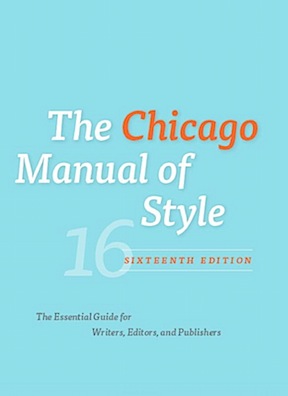
Chicago Manual of Style

The Grandaddy of Style Manuals

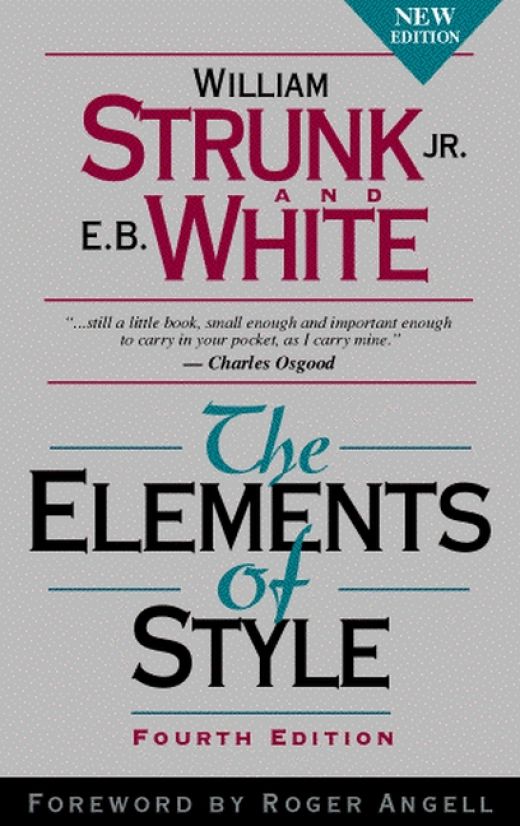
Another Icon

Another Icon

Legal Style Manual:  Dreaded Blue Book

Legal Style Manual: Dreaded Blue Book

California's Answer to the Dreaded Blue Book

California’s Answer to the Dreaded Blue Book

Read Full Post »

Toni Morrison explained, “I wrote the novel I wanted to read.” And I did the same thing when I wrote Dance For A Dead Princess. Here’s why:

Jane Eyre, as I’ve said before, is one of my favorite novels. I can’t count the number of times I’ve read it. And I’m not alone. It is so popular that other authors have tried to replicate its magic in books like Jean Rhys’ Wide Saragaso Sea, or Mary Stewart’s The Ivy Tree, or fairly recently, The Flight of Gemma Hardy by Margot Livesey.  And now me, in Dance for a Dead Princess.

I was nostalgically wishing for another Jane Eyre experience over the weekend, as I was hunting for a book I really wanted to read. As I surveyed the offerings and was disappointed, I began to imagine what a modern day literary agent would say about Jayne Eyre:

From the Desk of the World’s Most Important Literary Agent to Miss Charlotte Bronte:

Dear Miss Bronte,

Thank you for the opportunity to consider the manuscript of your novel, Jane Eyre. Unfortunately, I am unable to represent it at this time. Some words of wisdom if you decided to submit it elsewhere: your story is definitely not a Romance Novel. If you are unwilling to make changes in the present draft, you should look for an agent who specializes in Contemporary Women’s Fiction or Mystery.

That said, you do have a very promising, if flawed, story here. With some changes, you could have a bestseller on your hands. (And I’d love the commission I’d earn from representing it.) To that end, and our mutual financial benefit, some suggestions. First, sex sells. Historical and contemporary romances have to be hot, hot, hot. I realize you’ve devised quite an ingenious plot line here, and Jane and Mr. Rochester (really, Miss Bronte, a romance novel hero called Mr. Rochester and not Trevor, Tray, or Brandon?) are quite convincingly in love by the time of their ill-fated marriage attempt. But they only TALK to each other. Where are the smoldering sex scenes? Jane never once mentions Mr. Rochester’s six-pack abs (I assume he has them, yes?), or his alpha male swagger (he is an alpha male, right?) and, for all the times he meets Jane in the lane he never once cops even the tiniest little feel. (On second thought, since he never gets her in the sack, he can’t be an alpha male, therefore he can’t be a Romance hero.)

And then there is Jane, herself. Really, Miss Bronte, Romance heroines are not “plain.” After all, when your book hits the big screen, which big name actress is going to want the role of a “plain” heroine? Jane should have masses of chestnut hair, down to her waist that Edward (or better yet, Trevor, Tray or Brandon) can bury his face in at the, ah, appropriate moment. In addition, a regulation Romance heroine must also be equipped with (at a minimum) an exquisite heart-shaped face, a perfect cupid’s bow of a mouth, and flashing dark eyes.

Your book, Miss Bronte, is all PLOT and no SEX. And it begins with Jane’s dreary life in an orphanage when it should start with Mr. Rochester undressing Jane in his imagination the moment he meets her at Thornfield Hall. I realize you must have taken a Creative Writing course in which some dreary professor taught you all about character, plot, voice, and point of view. But when it comes to writing a best selling Romance Novel, throw out all that Literary Stuff. Sex, Sex, Sex, sells. That’s all you need to know.  The only PLOT you need is how to get from one sex scene to another.

Here are some suggestions, then, for transforming Jane Eyre from its current status as a Romance novel loser to a New York Times bestseller. Plot: As soon as Mr. Rochester meets Jane, he asks her to enter to a “pretend” marriage to keep the unwanted attentions of Blanche Ingram at bay. Soon their “marriage” is anything but pretend, yet Mr. Rochester is still engaged to Blanche.

Or you could take a leaf from E.L. James and Syliva Day and install Mr. Rochester in his own “red room” at Thornfield where he and Blanche teach the virginal Jane all about sex, sex, sex. Terrified, she flees to her cousin St. John (horrible name, by the way for a Romance novel sub-hero) only to be pursued by Mr. Rochester and taken back for her well-deserved punishment.  At the end, she falls in love with Mr. Rochester (Trevor, Tray or Brandon) or at least she’s in love with his millions.

Or finally, if you don’t like either of those plot ideas, instead of fleeing an orphanage, Jane should flee from an abusive first husband. Through sex, sex, sex, Mr. Rochester teaches her to TRUST again; and now armed with CONFIDENCE  in herself, she becomes a millionaire when representatives of Betty Crocker discover her tea shop in the village and purchase her secret recipe for blueberry scones.

Any of these plots and some really hot, hot, sex scenes would rocket your manuscript straight to the top. Otherwise, you might self-publish and sell a few copies to friends and relatives.

Sorry to send disappointing news, Miss Bronte.

Wishing you all the best,

The World’s Most Important (And Infallible) Literary Agent

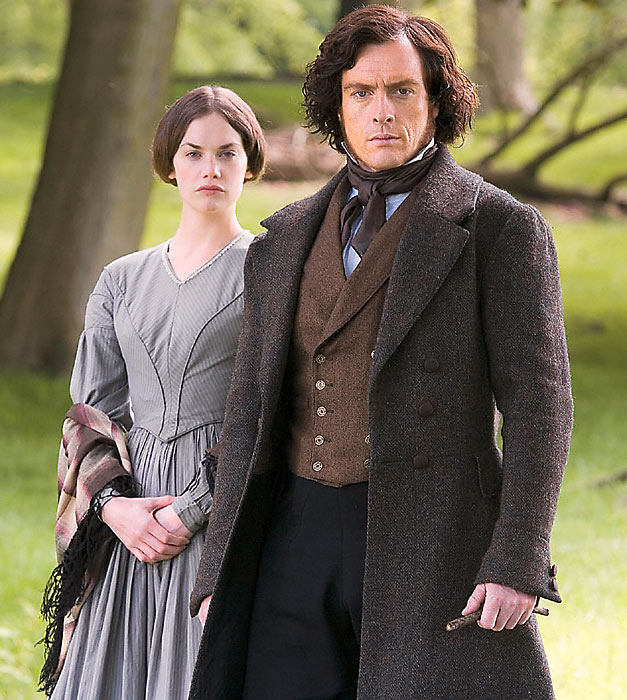
A "plain" heroine, Miss Bronte, really?

A “plain” heroine, Miss Bronte, really?

Read Full Post »

This week I managed (finally) to figure out how to post the cover of my novel on my blog. See, there it is on the sidebar. Now don’t laugh. Sometimes I think writing and editing it was easier than finding out how to use that pesky little image widget. (Just kidding.) And then there was the problem of how to post links to Amazon and Barnes and Noble. I googled and goolged and googled before I got that right. And I’m not sure those links are all pro, but they work. That’s all that counts.

I decided to publish Dance for a Dead Princess myself for several reasons. One, the whole business of finding a literary agent seems to have changed radically. Back in 1995 when I found the lovely lady who represented Summer’s Child, the whole process of agent rejection was more like a stately dance. I sent my book summary and sample chapters off in discreet navy folders, and they came back in my prepaid envelopes with “No Thanks” scrawled on the cover page. Moral of story: a human opened and at least looked a them. Until by and by, a human liked them and represented them.

Summer’s Child came close but did not sell, and another author appropriated my title (without asking me, but never mind), and my agent retired while I built a law practice and raised my children. (No small feat, by the way.) Then, a year or so ago, when I dove into the Literary Agent Ocean once more because I now had two novels I wanted to publish, I was shocked at how things had changed. Just their websites were hostile and uninviting. “Closed to submissions.” “We do not consider unpublished writers.” “We only accept referrals.” Couldn’t they have just written it out, “We are just TOO GRAND to ever read a WORD you’ve written even if it’s only a Cover Letter”? Or “If you’ve NEVER BEEN PUBLISHED we do not consider you LITERATE no matter how many GRADUATE DEGREES you have.” And then, the ones who had a tiny chink in their website armor allowed email submissions to which they promised NEVER TO REPLY. (But logical question: at some point weren’t all now published authors unpublished and didn’t they turn out to be both LITERATE and ENTERTAINING? Doesn’t that sort of squash the Literary Agent view of the Unpublished? Just a thought.)

Now, I am a lawyer, and law is not a profession known for being touchy feely. But I at least tell people when I am not going to represent them. And I do so in very polite lawyerspeak on ivory twenty-pound bond, personally signed by me, which they can cherish for a lifetime along with my highly impressive letterhead. (Don’t laugh. If you are a lawyer, you are selling your brain, so your letterhead has to be IMPRESSIVE to convince the client your brain is worth the fee.) “Dear Ms. XYZ, having considered the facts of your case, I have concluded I am not the right attorney for your file. Best of luck with your matter. Very truly yours, etc.”

Now, I hasten to add, one or two agents wrote me polite and professional turndown letters; and I respected their sincerity. In particular, they acknowledged what a feat it is even to create a novel even if mine was not right for them. But they were the minority, and I just didn’t see the point of beating my head against the closed Literary Agent Door. It reminded me of trying to get into social clubs in high school. The Cool Kids were never going to let you in no matter your merits because they had deemed you unworthy without ever taking time to even talk to you.

Anyway, Literary Agents were a barrier to entering the world of author. But they were no longer insurmountable. And even more importantly, I had seen what traditionally published authors go through. Back in the day, before I found My Agent, a published friend of mine shared her tribulations as her then-agent tried to turn her into Olivia Goldsmith (who was hot at the time; she died during plastic surgery. No comment.) My friend did not want to write the Big Hollywood genre thrillers the agent wanted. So her next move was to Agent Two, who, so far as I know, let her be herself. But I noticed that when her publisher published her books, she had to do all the work of promoting it. And I don’t mean being flown around first class from New York, to Boston, to London, and Paris with appearances on the Today show and GMA. No, my friend had to call the local bookstores, beg for book signing dates, haul her books there, and hope someone would show up to see her and ask her to sign one. In short, she was doing all the work, and it was not glamorous.

Now, I gave up big law firm practice to work for myself. There are upsides and downsides, of course, to that decision but I am my own boss. (And I’m pretty nice to work for, by the way.) So it made sense that if I was going to be a writer (and I’ve been a storyteller since the day I was born and a writer since age 11), I would light out for the Territory on my own. Hence decision: self-publish.

On March 30, 2013, I uploaded Dance For A Dead Princess to Amazon, Barnes and Noble, and Smashwords, armed only with my favorable Kirkus review and determined to figure out how to tell the world about my book. A great read. Cheaper than a Starbuck’s latte and lasts longer too. In the past month, I have floundered as I learned the ways of promoting a book. Some sites are very straightforward: send us money. Ok, I can handle that. Some sites have RULES that are as complicated as magic spells (and which makes me wonder if it would be easier to order a spell from California Psychics). The RULES go like this: You must have x stars, x reviews no longer than x which were not created under a New or Full Moon. Wow, mind boggling. Worse than the California Rules of Court. (Trust me, those babies are better than sleeping pills!) Of course, my question for those sites – pardon me for being lawyerlike – is how do you get x reviews with x stars under whatever moons your prescribe until you can let the word know your book is out there? Isn’t publicity designed to inform readers you and your book exist so they can create the x reviews, with the x stars under the required moons? Or am I being too logical?

Anyway, my novel and I have emerged into the new world of Novel Promotion where right now I feel as if I’m standing under a dark sky watching all the tiny little stars of all the books in the world shine down at me. But I believe in Dance or I wouldn’t have come this far. So I’ve just got to figure out how to help it shine a little brighter so readers who would love it will find it. This is a new journey, and I’m up for it.

dance-dead-princess-728x90[4] (1)

Kirkus Reviews

Read Full Post »

This has been a tough week for all of us. First the heartbreaking images from the Boston Marathon on Monday and then last night and today the death of one perpetrator and the capture of the other. Monday’s blast not only shattered the world around the marathon’s finish line, it shook all of us to our emotional core. How to believe in the essential goodness of humanity in the face of three young lives extinguished in seconds and hundreds maimed and injured? This is the place where we want to shake our fists at God and demand, “Are You There?”

The heroes who step forward in times like these are the ones who bring us redemption. Because they are willing to be selfless in the face of danger and even death, they let us go on believing that the essence of life is goodness and love. Boston and the sight of so many law enforcement officers, as well as civilians, stepping forward as heroes reminds me of a hero whom I never met and who died when I was two years younger than Martin Richard, but whose story has become an important part of my family lore. In the family I grew up in, the word “Boston” is synonymous with “Dick Horan.” Here’s why.

My father was an FBI agent. He was a very good FBI agent. That meant when something happened in the world – like Boston on Monday – our phone would ring in the middle of the night, and he would be whisked away on “indefinite assignment.” We never knew when he would be back. And once in a great while we would also admit the awful corollary: we never knew if he would be back – although it is exceedingly rare for an agent to be killed in the line of duty.

On January 17, 1950, a gang led by Joseph “Big Joe” McGinnis and Joseph “Spec” O’Keefe robbed the Brinks bank on the north end of Prince Street and Commercial Street in Boston. They arrived in Brinks’ guard uniforms and masks, went to the trouble of duplicating the bank’s keys, and made off with $1,218,211.29 in cash, and $1,557,183.83 in checks, money orders, and other securities. They divided an initial cut of the loot and put the rest away to wait for the six-year statute of limitations to run while they squabbled and fell out with each other. The FBI investigated the Great Brinks Robbery for many years and finally made arrests in January 12, 1956, just five days before the statute of limitations expired.

But my father had no inkling of that outcome when he got “the call” late one night in the winter of 1951. I was heading toward my second birthday in the coming August, and my mother was pregnant. In the 1950’s married women had children because everyone expected them to. But a more unmaternal person was never born than my mother. So she was not delighted to be left alone, although she knew it came with the territory of being my father’s wife.

Six months later, my father was still in Boston and had no idea when he would be back. It was hot, hot, southern summer in Tennessee; and my mother was uncomfortably pregnant and stuck with me, the charming child who neither napped nor slept. One particularly miserable day in mid-July, a scruffy man came to the door and asked to borrow the ladder he had seen in our open garage. Now, of course, my law enforcement wife mother should have known not to leave the door open or to say yes; but we were home, and it was hot, and she did. The man used the ladder, put it back, and then returned in the wee hours of the night and broke into garage.

Nearly eight months pregnant, my terrified mother summoned the police, who responded at once and frightened the man away. Later, Mother speculated he had seen the country ham she had brought from her father’s farm and the jars of canned goods my grandmother hand contributed and had returned to steal the food.

Calls to my father in Boston did not produce his return. I’m not sure if she asked him to come home, but I bet she did. However, the Bureau was not going to yank a top agent from a special assignment because of a domestic burglary.

Then, a week later, the doctor informed my mother my sister was going to be a breech birth. Now she really burned up the phone lines to Boston.

FBI agents work in pairs. My father’s partner was an agent named Dick Horan, then of the Boston office. Although my father did not strike up many friendships, he and Dick hit it off. That night after my mother’s call, Dick could tell my father was upset, and he insisted the two go to a movie. Now, my father hated two things in the world: sweets and movies. But he went because Dick insisted and eventually told him about my mother’s call.

In the family legend, it is Dick who went to the Special Agent in Charge and asked for the Bureau to send my father home. I suspect that is true, since I can’t picture my father, hat in hand, asking to leave. But not long after Dick dragged Dad to the movies, the SAC called him into his office and told him he was going home. To this day, I remember (and I was less than two mind you) going to the airport to get him that hot July afternoon in my best dress and hair bow. Then a few weeks after his return, my ever fickle sister turned herself around and was born head first.

On April 18, 1957, Dick Horan was killed by a fugitive on parole whom he and a team of agents were trying to arrest in Suffield, Connecticut. The rest of the agents went to the back door of the house. As Dick went down the basement steps alone, Francis Kolakowski shot him to death. I was just shy of my seventh birthday. After that, my father was ever-bitter about the subject of parole and would tell Dick’s story if the word was spoken in his presence. Understandable.

So, you see, heroes live on. I cannot count the nights my father sat around the dinner table, and in the tradition of true Southern storytellers, told Dick’s story. And today, all these years later, I am telling it to you. In the same way, night after night, someone will tell the stories of the heroes of Boston. And they, like Dick, will live in the lore of uncounted families from generation to generation. I never met Dick Horan, but I always felt as if I had. He meant a lot to my dad, who was close to few people in his life. Dick was a good man and a hero. And this week, the good men and women of Boston became heroes and redeemed us all. They gave us the hope and the courage to believe that evil is the exception and goodness is the rule.

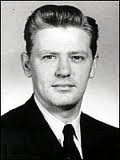
Richard P. Horan, a hero

Richard P. Horan, a hero

Read Full Post »

The Irish and Southerners are born storytellers. Think James Joyce or William Faulkner, or John Grisham. When I was a child in Tennessee and we visited the extended family, the women sat in the kitchen telling stories about their lives as wives, and the men sat in livingroom telling stories about sports and jobs and politics.

By accident I became a lawyer. But by birth I am a storyteller. Fortunately, lawyers tell stories, so I got it half right.

In California people do not like to wait. Show Californians a line, and they will begin to complain. This annoys me because growing up Southern, I learned it is polite to take your turn. Even if that means waiting. And polite waiting is not grumbling about it.

As you can imagine, as an appellate attorney who essentially writes legal term papers for a living, I am a huge patron of FedEx. They make all my briefs ready to go to the court of appeal. So one of the places, I am often in line is my local, favorite FedEx.

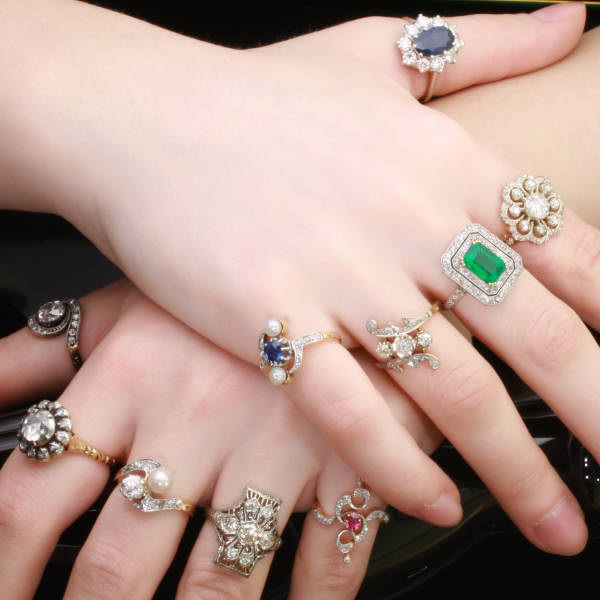
On Sunday morning I bopped in wearing my workout attire because I was on my way to the gym. (And no makeup, by the way. A real switch up for a daughter of the South who wouldn’t leave the house without mascara for most of her life. I am certain I will die with my mascara ON.) Before the guy working the counter could find my latest legal gem, now copied and bound and looking oh so All Pro, he had to wait on the customer ahead of me. She was involved in directing him in some sort of copying job. I immediately switched into “waiting mode” and studied my counter companion. She was a middled aged woman, wearing sweat pants, t-shirt, and jeans jacket. I could tell she had spent at least ten seconds pulling this outfit together. She was definitely not thesartorialist.com material. But what set her apart was the plethora of gold and diamond jewelry on her hands. Literally a ring on each finger. A BIG one with a BIG diamond in each.

Now, it was a bit much. And I wouldn’t do it. But it worked on her for some odd reason. So I complimented her jewelry.

She broke into a huge smile as people often do when they know you are interested in their story. She explained the rings were gifts from her children although she had chosen them herself. “I ask them to give me money throughout the year for birthday and Christmas and Mother’s Day. And I save up in a special account, and I buy something I want.” Then I realized she now carried with her every day on every finger a visible reminder of her children’s love. So her jewelry wasn’t too much, after all. It was just right for her. It’s amazing how you enrich your own life when you give away a compliment and receive a story in return.

Read Full Post »

« Newer Posts