Feeds:
Posts
Comments

Posts Tagged ‘love’

The “it girls” all arrived as princesses this Halloween. They made the trick or treat scene at our front door in ankle-length pastel blue and pink satin skirts, frothed with sheer tulle ruffles at the waist and hem. Bodices sported sequins and glitter. I doubt there was a Versace, Chanel, or Marc Jacobs in the lot, but each one was thrilled with her red carpet look for the evening. (It was Halloween. I should say orange carpet.)

Observing them as I handed out Halloween candy reminded me that I had had a secret desire to be a princess when I was their age. Just as small boys announced their intent to be firemen or policemen, small girls are prone to favor the princess line of work. The only trouble was, I couldn’t quite figure out what princesses did. Sitting on a throne all day waiting for a prince to show up sounded like the height of boredom. So did swirling around a ballroom at all hours in an evening dress and diamonds. And I wasn’t particularly thrilled about eating a poisoned apple or pricking my finger and sleeping for a hundred years. Just regular sleeping overnight was pretty boring, in my view. So even though I was taken with the princess uniform – evening dress, glass slipper, and tiara – the job that went with it didn’t sound as attractive as I’d first thought.

Then I went to school and began to read history. The princess gig began to look less and less attractive. For example, Henry VIII had no trouble dispatching unwanted princesses to nunneries and scaffolds. A little later, in France, the guillotine did the job of eliminating the surplus princess population. Moving into modern times, a Russian firing squad did away with a whole family of princesses in Ekaterinburg in July 1918, along with an Emperor, an Empress, and a Tsarevich. And then, to prove it still isn’t safe to be a princess, Diana, Princess of Wales was smashed up in a car “accident” in 1997.

Conclusion: “pretend princessing” has its upside: a swirly satin skirt for the evening and all the chocolate you can stuff into a plastic pumpkin on Halloween. But the real thing isn’t safe. You don’t want to wind up as another princess statistic. Just say NO to Prince Charming when he hacks through the hedge after a hundred years.

Regulation Princess Gear

Read Full Post »

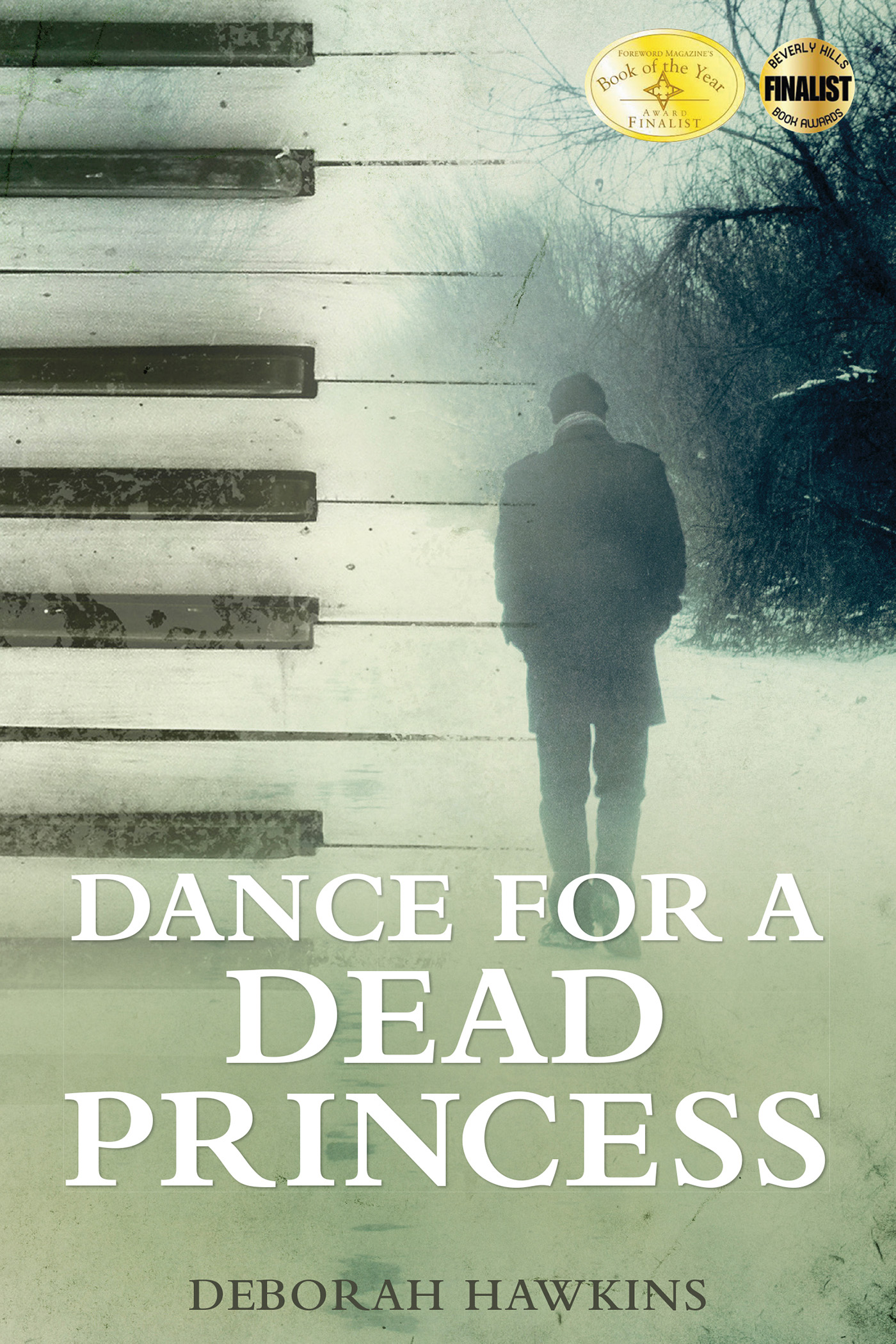
PROLOGUE

Mid-April 2010, Paris

In the gray spring rain, he stood in the Place d’Alma staring down at the tunnel where she had vanished from his life on the last night of August 1997. He came here whenever he was in Paris. He counted the pillars until he reached number thirteen, the one that had taken her life. Tears formed behind his eyes, as they always did in this place. But he refused to let them overflow. Instead, he took a long breath of fresh rain mixed with the exhaust of cars speeding through the tunnel.

When the big black Mercedes had entered its skid that horrible night, his last living link to Deborah had been taken from him. Diana and Deborah, West Heath girls, friends forever. Deborah had been dead since 1994, but he had lost her long before she had become his wife just two years after Diana had married the Prince of Wales in 1981. How many nights had he spent talking to Diana about his marriage, about her marriage, about his guilt over Deborah, and about the impossibility of being in love? Too many to count. He ached to tell her now how empty his life had become without either of them.

He stared down the long, gray tunnel, wondering as always, what she had felt as she had slipped away from everyone who loved her. Had she struggled against it, as Deborah had? Or had her torn and broken heart quietly accepted its fate? No, he doubted that. She’d have fought to stay with her boys. Diana hadn’t gone into death quietly. That January, she’d had a warning of what was coming. She’d recorded a video tape naming her assassins and had given it to someone in America for safekeeping. But she would never tell him who it was. Too dangerous, she always insisted. If you had it, they’d come after you, too. Leave it alone, Nicholas. The tape is safer out of England.

His phone abruptly interrupted with a text message from his assistant. He was late for a meeting of the Burnham Trust at the Trust’s Paris headquarters, and everyone was waiting. Well, they could wait. All day and all night if he wanted. He was the Eighteenth Duke of Burnham and the second richest man in England after the Duke of Westminster, and he’d be late if he decided to be. He hadn’t wanted to be a duke, but having been forced into the job, he was going to enjoy every possible perk.

As soon as the news of Diana’s death had reached him, he’d vowed to find her tape and make it public. No luck for the last thirteen years, but his latest operative had just come up with a stellar lead at last. It was so stellar that not only was he pretty sure he was going to find the tape, he was also going to have the opportunity to unload the decaying family seat in Kent and exact his well-deserved revenge upon his father, the Seventeenth Duke.

Hever Castle as the Model for fictional Burnham Abbey

Tunnel, Place d”Alma, Paris

Diana’s Funeral

West Heath School for Girls

Read Full Post »

Life as a stay-at-home mother of three children, five and under, was an endlessly demanding job. I had always been a hard worker and an over achiever, but child/care 24/7 was the most exhausting challenge yet. There were days when, as much as I loved my three little ones, I wasn’t sure how I was going to get up at sun rise and keep going. I had never been so tired in my life. And I had a sinus infection that lasted for three and a half years. One unhelpful and terrifying male doc said I needed to be tested for HIV. The woman doc whom I went to for testing and whose children were the same ages as mine couldn’t stop laughing when I told her why I was there. Honestly, it wasn’t very funny.

I became fascinated with Princess Diana in that period. I’m not sure why. There were probably a lot of reasons for my fixation. First, I loved her clothes. Whether in her early Laura Ashley mode or in her shoulder-padded Power Suit mode in the 1980’s, she was gorgeous. She was the IT Girl of Style.

Second, she delighted in mothering just the way that I did. In the pictures of her with William and Harry, who were only a few years older than my children, her love shines off the page. Granted when she played games with them in their nursery, she’d had a full night’s sleep because her nanny was on call, but even my sleep-deprived brain could connect with another mother who loved her children the way I loved mine.

Third, she and I had entered into similar marriages. My husband’s job was to our marriage what Camilla Parker Bowles was to Diana’s. The third party to my marriage was a corporation whereas for Diana it was the Other Woman; but the result was the same. And Diana had married a man who wanted a wife and children from Central Casting to be available only for photo ops. And so had I.

Fourth, Diana went through a very public divorce with a man determined to wound and humiliate. One of my few consolations on those terrifying days when I left the Family Law Courthouse threatened with the loss of my children and so emotionally upset that I was afraid to drive, was that at least the venom that had just been spit in my face wasn’t going to be heard around the world. For Diana, it was a very different story.

I didn’t lose my children. I would have if I hadn’t been a lawyer. Oddly enough, the role that sat most uncomfortably on my heart was the one that saved the people I loved most from being lost to me. But that victory came at a heavy price. During that marriage, I had done the thing I had wanted to do all my life: I had written a novel. After a lot of tries, I even got an agent in New York. In those early dark days of my divorce, my little book traveled from editor to editor at major publishing houses. Some did not like it. Some liked it but would not buy it. It was called Summers’ Child, a title that another writer would use for her own very successful novel some years later. (I had copyrighted my manuscript, and I knew she hadn’t done her homework before using my title.)

But when my husband found out that I had written a novel that was not succeeding with New York publishers, he dragged me down to the Family Law Courthouse and accused me in public of being a no-account deadbeat who was trying to live off child and temporary spousal support. He argued that I was trained as a lawyer, and so I had to go back to work as a lawyer. Even though I hadn’t done any work as a lawyer for eight years and hadn’t the foggiest idea, anymore, how to even sigh on to a legal research service.

Family Law Court, at least in those days, was a terrifying hell of illegality. I had graduated second in my class from law school, and I knew how unconstitutional the various rulings from that court were. The family law court operated at that time as if the Right to Privacy did not exist. At one point, I actually thought they were going to send me to involuntary psycho therapy to force me to withdraw my accurate and true statements that my husband had abused me and the children. I felt as if I’d wound up in a Russian Gulag as a political prisoner for not Speaking the Party Line.

I knew how to challenge these outrageous family law court rulings in higher courts. But the problem was I had to play the Family Law Court game or lose those dearest to me. It would do me no good to take my case to the United States Supreme Court only to be reunited with my children by my victory there when they were adults. So even though the Thirteenth Amendment abolished involuntary servitude, the state of California said I had to go back to work as a lawyer. And I did. In my living room, where I wrote appellate briefs and remained close to my children. But who I really was born to be was quietly dying, day by day.

Read Full Post »

In the end, I drifted up the road from Richmond to another, smaller firm in Washington, D.C. where my creative bent found a home. Not long after I arrived at New Firm, the Most Important Partner came into my office one day to congratulate me on a memo I had written for him that the Florida Legislature had then adopted at a statute for the benefit of one of the firm’s clients. He was a very happy Most Important Partner. The client was a Very Happy Important Big Bucks Client. And the firm sure could bill for that one! Redeemed at last.

But finding a home as a lawyer wasn’t as fulfilling as I had thought it would be. It was all still paper and stale conference rooms and working trips on air planes. And business suits, starched shirts, and floppy bows. So I struck out for California (on an airplane, not in a covered wagon) and motherhood.

By 1991, I had three children, ages five, three, and newborn. I had hired a college girl as afternoon help three days a week because I just could not keep up with the demands of the mother job, which was a 24-hour a day, 7-day a week affair. I had no family to give me a break. Babysitters didn’t want three kids or a newborn. And the kids’ dad had parked us in a ritzy part of town where moms had Hispanic nannies. (And went back to Work. To avoid the tough job of Mother, I was convinced.) So no one needed a Mothers’ Day Out Program. (Except me, apparently.)

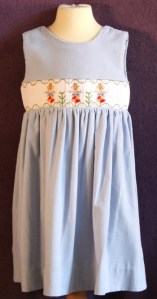
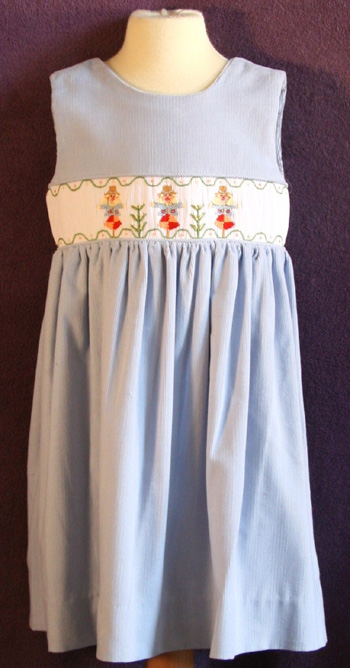
Mothering, I soon discovered, was an endlessly creative job. My artistic self smocked tiny dresses for my daughter, rompers for the boys. I marched clowns and balloons, cupcakes, and teddy bears across their tummies. I looped ribbon into “frou frous” and sewed them onto my daughter’s dresses and hats. I made tiny linen and velvet suits and vests for the boys. I made doll wardrobes and Halloween costumes. (Think my daughter as Pooh and my first son as Piglet when I was pregnant with Number Three.) I made matching velveteen mother-daughter-son outfits for Christmas. And I used a gallon milk jug and fake fur to create a dead wringer for a Coldstream Guards hat. (For my daughter, not the two boys.)

Of course, this activity was not a California Mother Thing at all. California Mothers (the ones without nannies) wore yoga pants and stuffed their children into knit rompers from Mervyns and Gymboree. My activities were so unusual that I had to smuggle a “pleater,” the device consisting of rows of tiny needles that prepares fabric for smocking, back from Tennessee in my suitcase. I ordered smocking patterns and laces and tiny French hand sewing needles from Georgia and Florida and Virginia and Texas.

And naturally I didn’t send my California children to school in these artworks that only a Southern Mother could love. No, as soon as my daughter could pull the OshKoshs off the hangers and put them on, one leg at a time, the dresses hung in the closet quietly waiting for Sunday, like the Good Girls they were.

But, of course, Sunday came. And again, I behaved as a Southern Mother would. CHURCH. Being Episcopalian, we had no duty (Thank, God) to proselytize the California Mothers and their offspring. I could quietly dress my little ones in their smocked and French handsewn best and shuffle us all off to Sunday School (which, true to Southern Mother Form I taught) and CHURCH. (Where I provided stickers and crayons and paper and tiny coloring books to keep the small troops quiet through the boring (to them and sometimes to me, true confessions) service. One interesting Sunday, my small daughter pointed out we were almost the only people there under fifty. Everyone else was at BRUNCH in their yoga pants and knit rompers, California Style.

But I was a Southern Mother. I didn’t know any better.

Being creative as a mother wasn’t just about their clothes. No, it was far deeper and more fun and more substantive than that. Southerners love stories and are born storytellers. I told stories about the South and about their grandfather the FBI agent and their great-great-grandfather the Civil War solider (for the Union!). I read and read and read and read. We loved Thomas the Tank Engine (we called him “Thomas Tanken”), Madeline, Good Night Moon, the Runaway Bunny, Winnie the Pooh, any alphabet book ever written, and all forms of Nursery Rhymes. We watched Sesame Street, talked about “Bee Bo,” “Oscar the Grouch,” “Cookie Monster” and “Count One Count.” (My daughter’s name for him which I thought much better than the original.)

We went to Disney moves, although my daughter wisely decided she did not want to be a Disney princess like her California counterparts, who would ditch their knit rompers for princess gowns, tiaras, and scepters to wear to the park. My daughter, on the other hand, put on her Coldstream Guards costume for outings and marched beside her little brothers’ stroller.

We ate fish sticks and tater tots for supper with plenty of ketchup. We had pillow fights and said prayers at bedtime. (Always the Lord’s Prayer because Now I Lay Me had terrified me as a child because it talked about dying.) We waded in the Pacific on days that never seemed to end because of the stifling heat. (The kids’ dad, who worked in air conditioned comfort, said we didn’t need to be cool.) And we promised every time that we wouldn’t go in the water in our clothes. But we always did. In short, the four of us laughed and created and played and had fun, Southern Mother style, in the foreign country of California. We made few friends, although we tried. But we had each other.
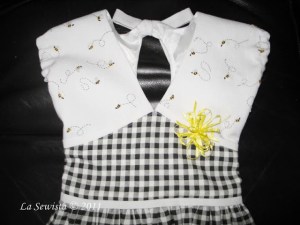
Somewhat skimpy ribbon frou frou on dress

Bee Bo!

Thomas Tanken!

A Smocked dress

Her costume looked like this!


A pleater.


Read Full Post »

Autumn has come to Southern California. Trouble is, the change is so subtle you have to know what to look for to realize the seasons are turning. Suddenly the air seems very focused and sharp, even though the temperature is still 81º. Crows caw, sounding ominous and lonely in the late afternoon heat. Fewer mallards, and now no ducklings, swim circles among the dry reeds in the  pond close to our house. Trees grow brown, and their leaves shrivel, but hang on. Here and there, a few liquid amber trees – a relative of the Eastern maple – change color, some turn dry gold, others dusty red. But autumn here looks more like summer drying up than a season of breathtaking color and bountiful harvest.

I know because I am an ex-pat Southern girl. People hear my accent and ask how I got from Tennessee to Southern California. The answer is simple: in 1985, I agreed to a too hasty marriage to the wrong person, who had taken a job here. Without even one prior visit, I arrived in San Diego in November 1985 and realized at once I was living in a foreign country. I hadn’t bargained for that. But I hadn’t bargained for much of what was to come.

Autumn in the South, is a deep, lush season. It begins in September with crisp, cool mornings warming to sharp, golden noons, and cooling to vermillion sunsets. The trees go from green to brilliant gold and flaming orange and red almost overnight. Then the leaves fall, covering the grass in deep pools of vibrant color. When I was a child, my parents paid me a minuscule wage to rake them into piles to be carted away to compost. I couldn’t resist the temptation to build leaf forts first and jump into them, scattering red and gold in all directions.

Autumn in the South means FOOTBALL. (Not football.) When I couldn’t be bribed into raking, my father would take over the chore, wearing a soft plaid flannel shirt, transistor radio in his breast pocket. The long golden afternoons marched to the steady cadence of the announcer’s voice, punctuated by my father’s sharp cries of joy or dismay at Tennessee’s progress.

Autumn was bittersweet for me because it meant back to school. On one hand, school was my forte: I was an excellent student. On the other, school was the place I began to perfect the art of covering my true identity from the world. Good little Debbie Hawkins with her pigtails who sat up straight in her desk, did her homework, and never gave the teacher any trouble was not the real me. The real me was hiding underground.

Autumn always brought new clothes. In those days, mothers sewed. Late August meant sitting on high stools in department stores, looking at pattern books, and picking out new school dresses. I wasn’t a fan of figuring out which patterns to buy. You could never tell until they were sewn up if the dress was going to flatter or make you want to hide forever. But I loved walking between the tables that held the bolts of fabric, fingering the soft wools, the supple jerseys, and the crisp cottons. I wanted one of each. School was rarely a creative exercise. It involved regurgitating long lists of facts the teachers thought our lives depended upon. But holding and draping fabric in autumn grays and tans and browns – ah, that was pure magic!

My first child was born during the beginning of the second autumn that I lived here in exile. She was a September baby, coming at just the moment when the lazy summer air focused sharply on turning the corner into fall. The man whom I had married had vanished back to his twelve-hour days at the office. I had thought we would at least share parenthood. But I was wrong. Alone in a tiny rented cottage, I struggled to learn the ways of new motherhood with a child who cried twenty hours of every day. One morning, I saw a group of children from the local preschool pause in front of the liquid amber tree in the cottage’s front yard. They were picking up the dusty gold leaves that had fallen. That poor lonely liquid amber was the only tree of its kind in our tiny community. The rest were palm trees and evergreens. No wonder the children had journeyed from their school to see a phenomenon that in the South was as common as breathing autumn air. Alone and exhausted, I began to cry for all the autumns my California children would never have.

Since that day, I have traveled a long journey, coming to love this strange, raw land that is home to my three amazing children. I have decide this blog is going to become the story of that journey; and how I, perpetually an ex-pat, came to terms with largely foreign ways. Once upon a long time ago, I was a graduate English student, studying Irish literature. Somewhere during those days, I read that if you are born Irish, you are always Irish, no matter where life takes you. And now, after more than twenty years in exile, I can say, if you are born Southern, you are always Southern, even if you marry the wrong person and raise children in a foreign land. But I can also say, that leaving and looking back teaches you so very, very much about who you are and how to appreciate the place that created you. If I had never left, I would never have learned who was hiding inside of me.

Stay tuned for more of the journey. And happy autumn wherever you are.

Fall in San Diego

Southern California autumn

In Tennessee

Tennessee autumn

Some content on this page was disabled on March 24, 2021 as a result of a DMCA takedown notice from Dennis Flaherty. You can learn more about the DMCA here:

https://wordpress.com/support/copyright-and-the-dmca/

Read Full Post »

The Irish and Southerners are born storytellers. Think James Joyce or William Faulkner, or John Grisham. When I was a child in Tennessee and we visited the extended family, the women sat in the kitchen telling stories about their lives as wives, and the men sat in livingroom telling stories about sports and jobs and politics.

By accident I became a lawyer. But by birth I am a storyteller. Fortunately, lawyers tell stories, so I got it half right.

In California people do not like to wait. Show Californians a line, and they will begin to complain. This annoys me because growing up Southern, I learned it is polite to take your turn. Even if that means waiting. And polite waiting is not grumbling about it.

As you can imagine, as an appellate attorney who essentially writes legal term papers for a living, I am a huge patron of FedEx. They make all my briefs ready to go to the court of appeal. So one of the places, I am often in line is my local, favorite FedEx.

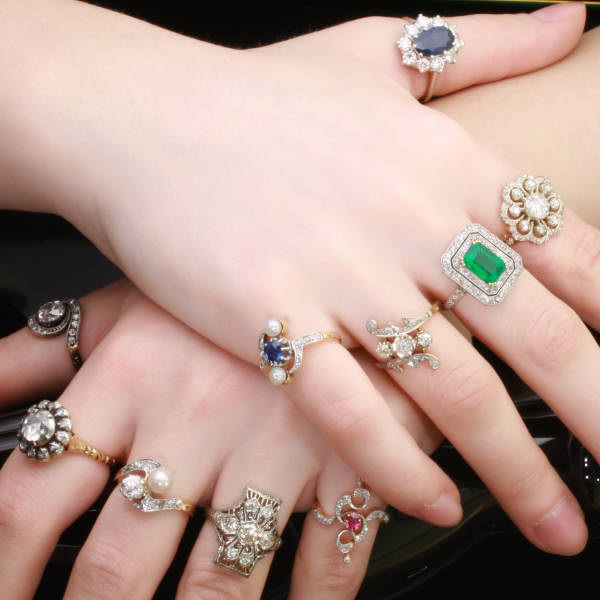
On Sunday morning I bopped in wearing my workout attire because I was on my way to the gym. (And no makeup, by the way. A real switch up for a daughter of the South who wouldn’t leave the house without mascara for most of her life. I am certain I will die with my mascara ON.) Before the guy working the counter could find my latest legal gem, now copied and bound and looking oh so All Pro, he had to wait on the customer ahead of me. She was involved in directing him in some sort of copying job. I immediately switched into “waiting mode” and studied my counter companion. She was a middled aged woman, wearing sweat pants, t-shirt, and jeans jacket. I could tell she had spent at least ten seconds pulling this outfit together. She was definitely not thesartorialist.com material. But what set her apart was the plethora of gold and diamond jewelry on her hands. Literally a ring on each finger. A BIG one with a BIG diamond in each.

Now, it was a bit much. And I wouldn’t do it. But it worked on her for some odd reason. So I complimented her jewelry.

She broke into a huge smile as people often do when they know you are interested in their story. She explained the rings were gifts from her children although she had chosen them herself. “I ask them to give me money throughout the year for birthday and Christmas and Mother’s Day. And I save up in a special account, and I buy something I want.” Then I realized she now carried with her every day on every finger a visible reminder of her children’s love. So her jewelry wasn’t too much, after all. It was just right for her. It’s amazing how you enrich your own life when you give away a compliment and receive a story in return.

Read Full Post »

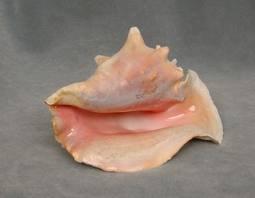
For a week or more, I have had a conch shell in my right ear. The doctor called it an ear infection and said the ear is blocked with fluid, but I know the sound of the sea in a conch shell when I hear it. Sorry doc.

Now the sound of the sea is romantic. But with a conch shell I can put it down when I’ve had enough romance and use my ear for other things. But having an actual conch shell living in my ear is not working out. Do you know how hard it is to practice clarinet with just one good ear? (Ok, never mind that I still play sharp with two good ears. Working on it.)

So this thing has to go. And soon. There are a number of theories about how to remove the conch shell. The doc favors antibiotics. Only problem: who decided all antibiotic pills have to be the actual diameter of my throat? Choking to death is not an option for getting well. So just like any pediatric victim of an ear infection, I have a brown bottle of cherry flavored liquid and a squirting teaspoon dispenser. So far the results from option one are not stellar.

Option two. Holistic healing. Being a fan of Louise Hay, when some part of my otherwise reliable physical self is on the blink, I run for You Can Heal Your Life. I admit to loving the entire story of this book. Overcoming the odds and optimism. And I met Ms. Hay once in person and was totally charmed. But, the truth is, the chart in the back of symptoms and affirmations is a hypochondriac’s dream. (Don’t I wish the conch shell in my ear were just hypochondria. I’d have it out of there in a heart beat. Or thought beat, I guess.) (Notice cool use of the subjunctive to demonstrate the conch is not hypochondria. Only English majors even remember what a subjunctive is.)

Anyway, according to the chart, I developed this annoying symptom, not to romance the sea in my ear, but because I am “Angry. Not wanting to hear. Too much turmoil and my parents are arguing.” Well, if I am angry, I have no idea why. I do want to hear. Any yes, my parents were champion arguers but one of them has been dead for more than thirty years, and I haven’t lived with the other one for even longer.  Granted she is probably is still arguing alone,  but I can’t hear her with either ear.

But a good affirmation or two can’t hurt. So I am chanting, “Harmony surrounds me. I listen with love to the pleasant and the good. I am a center for love.” I like the last one, a lot. And after chanting these at least once, the conch vanished for about three minutes. Really. Like Elvis, it left the building. But not for long. So now I am an antibiotic swigging, chanting host to a conch shell in my ear. Perks: cherry taste of the med, and feeling good when I say “I am a center for love.” Downside: well, we know that one.

Option three. The Abraham-Hicks approach: that which you dwell on gets bigger. So DON’T THINK ABOUT IT. Kind of difficult when you are trying to HEAR, but I’m game.

Option four and final option for now: Go fill up the bathroom with steam from the shower and breath it to open my sinuses and hopefully, my ear.  Hey, it’s pleasant, harmless, and tasteless, and I can chant while I don’t think about the ocean roaring in my ear! And I can light the lavender candle to banish the anger I didn’t know I had. (Still skeptical about that one.) Will let you know when Elvis leaves the building for good.

Image

Read Full Post »

« Newer Posts