Feeds:
Posts
Comments

PRELUDE AND THEME

CHAPTER FOUR

December, 2007

He was playing it now. The singers moved away from center stage to leave room for Stan to solo. He made the longing melody so rich and deep that almost everyone stopped dancing to listen. Four hundred people hanging on every note.

He could still do that to an audience, Karen mused, as she watched him soar through the haunting melody, eyes closed, deep in the world he occupied when he played.

Twelve years had changed his face and thickened his abs but had not touched the way he mesmerized with his horn.

* * *

October, 1994

And that is how she had left Jazz By the Bay that first night, mesmerized and longing to return. When Alan showed up at her office around ten next morning, she was quick to give him an inconclusive report that would require her to go back more than once.

“Too soon to tell what kind of profit he’s making.” But with less than half of twenty tables filled at mid-week, Karen already knew Harry Rich was having a tough time being in the black each month.

“So how long before you’ll know?”

“Give me at least a couple of weekends. If he’s packed on Friday and Saturday nights, he’s in the clear.” Pray God that was true, Karen thought.

Alan shrugged. “Ok. Sounds reasonable. Is Hartfield on schedule?”

“Of course. Secretarial got the final draft done last night, and I’m going to messenger it to the printer’s at noon. It’ll be out the door to the SEC in the morning.”

“Good. So Waterfront Development didn’t slow you down too much?” He grinned, and Karen knew he was playing his I’m-right-and-you’re-wrong game. He wanted her to admit she could maintain her own practice and his, too.

“Not too much, but I’ve still got a lot to catch up on.”

“But you’ve got time for lunch today, right? David and I wanted to thank you for working on the Waterfront deal.”

Karen’s heart sank. Whereas other associates would have killed to go on lunches with the name partners, she would much rather have a sandwich at her desk. She dearly hated sitting at Rainwater’s listening to Alan Warrick and David Thompson tell endless war stories about the early days of their firm while her pasted smile made the corners of her mouth hurt. And it would be particularly hard to listen to them today when her mind was completely occupied with replaying Stan’s performance of “I Can’t Get Started” and wondering if he would repeat it for her that night.

But as of March she was up for partner. And even if she hadn’t been, she could not have refused the joint request from the firm’s letterhead. Still, the thought of being hours behind when she got back to her desk made her heart sink. What if she couldn’t make it to Jazz By the Bay that night?

* * *

But she did arrive by ten o’clock. She held her breath as she paid the attendant at the door and stepped into the club’s darkness. Stan was on stage with the brunette singer from the previous night. The poster out front identified her as Kristin Rich, wife of Harry, the owner. Harry himself, a fortyish African-American, whom Karen recognized from the same poster, was at the piano. A man about Harry’s age was on drum set. Stan was in the process of adjusting the horn in preparation to play.
Karen slipped into her table from the previous night, relieved that over half of the tables were full. She felt a hard stab of jealousy when she realized the Table of Three had grown to Four, and the gowns were even lower cut than the night before. She wished she had changed out of her work suit before coming over.

And then Karen forgot everything except the warm, deep golden sound of Stan’s trumpet, playing “My Funny Valentine.” He went through song after song, some alone, some with the singer. Every melody tore open the sealed places in Karen’s heart and let in a flood of overwhelming feelings she couldn’t name.

When Stan played, he often closed his eyes, concentrating on every detail of his performance. But at other times he kept them open and let them dart over the audience, making contact with some listeners and ignoring others. He was very practiced at gaining the attention of those he chose to engage and appeared to realize the disappointment he inflicted on the ones he ignored. That night, she noted with satisfaction, he made little eye contact with the Table of Four.

Not long after she sat down, he broke into “Watermelon Man” with Harry on the piano. As he hit every impossibly high note, he looked right at Karen. He seemed to be saying, this is for you. Her hands began to tremble with excitement. She could hardly wait for a chance to talk to him.

He came into the audience at the break, scotch in hand, as he had the night before. He concentrated on the couples tables first, and Karen grew impatient for him to come to her. But she was happy that he studiously avoided the Table of Four.

Finally, he was standing next to her, eyes twinkling.

“You came back.”

“I did.” She smiled, trying to keep her voice steady.

“Then I must have done something right last night.”

“Except for getting my name wrong.”

“But I got it right. Kay, the banker!” His face lit up as he teased her.

“No, Karen Moon, the lawyer.”

He jingled the ice cubes in his empty glass as he considered what she had said. She felt as if he were trying to make up his mind about her. Did her profession mean he would immediately lose interest? As she waited uneasily for his response, the gold chain jangling against his watch reminded her how much Alan Warrick hated men in jewelry.

“What kind of lawyer?” He finally asked.

“Securities and Exchange Commission. Financial filings. I worked for a firm in New York for five years right out of law school where I learned the basics. Then five years ago, Alan Warrick hired me here.”

“Form 10-K’s and 10-Q’s?” he suggested.

“Right. How did you know?”

“Oh, I follow the stock market. I have a few investments. Any hot tips?”

“Afraid not.”

He grinned. “Well, I’d better get back on stage.”

The lights went down, and he began the first bars of “I Can’t Get Started,” making eye contact with her as he set his embouchure and sounded the first note. This time he did the vocals, too; and she sat entranced as he played – just pure, golden horn.

The music ended too quickly at a quarter past midnight. The club emptied rapidly, except for the Table of Four who rushed to the stage while Stan packed up his instrument.

Regretfully, Karen headed for the exit, knowing she had to be at work early. She was already counting the minutes until she could return next evening.

But just as she reached the door that led to the lobby, Stan called out, “Wait, Karen! Can I walk you to your car?”

She turned, her heart slamming in her chest. The Table of Four studied her with envy.

“Sorry, ladies,” he said. “I’ve got to make sure Kay the banker makes it home safely.”

Each one gave Stan a peck on the cheek and headed for the exit. They all looked Karen up and down as if to say, we have no idea what he sees in you.

Stan picked up his trumpet bag and hurried toward her. “Where’s your car?”

“In the lot outside.” She wished she had parked farther away.

“So how was it tonight?” he asked as they stepped into the crisp October air.

“Fantastic. Are you this good every night of the week?”

He smiled. “I try to be. Hey, I guessed this was yours.” He took the key from her and opened the door.

“Why did you think this one was mine?”

“Conservative but not quite. Like you.”

“I’m not conservative,” she protested.

“Oh, no? You work in the top law firm in town and you aren’t conservative?”

“If I were, would I be standing here with you at one a.m.?”

He laughed. “Probably not.”

She slipped behind the wheel and closed the door, rolling down the window quickly. “Thanks for tonight.”

“I’m glad you liked it.” He leaned on the door as she started the engine, “But here is the big question:  are you coming back tomorrow night?”

“Absolutely.”

bea0841a241f69cef63ff7609ed35423


PRELUDE AND THEME

CHAPTER THREE

December 2007
As the waiters rolled back the doors to reveal the dance floor, the eight-piece band broke into “Let’s Get This Party Started.” Karen would have cringed at the cliche with any other group, but she barely noticed the song. Her eyes were riveted on the man in the red sequined jacket with the trumpet, standing just behind the two, statuesque blonde singers in plunging green velvet gowns. Over the course of twelve years she had often tried to imagine his face, wondering how much he had changed. And occasionally she had seen men who somewhat resembled him and had incorporated their features into her mental picture. But she hadn’t gotten it true to life. And now she had the chance, at last, to see what he had become.

Middle age had thickened his formerly wiry five eleven, but not a great deal. His hair was still wavy and dark, but noticeably receding, leaving a broad forehead exposed. He had put on weight in his face which gave him a rounder, more open appearance than the sharper features of his youth.

But his eyes, dark and mischievous, were exactly the same. She watched them dart from curvaceous singer to curvaceous singer and felt the old familiar stab of envy as she wondered which one he was sleeping with. Her jealousy broke the dam that had held back her feelings. As she stood watching him again, after twelve years, she couldn’t stop the memories.

* * *

October, 1994

When Karen Moon graduated from Harvard Law in 1984, she went to work on Wall Street for the securities powerhouse, Jennings, Cooper, and Duran. For five years she tried to learn to love securities law; but by June of 1989, she was willing to admit, only to herself, that it was exquisitely boring. So when a head hunter called with the news that Warrick, Thompson in San Diego had an opening for a rising mid-to-senior-level associate in the securities field, Karen decided a change of venue might spark her interest in filling in Securities and Exchange Commission forms.

Alan Warrick, a former securities litigator, interviewed Karen. During their conversation, Karen realized Alan knew litigation but not the regulatory side of securities law. Her job would be to do the substantive legal work to make him look good, so the firm would attract clients. In 1989, the local San Diego corporations were going to New York for their securities needs. Alan wanted to change that.

During that same interview, Alan decided that this thin, serious, auburn-haired woman with eyes the color of a stormy green sea and whose resume said she was thirty but who looked twenty, was the one he wanted for the job. She knew her stuff, and he could tell she was meticulous in her attention to detail. And she wasn’t married, so she had nothing to keep her from concentrating on her work for him. To win her over, Alan make it clear that the firm would highly prize an attorney who oversaw public stock offerings for large corporations and who shepherded their routine filings through the Securities and Exchange Commission. An associate attorney who knew how to fill in all the blank lines with all the right financial data on SEC forms and who got all the pictures in the right places in the annual reports would become a partner and earn a huge annual income.

So for the first year at Warrick, Thompson, Karen had tackled her work with renewed vigor, if not interest. She was the lone securities expert in the firm, unlike Jennings, Cooper, where securities expertise had lined the walls and carpeted the floors. Being “The One” all the other attorneys came to with SEC questions was fun. For a while.

But financial data has no heart and soul. Ten mind-numbing years of manipulating numbers for corporations of all sizes and persuasions took their toll. By 1994, her fifth year in San Diego, she realized she was as blank and empty inside as the documents she spent her days producing.

Then one Monday morning in March 1994, on the day that the handful of associates who had dared to take a few days off for Easter returned, rested and tanned, but apprehensive that all their files had been reassigned, Alan came into her office to announce that her partnership decision would be made in September of the following year. Karen, of course, had taken no time off for the holiday.

Just keep on, keep on, he advised; and she’d be a certainty for partner in September 1995. After all, she thought, as the aura of Alan’s smugness followed his retreating back out of her office, who are they going to replace me with? Although she now had two junior associates who helped in her practice, neither of them had the expertise to handle her clients. And neither had her dedication to work. Both had made the highly unprofessional mistake of absenting themselves over the Easter weekend.

Still, from day one, when she’d sized up Alan as a litigator and not a securities specialist, she had understood he was tough and expected to be pleased. Even if she knew more about securities law, Alan and David Thompson were the name partners. Cross them, and you were out.

So on that March Monday in 1994 Karen focused on making Alan happy. This was relatively easy to do because she was already used to working long hours, generating as much revenue from clients as humanly possible – or even as inhumanly impossible. She had learned in the early days of her career an associate in a big law firm that life was like was a prisoner-death-march. If you became ill, took a vacation, or fell in love, the firm eliminated you right where you fell, brought in your replacement, and moved on.

* * *

Then one clear Wednesday night in mid-October 1994, pleasing Alan Warrick became much, much tougher to do. Around eight thirty p.m., she looked up from the Hartfield Corporation’s 10-Q and saw Alan standing in her doorway.

“Great job on Waterfront Development’s closing today.”

“Thanks.” That was a matter Karen had truly hated. As a securities specialist, she did not often oversee corporate buyouts. But because she was being groomed for partner, to prove her “versatility,” Alan had dumped the Waterfront deal on her plate.

“Anyone else would be out celebrating,” Alan observed as he plopped into one of the chairs in front of her desk.

“Another time. I have to get Hartfield into the overnight word processing pool before I leave. I’m behind on reviewing my 10-Q’s because of the Waterfront deal.”

Alan heard the irritation in her voice. “Look, Karen, I apologize for pulling you off your regular clients, but Waterfront Development is huge. They are going to be redeveloping the entire area by San Diego Bay in the next ten years. David and I wanted them to be comfortable with you. They are going to be selling a lot of securities to finance their construction. We wanted them to love you.”

“And do they?”

“Looks like it. In fact, I’ve got a special request for you to take a look at a property for them.”

“A property? Alan, this is going too far. I have nothing to do with real estate. Let them fall in love with someone from that section.”

“No. That’s not what we need.”

Karen sighed. She was tired, and the Hartfield numbers were beginning to swim in front of her eyes. She hated being unable to finish a project before going home. “So what exactly do you need?”

“We want you to check out a place at Seaport Village, Jazz By the Bay. It’s a restaurant and jazz club that was part of the properties Waterfront picked up in the deal you closed for them today. The owner, Harry Rich, is half-way through a ten-year lease. Waterfront wants him out, so it can begin construction on a new set of shops and restaurants at the Village.”

“So start eviction proceedings.”

“It’s not that simple. As far as we know, Harry’s not in breach of his lease. Pays his rent on time, all that stuff.”

“Then wait five years.”

“Too expensive. No, look, here’s the lease.” Alan held up a file folder. “It has a provision for early termination if Rich hasn’t shown a profit for six of the last twelve months.”

“Ask to see his books.”

“But first, we want to know what kind of traffic the club generates. We don’t want to piss him off if he’s making money.”

“So you want me to put down this very important 10-Q that has to go out in two days to drink wine at a jazz club tonight? And I assume the time is billable?”

“Very billable.”

“And you’re coming, too?”

“Absolutely not. My wife hasn’t seen me in weeks – since we started the Waterfront deal. Besides, you at least know something about music. I can’t stand the stuff.”

Karen stared at Alan. “You’ve never mentioned my undergraduate major in the entire five years I’ve been here. You never even asked me about it in my interview.”

“Yeah, but now you know I read your resume. Flute, music degree. Boston University. You were on your way to Julliard. Then you wised up and went to law school, instead. Good thing, or you’d be starving like Harry and his buddies at that club. Do it for me, Karen. It might even be fun. You could stand a night or two away from the office.”

“As long as it’s billable. I’m up for partner, remember?”

“I never forget. Look, jazz clubs don’t close early. You’ve got plenty of time to wrap up Hartfield, get it into the pool, and make it to Seaport Village. Besides, I bet the crowd – if there is one – shows up late.”

“But it’s Wednesday night, Alan. Who parties on Wednesday night?”

“Beats me. Go find out for both of us. See you later. Good luck.”

* * *

Mumbling under her breath, she fixed up the Hartfield numbers and took the final draft to the overnight secretarial pool, then headed for her convertible VW Rabbit in the basement parking garage. She had promised herself a small BMW as soon as the partnership decision was made. The money to pay for it was waiting in her brokerage account. But buying it too soon might look cocky to Alan and David.

Well, hearing some jazz would be more fun than heading back to her condo in Del Mar, eating Haagen Daz out of a carton for supper, and then staring at rerun movies on TV until it was time to kill her boredom with a glass of wine and sleep.

She parked and wandered through the Village’s maze of tiny white fairy lights, until she found the little club, tucked into a corner with a stellar view of the harbor. Prime real estate, she thought, as she handed her cover to the bouncer at the door. He couldn’t believe she asked for a receipt, but she fully intended to bill the $10.00 to Waterfront Development. And that was the last fully rational thought Karen Moon had for some time.

She heard him playing before she saw him. Stan Benedict’s trumpet was pure gold in the medium range, had the depths of a human voice in the low range, and cut through her soul like diamond on diamond when he soared above the staff. She grabbed the receipt from the astounded bouncer and hurried inside to see who could be making these unexpected miracles of sound on an ordinary Wednesday night in San Diego, California.

It was a small club, only about twenty tables, with most of them empty on a mid-week night. But the attention to detail lavished on the decor gave it the elegant feel of a upscale forties night-club. Every table was covered in crisp white linen and topped with a candle glowing in ruby glass, next to a spray of red and white roses. The stage was small but professionally lit. The aroma of irresistible cooking wafted from the kitchen.

Karen was so fascinated by the music she forgot her role as corporate spy. Instead of taking a table in the back, she hurried to one close enough to the stage to see every detail, but far enough away to be engulfed in his incredible sound.

He was in the middle of his first set. His dark eyes darted over the audience from time to time, and occasionally rested on her, probably because she was new. Or maybe it was her business getup. The remainder of the audience, in everything from casual to full evening dress, seemed to be regulars. There were four couples, varying in age from twenties to forties, and one table of three women, mid-twenties to early thirties, obviously well known as fans because he grinned or winked from time to time when they clapped for a particularly high note or difficult passage. Each one wore a skin tight cocktail dress revealing plenty of cleavage.

Karen couldn’t take her eyes off him. Which conservatory had taught him to play like that? He was meticulous as he settled the horn to his lips, gripping it precisely with his left hand and running the long fingers of his right expertly across the valves. He was in charge of the sound, and it was overwhelming. In one shocking instant, the notes sent her world from black and white to color. At that moment, she couldn’t have even spelled Waterfront Development Corporation.

After the first set, he came into the audience, a glass of scotch in his left hand, and exchanged a few words with the various couples, who offered song requests. Karen busied herself ordering a red zin so she wouldn’t let her eyes linger over his conversation with the three women. She heard lots of laughter; and he glanced her way once and found her watching him. Embarrassed, she took a quick sip of wine and fixed her eyes on San Diego Bay, visible through the window behind the stage.

As if he knew he had her at a disadvantage and anxious to follow up, he left the women and sauntered over to her table.

“Hi, I’m Stan. You’re new, tonight.”

“Karen.” She stuck out her hand and then hated herself as he eyed it with amusement and gave it a light shake. Too many years among lawyers, she thought and gritted her teeth. “You play – ” She was so caught up in the sincerity of her feelings she didn’t care that she sounded tongue tied. “Incredibly.”

He grinned, and her heart turned over. She didn’t want to be one of the string of conquests like the poor women at the other table, but he did something to her that she could not describe.

“Not incredibly. But thanks.”

“No, I meant it. Where did you learn to make that sound? To play so effortlessly in the octaves off the charts?”

He shrugged. “Here and there.” The laughter in his eyes deepened. To her great satisfaction, he was flirting with her. “How do you know which octave I’m playing in? Or about trumpet players. You don’t look like a musician. You look like a banker.”

All at once Karen was miserably self-conscious in her mannish blue suit and starched blouse. She blurted out, “I’m an attorney. But I studied music – once.”

“Where?” His laughing eyes were skeptical.

“Boston University.”

His face became serious, and he backed away imperceptibly. She hadn’t thought her college background would intimidate him. Surely he had studied somewhere even more prestigious, given the way he played. Why should he be threatened by someone who filled in SEC forms all day? She bit her lip and wished she could begin her conversation over with him. At that moment, the only thing she wanted in the entire world was for Stan Benedict to like her.

But he was all cool, professional reserve now. The twinkle in his eyes had been extinguished. “Thanks for coming in, Kay. Come back again.”

“Karen.”

“Karen,” he repeated absently as he turned toward the stage.

She sat at her table, filled with despair, clutching her wine glass. Obviously he would not even remember her an hour from now.

He reached the stage where a stunning, raven-haired woman in her late twenties or early thirties in a tight, dark blue clingy silk dress joined him along with a drummer and an alto sax player. Stan leaned over and kissed the woman on the cheek, and Carrie felt a sharp, unexpected stab of envy. Was she his wife? He hadn’t acted like a married man at the Table of Three.

Stan started to put the horn to his lips, going through the now familiar routine of setting his mouth carefully in position before he took his first breath. But just before he completed his preparations, he put the horn down, catching the other musicians by surprise. They all looked at him quizzically.

He gave them his twenty-watt grin, walked over to the edge of the stage, and looked straight at Karen.

Her heart began to slam in her chest, and her hands trembled. She clutched the glass to keep them still.

Stan smiled and called out, “What’s your favorite tune?”

“‘I Can’t Get Started.'” She hoped her voice had sounded calm and normal.

He stepped back to his position on stage and said to the others, “Second set, first number. ‘I Can’t Get Started.’ For Kay, the banker.”


images (4)

PRELUDE AND THEME

CHAPTER TWO

December, 2007

In her early days at Warrick, Thompson, Karen had looked forward to the firm’s annual Christmas party. The venue varied. Sometimes oceanside at the Hotel del Coronado. Sometimes inland with exquisite food at the Rancho Bernardo Inn. And sometimes under chains of white fairy lights outdoors on the Prado at Balboa Park. But always with no expense spared. Before her legal career, Karen had no experience with formal parties. Her family’s budget could not cover Christmas dinner at a restaurant, let alone a catered affair for four hundred.

In those first years at the firm, she had shopped the second-hand designer stores to compete with the wives of the big name partners who imported their gowns from Rodeo Drive. Even before she was fully aware of how much appearance mattered in the Warrick, Thompson world, she had instinctively kept her true self hidden and disguised herself to look like those around her. At age thirty, as she stood by the hors d’oeuvres at her first firm Christmas party, white wine in hand, she had laughed privately at the thought of resale Givenchy as camouflage.

Now at forty-eight, she regarded the annual event as a dreary duty. Howard loved it for glad-handing big name clients. But she thoroughly hated wearing a pasted smile from eight to midnight, while watching unhappy people drink themselves into oblivion. And now that she had the money to afford original designer labels – in fact something Howard insisted on to ensure his status in the firm – she no longer found dressing up for the big night could take her mind off the exquisitely boring evening that lay ahead.

On Friday, December 16, she closed her courtroom at four p.m., an hour early, and made it home before I-15 became impassible. She had trained herself in the last two weeks not to look at the answering machine when she came in. She knew the light was not blinking. She had instructed her staff and Howard to leave messages only on her cell so that a winking red light would not tempt her to hope Stan had called again.

Because, of course, he did not. And it had been for the best, she reminded herself as she stripped off the gray suit of judgeship and ran hot water for her shower. Even if her heart still turned over at the sound of his voice after so many years, they had nothing to say to each other.

She stayed in the shower an extra long time. The last thing she wanted was to arrive before Howard. He was flying back for the party but would arrive so late he would go straight to the Hotel Del from the airport. He was still in trial in Philadelphia and had not been home since December 1. She had given his tux to his secretary to FedEx to him the day before.

She took extra time with her hair and makeup. Was there any trace of Carrie in the face of The Honorable Karen M. Morgan? Her auburn hair, which had been long enough to cover her breasts on those wild nights when she and Stan had made love from two a.m. until dawn, was now cut to a tame chin length. She pulled it away from her face with small black clips when she sat on the bench. Loose hair, even chin length, was unprofessional.

She still had Carrie’s round face and big hazel eyes that became green when she wore that color. But these days they were more often gray, influenced by the black robes. She had never looked her age – a disadvantage in the early days of her career when partners had passed her up as too young for important assignments. But Howard now loved having a “trophy wife” his own age who looked ten years younger. She shuddered at the way he’d said it.
She applied her Chanel makeup and studied the effect. Suddenly she wished she had picked the dark green velvet Prada gown at Nordstrom’s. Deep V-neck, long skinny sleeves, and a pencil skirt, slit to the knee. Hardly something the Honorable Karen would wear. But a dress the middle-aged Carrie would have adored. If she had survived.

Karen dug deeper into her cosmetic drawer and found an old emerald eyeshadow. Cover Girl. From the days when she had bought makeup in drug stores. She applied it lovingly to each lid. And then deepened her black liner, smudging it carefully so that it would look soft. She smiled. Her eyes were now the color of the sea on a sunny day. She slipped into her black silk Chanel gown, high neck but plunging V back, three quarter-length sleeves. She added the emerald and diamond earrings she had bought last summer when Howard’s secretary forgot her birthday. She wiggled into black satin evening sandals and picked up her discreet black evening bag. Eight-thirty. Cocktails had begun at eight. Howard shouldn’t arrive until nine.

She resolutely refused to look at the answering machine as she walked through the kitchen, car keys in hand. But just as she opened the door to the garage, she turned abruptly, ran across the room, and switched it off. There. Now she could come back untormented by any hope of a call. Besides, it was Friday night. Stan Benedict was working. Somewhere – she had no idea where – he was on stage, playing trumpet in a way that touched the soul of every woman in the club. One lucky one would go home with him. But not Carrie Moon. She had been home with Stan Benedict. And she was dead. The Honorable Karen M. Morgan turned off the kitchen light and headed for her BMW. Showtime at Warrick, Thompson. Again.

* * *

Everyone had just sat down to dinner in the dark paneled Crown Room when she arrived at the Hotel Del. To her surprise, Howard was already there and seated next to fifty-something Huntfield Harper, CEO of Harper Biotech. Her husband shot her an annoyed, but relieved look as she slid into the seat beside him.

“You’re late!” he hissed in her ear, smiling to mask his displeasure.
“Sorry.” She gave him and her immediate audience a vague smile, unperturbed. “Red zin,” she said to the hovering waiter and turned to engage the third Mrs. Huntfield Harper in mindless conversation. While the twenty-something, dripping in diamonds, chattered about shopping and redecorating her Rancho Santa Fe mansion, Karen tuned out. She had long ago mastered the art of lobbing a pointless question across the net to keep equally pointless social conversation flowing.

When the lobster entree arrived, Mrs. Harper received a warning look from her husband as the waiter poured her fourth glass of champagne. Karen heard the musicians begin their sound check. They were behind the closed folding doors in the middle of the Crown Room where dancing would follow dinner. First the deep reverberations of a bass guitar, then a sax, starting low and running an F scale into the upper octaves, followed by laughter and conversation that she couldn’t make out, followed by electronic buzzes and monotones that indicated they were adjusting the sound equipment. Mrs. Harper paused at that moment, and Karen tossed her another question about interior decoration that restarted her monologue.

The sax wailed a few notes of the blues scale, and then a trumpet began to warm up. Karen felt the first low notes vibrate inside her as if she were the instrument. No, she told herself. Stan’s not in there. A phone call does not mean he’s in San Diego. And even if he were, he’d be playing solo at a jazz club somewhere – probably Croce’s tonight. He wouldn’t be backup in the kind of corporate dance band Warrick, Thompson shelled out big bucks for every year. Stan wasn’t in the next room. But someone who could nail triple high C’s, just the way he could, was in there. The high, pure notes sent her blood racing. At least the music would salvage something of the evening for her.

PRELUDE AND THEME

CHAPTER ONE
December, 2007

“Stan Benedict calling for Carrie Moon.”

Even after twelve years, his rich, baritone sent her heart racing. He still had a smile in his voice. On all the nights when she couldn’t sleep because she was thinking of him, she had tried to remember exactly the way he had just, an instant ago, pronounced her name, Carrie Moon.

But, no, she reminded herself quickly. Carrie Moon had been dead for twelve years.

“No one by that name lives here!” she blurted into the receiver and threw it down before she could lose her nerve. As much as she had dreamed of the day when she would hear from Stan again, she knew she couldn’t let him into the well ordered life of The Honorable Karen M. Morgan, Judge of the Superior Court of San Diego County.

“What’s wrong?” Her husband Howard appeared in the doorway of her study, his face contorted with frustration. “I need quiet to finish these depositions.”

“Sorry. It was nothing.” She tried to steady her hands as she adjusted the sentencing memoranda she had been reading in preparation for the sentencing of two convicted murderers the following day. But she was unsuccessful.

“Your hands are shaking. Was that some sort of threat? Should I call the police?”

Because she presided over criminal as well as civil trials, Howard resolutely believed that one day someone she had sentenced to prison would escape and murder them in their beds. He hated her job. He had wanted her to stay at Warrick, Thompson, and Hayes, San Diego’s biggest law firm, where they had both been partners. But after more than twenty mind-numbing years of ensuring the right accounting data of multinational corporations went on the right lines of Securities and Exchange Commission financial disclosure documents, she had chosen to accept the judgeship two years ago.

At six one, with one hundred and eighty pounds of well-honed muscle, Howard was not someone to be taken lightly. She was certain his stature enhanced his reputation as an unbeatable trial attorney.

At that moment he looked like an angry grizzly bear, roused from the comfort and isolation of his own fully equipped home office. When had the handsome man she married become this jowelly, gray-haired, fifty-year old? Where was the distinguished Howard Morgan, who had spoken to her in the elevator ten years ago on his first day at Warrick, Thompson? In 1997, a year after she became a partner at age 38, the firm had lured him from Elliot, Fitzgerald in New York to shake up their sleepy, backwater litigation section. From his first day in charge, the litigation lawyers at Warrick, Thompson were on call twenty-four/seven. They went to every initial client meeting with a fully prepared litigation plan and cost analysis. After five years of Howard, the Los Angeles firms that had been trying to take over the San Diego market, closed their branch offices and went home.

“No, you don’t need to call the police.” She regained more and more of her composure with each passing second. Her voice now carried its usual cool, unflappable judicial tone. “It was just a wrong number.”

“Good. I don’t have time for crises right now. I have to read three major depositions tonight.” He turned abruptly and went down the hall. She would not see him again for at least a week. He would study depositions until the wee hours, sleep on the sofa in his office, and be out the door to catch his flight to Philadelphia by six a.m. After ten years of marriage, she knew all his routines by heart.

She took a long breath and stared at the phone. All she had to do was hit *69, and Stan’s voice would be there again. And she could tell him the truth. Except she had already told him the truth. Carrie Moon did not live there. Carrie Moon no longer existed.

  * * *
She was in her office in her chambers by seven the next morning, an hour before her secretary, her court clerk, or her bailiff arrived. She had not slept, so there had been no point in staying in bed past five thirty when the first faint light of the December dawn filtered through her blinds. She actually had come downstairs in time to see Howard heading out, suitcase in hand. He regarded her with mild surprise.

“You didn’t have to get up to say goodbye.”

“I couldn’t sleep anymore. Have a good trip.”

He nodded and without a backward glance hurried out to the waiting limo.

No kisses, but she hadn’t expected or particularly wanted one. In the early days of their relationship Howard’s attention had been exciting. He had appeared in the doorway of her office at six in the evening and had taken her for a drink or for dinner before returning to his own office to work until the wee hours. Single, successful, and rich, he had been highly sought after. His attention had turned her head. He had asked her to marry him after three months of dating. She wasn’t in love when she said yes; but she had thought mistakenly, he was in love with her. On their third anniversary – by the time they were using a king-sized bed, so that they could maintain the appearance of sleeping in the same room without touching – she had asked him why he’d pursued her so relentlessly in the beginning. Unspoken were the words, since you obviously care so little about me now.

“I needed a wife. So everyone would leave me alone. It takes time away from work to fend off women and well-meaning friends who want to fix you up. You were terrific wife material for someone like me: a partner at the firm, discreet, undemanding. And you’ve turned out to be everything I thought you’d be, Karen. You’ve been great for my career. And I hope I’ve been the same for yours.” He had stretched across the mammoth bed and patted her shoulder before he rolled over and went to sleep.

The Honorable Karen M. Morgan sat down at her desk, wondering if she dared make herself a cup of coffee. When she became a judge, she quickly learned that everyone waited on her because of the dignity of her position. Her court secretary and clerk would be miffed if they showed up and found the pot brewing. She eyed her empty cup longingly but decided against rocking anyone’s boat that morning. She considered the sentencing memoranda and probation reports on her desk and wondered if she would learn anything else about Pablo Rodriguez and Vincenzo Lopez if she read them again. She already knew they were twenty-one and twenty-two. Gang members since the age of twelve. They had killed three bystanders in a drive-by shooting against a rival gang eighteen months ago. One victim had been a four-year-old child. Each defendant was up for 125 years-to-life. Pablo was the sole support of a widowed mother and a ten-year-old sister. There would be tears this morning.

The probation report and sentencing memoranda remained untouched. She would learn nothing more about these men whom she would soon sentence to a living death just as she would she never learn any more about Howard’s twisted logic which had produced their living death of a marriage. His coldness would have mattered if she had had a heart herself. But hers had been dead for twelve years.

Yet maybe a spark still lived inside her somewhere. After she had heard the limo drive off that morning, she had rushed to the phone and dialed * and 6 before she put it down without completing the 9. She had stared at the receiver longingly, wishing she had not told Stan the truth last night. Then she probably would be seeing him today. The thought of being near him created such a surge of joy that she couldn’t catch her breath for a moment. She had felt nothing like this for twelve years.

Howard would never know if she saw Stan. He was going to be gone for the entire week. And even if he found out, he would not care as long as no one else knew. In the world of Warrick, Thompson, no one frowned on having affairs; they frowned only on knowing they had occurred. One never made one’s personal or professional mistakes public.

She had stared at the phone and wondered how long * 69 worked to ring back the incoming call. But where would a ringing phone have found Stan at this hour except in bed with some woman half his age? For he, too, had turned forty-eight this year. He had been thirty-six on that last day.

She closed her eyes, summoning her memory of his smiling voice and her first sight of him on stage with his trumpet at Jazz By the Bay. Five feet eleven, dark, slightly wavy hair that he grew to collar length, slender build but well-developed chest, the result of years of relentlessly increasing his lung capacity. He wasn’t classically handsome, but he was drop-dead attractive thanks to the warmth in his smile and the twinkle in his dark eyes. His exuberant personality made him a born flirt. She’d watched him solo that night on “I Can’t Get Started” and, while her heart raced, she had realized most of the other female hearts in the room were pounding just as hard.

“Judge Morgan, you’re sitting in the dark!” Isabel Martinez, her secretary, flipped on the overhead lights as she entered the office.

Karen hadn’t noticed. The glow of the desk lamp that she left on around the clock had been sufficient for her musings. Mesmerized, she watched Isabel place a small artificial tree on the corner of her desk.

“What’s that for?”

“Christmas, Your Honor. Haven’t you noticed it’s December 1?”

Karen reached over and pulled yesterday’s page off her calendar. “Why, so it is.” She rubbed her eyes, sandy from lack of sleep.

“You need coffee,” Isabel said wisely. “I’ll put the pot on.”

Karen watched her small, overweight figure waddle over to the coffee pot and take charge. Isabel was only a year older than she was, yet looked ten years her senior. She had been married since the age of 18 and was a grandmother three times over. Karen wondered if she loved her husband but dared not ask.

In the law firm, secretaries and paralegals talked about their personal lives to the women attorneys. But as soon as she was on the bench that stopped. She could not be called Karen any longer. She had to be Your Honor or Judge Morgan. When she put her robe on each morning, she felt as if she disappeared under its weight. A figure that looked like her took the bench day after day and barked orders in the courtroom, while her soul hovered in some unknown place, waiting for the robe to come off so that it could return to her body.

“Here.” Isabel handed her a steaming mug just as Jim Scott, her court clerk, and Bob McGee, her bailiff came in. Eight o’clock. They met each morning to receive her orders for the day, but on this day she had none.
Fortunately Bob took the lead. “I’ve scoped out the hallway. Lots of press waiting to report the sentencing. And lots of victims’ families, too.”

“Tell the press they have to stay outside.” Panic hit Karen. Stan might see her on TV and realize she had lied to him last night. She remembered how he used to watch the morning news as he lay in bed, not rushed to go anywhere because his work day never started before eight p.m. What if he saw her and came down to the courthouse?

“With all due respect, Judge Morgan, the last time we tried to close the proceedings, we spent two mornings in litigation with those hotshot Los Angeles First Amendment lawyers that Channel 21 keeps on retainer,” Bob reminded her.

One of Howard’s few failures was his inability to capture Chanel 21’s First Amendment business. “Good point,” she conceded. “Let them in, but make sure they are set up by nine. I don’t want any delays today.”

* * *

At six fifteen that night, she sat on I-15, her silver BMW stalled like a ship dead in the water. She stared blankly at the parking lot that the freeway inevitably became after five o’clock. She recalled the impassive faces of Rodriguez and Lopez as she had sentenced them that morning. As she inched forward to her exit, she realized to her horror that she was as emotionally detached as they had been. She couldn’t shed any more tears about anything or for any reason – not like the mothers, sobbing their hearts out as their sons were led away. What if she could feel again? Even pain would be better than this continual numbness. But no, she reminded herself, blinding emotional pain had left her unable to feel. She had hurt until she could not hurt anymore. Not feeling was better than hurting that much ever gain. Stan had to stay out of her life.

But within ten minutes, she found she was wrong. She parked in
the garage of their six thousand square-foot-home with the view of the eastern mountains. This house was one of the few disagreements she had won with Howard. He had wanted to live in upscale La Jolla by the sea. But she had grown up in Asheville, North Carolina; and she missed mountains and forests. Her suburban Scripps Ranch home, among the eucalyptus trees, was in one of the few San Diego neighborhoods with anything green overhead. And she could see the mountains every morning from her bedroom window.

She hurried into the silent kitchen. She raced toward the phone, almost breathless at the sight of the red light on the answering machine, winking steadily like a monitor tracking her heartbeat. She pushed the message button and held her breath. Isabel’s soft monotone reminded her to bring ornaments for the barren little tree. The light stopped blinking as if her heart had stopped beating. She hit the erase button and burst into the tears she had no idea she could shed. She stood alone in her empty kitchen in her empty house in her empty life and sobbed for Stan Benedict – and for Carrie Moon.

bea0841a241f69cef63ff7609ed35423

Last Wednesday morning, at 5:30, I woke up with my heart racing like a NASCAR competitor. I rolled over and tried deep breathing, but my heart ignored the vast quantities of oxygen I poured in and out of my lungs. (I have a trumpet player acquaintance who swears his trumpet-breath training saved his life during a heart attack. So I thought it was worth a try. I guess it doesn’t work for woodwinds.)

car

So I sat up on the side of my bed in the dark and panicked. Which sent my out-of-control ticker into the tilt zone. But really, I told myself, wasn’t this the product of a month of my doctor trying to find a blood pressure medication that would keep mine normal and not give me the backache the current one gave me. Surely I wasn’t going to die of a pounding heart brought on by the recent three-day trial of a DIFFERENT DRUG? Then I decided NOT to answer that question.

I went down to the kitchen and swallowed the effective, but offending drug we were trying to replace, reasoning that the back pain you know is preferable to the death you don’t know. I went back to bed, and somehow my pulse went back to normal. I fell asleep congratulating myself on saving the cost of the ER visit and remaining alive, all with one tiny pill that was just going to give me a severely aching back while it kept me on this side of Eternity.

BUT THEN –

I was awake once more. And my heart was now racing along again in the danger zone. It was no longer impressed that I was willing to endure back pain to get it to behave. And it had developed this funky new symptom, pressure on my chest. I sat up again and considered my options. There was no one home but me and the retrievers, who don’t drive. One child was in Seattle. Not an option. One was in a classroom teaching with a brand new job on the other side of town. Not an option. The third was in his second week of law school, in class, also on the other side of town. Strike Three.

I reminded myself people in my family live a long, long time. All I had to do was drive myself to the hospital. I was tough. I could do it. After all, I’d given birth to three children after the age of thirty-six, wimping out to anesthesia only on child number three.

So for twenty minutes, I listened to Frank Sinatra sing Mack the Knife and tried to pretend my heart wasn’t going faster than my MiniCooper. I picked Mack, not because I like the lyrics, but there’s this feel-good jazz interlude that’s all big band and no vocals. And if I was heading to the Other Side, I wanted  Count Basie to give me a Big Send Off with trumpets blazing. I drove, and breathed as I counted the red lights to the ER.

The staff grabbed me at once and stuck electrodes everywhere. And by their reaction, which went from OMG to Oh, hum, I wasn’t having a heart attack. After a lady with a clipboard asked if I had an “Advanced Directive” and I told her “No, that means death is not an option today,” (she didn’t get the joke) a serious young ER doc told me the vampires would be after my blood, and then he would figure out what was making my heart run like a racehorse.

I had no one to talk to. I lay on my back and stared at the layers of gray metal light fixture on the ceiling and tried more deep breathing. My heart slowed its pace slightly, but nothing like what I needed to be comfortable.

I decided to think about SOMETHING ELSE. But what? I considered the possibility, Advanced Directive or no, the Universe had decided my number was up. Would the petals of the industrial light fixture above my head slowly dissolve into the long white-tunnel everyone talked about? Would heading into the light be easier than lying here alone, trying not to worry the EKG might have been wrong because my heart was not with the slow-down program? Would I get to come back and write a bestseller about Heaven which I already remembered from Before I Was Born? Had it changed much? Heaven Before and After didn’t sound dramatic enough for the bestseller list. And then it might seem boring that I’d already been there and remembered the place.

The ER doc returned to look at the heart monitor. Surely a bad sign, I thought.

“Wow, your heart rate’s high!”

Tell me something I don’t know. Was this doctor-speak for the white tunnel is on it’s way?

“Don’t name a number,” I said. I figured the freak-out from that information would send me into Eternal Oz to hang with the Wizard for sure.

He nodded and made way for the vampire cart.

Now I began to wonder if I should call my children. After all, they had no idea where I was or that my heart was doing a tap dance that might not have an encore. But the nurse had promised me an answer within the hour after the lab had given the results to the serious ER doc. So I decided to delay announcement of my possible demise. In the meantime, my heart had taken a new view of woodwind breathing and was beginning to turn down the metronome.

In the end, the vampires had the answer. The new medication coupled with the weird diet the doctor’s nutritionist had come up with (another story) had washed out all my potassium. And hearts can’t hold a tempo without their potassium. They rush like a junior high band on steriods playing a Sousa march. So after an hour of fluid dripped into my vein and twenty minutes of drinking the nastiest tasting potassium liquid on the planet, I was wiped up, dusted off and sent HOME.

It could have been worse. I’m glad it’s over. I eat an avocado, now, every day. Better source of potassium and a whole lot cheaper than the ER.

The-Heart_R

It must have been the last winter storm of the season that came overnight. It seems odd to say “winter storm,” since in San Diego “winter storms” do not have freezing temperatures and snow, the hallmarks of real winter. But even though it was 61 degrees when I went outside with the first of the retrievers at seven o’clock on Saturday morning, it felt colder than that. I put on my jacket before accompanying retriever two on her first potty break of the day.

We walked to Hendrix Pond after retriever breakfast. (Mine comes later with a foamy hot latte that I make myself in a bone china cup with pastel flowers that is the sine qua non for reading my emails.) Everything was shiny wet under gray clouds that carried the potential for new rain. The eucalyptus trees tossed restlessly overhead in the wild winds, and the world smelled of rain and the fruity, but faintly astringent, aroma of eucalyptus. Excitement was in the air; but I had no idea why.

The pond was a sheet of greeny-brown glass, with few green-headed mallards and navy-winged females swimming among the reeds. The three white heron that had been there yesterday were nowhere to be seen. (It has been ages since all three were present; a good sign, I think when all return together. I found a white feather once that one of them left behind, and tucked it into a flower pot by my front door as a symbol of magic and good luck.) Most of the ducks were tucked securely into various sheltered nooks around the pond, some with their heads under their wings. No one had come to feed them as people often do of a morning. The retrievers and I had the wild, windy, cold, wintry world of the pond to ourselves.

We followed our usual trail around the perimeter, the retrievers investigating every new smell that overnight wind and rain had created. I waited patiently while they exhausted every sniff of whatever blade of grass or smooth bit of rock caught their canine fancy. I gazed out at the ducks and listened to the creaking eucalyptus overhead and wished I had awakened in the night to hear the wind and rain. There is nothing more cozy than waking in the wee hours to hear the world being tossed to bits by winter winds accompanied by the staccato beat of rain on the roof while retrievers snore contentedly close by. I love to snuggle deeper into my warm bed and my heap of feather pillows and say a prayer of thanks for my roof, my bed, my dogs, and for being cozy and dry.

The retrievers and I walked out of the shadows just as the morning sun broke through the heavy clouds. I felt the warmth of a normal April morning on my back for a few minutes; and now my jacket, which had been so welcome a minute ago, was uncomfortably hot. In this new unwelcome heat, the world seemed to go fuzzy the way a scene does when you turn the focus ring of a camera too far the wrong way. In an instant, I remembered what hot summer walks are like, with the heat of the sun on my back, and the retrievers, in their fluffy blonde coats, anxious to return to the dark cool of the condo. But, as quickly as the heat of April emerged, it vanished behind the gray morning storm clouds sailing across the rain-washed sky. Now the focus ring had been turned in the opposite direction, and it seemed as if the world had gone from fuzzy into sharp focus in the crisp air.

Some people love summer. Maybe because I grew up in the excessive heat of Southern summers, that season has never been my favorite. In a few days, it will become summer-hot here. Nineties are predicted where we live by Tuesday. So this morning’s chance to bid farewell to the cozy focus that winter-damp air brings to life under the tossing eucalyptus was welcome. Winter, I will miss you.

The Pond - Our Daily Destination

The Pond – Our Daily Destination

Up until last week, the only contact I’d had with Lena Dunham’s series “Girls” was reading various blogger posts about the different fashion statements the four female leads represent. I love fashion, although to be more accurate, I love style because style is timeless and individual, whereas fashion is a fickle friend of the moment. Based on my limited knowledge of “Girls” obtained through the style blogs, I was kindly disposed toward Lena Dunham because she insists on a personal style that is definitely not influenced by Hollywood’s unnatural picture of what women must be. And I admired her for succeeding in a difficult business at age twenty-seven.

Then a couple of weeks ago, I read a review of “Girls” written by a British blogger, Emma Woolf (the great-nice of Virginia herself), which made me curious about the substance of the show. Ms. Woolf, who could be a contemporary of Hannah Horvath and company, didn’t like “Girls” one bit. The title of her essay was “Why ‘Girls’ Is Bad for Women.” She described her experience watching the episodes in the first series on DVD as “uncomfortable and unforgettable.” (Did she mean “forgettable”?)

Curious, I ordered the same first season DVD from Netflix and on a night when I was too tired to do anything else, I settled down to watch. I began by wanting to like Hannah/Lena. I sympathized with her plight as a writer, struggling to get started. I felt for her when she was suddenly and without warning cut-off financially by her parents, and I sympathized with her decision to go plead her case to them – until I discovered her “novel” that was “nearly finished” consisted of all of ten pages. How could anyone who called a ten page draft a novel, expect to be taken seriously? What emotion was Lena Dunham trying to evoke in me? Laughter, disgust, complete bafflement?

I considered ejecting the disk after episode one, but I thought “Girls” might get better, so I punched “forward” and “play” and ploughed on. Pretty soon, I understood Ms. Woolf’s objection to “grubby sexual content.” As she put it, “If you want to watch strangers copulating, I imagine professional pornography would be more satisfying.” And she was right about the sexual content of episode two, which as she said “opens with Hannah and her reclusive boyfriend Adam having sex, in a scene so disturbing that it felt close to abuse.” I kept wondering if I was supposed to like Adam because I did not like him even a little. Any respect I had had for Hannah/Lena vanished. She insisted a man was her “boyfriend” who wouldn’t return her texts, yet would use her (there is no other word for it) for some very unattractive sex when she showed up at his door, reeking desperation and misery. Why, I wondered would a young woman depict the lives of herself and her contemporaries in such a squalid, hopeless light? Was Ms. Dunham trying to say that women are still required to have a man in their lives at any price despite the enormous strides women have made toward equality and independence in the last fifty years? I found the suggestion that women must or should put up with abuse – physical or verbal – as distasteful and disturbing as the generation of “romance” novels that encouraged women to put up with domestic violence in the name of “hopeless love” for an “alpha male.”

At any rate, I gave “Girls” the same chance Ms. Woof did. I watched all of the episodes in series one. It didn’t get better, and I was relieved when it ended although I wasn’t entertained by Hannah/Lena’s inane monologue about the “benefits” of contracting AIDS as she lay on an exam table with her feet in stirrups for her annual pap smear. Really, are these private details of women’s lives interesting enough to be on television? And what is “Girls”s is trying to accomplish by airing the mundane details of womanhood: comedy? satire? social commentary? Beats me.

Like Emma Woolf, I am not a cultural snob. I admit I did not watch “Sex and the City” in its heyday, but I saw all the episodes while happily bypassing the 11 p.m. doomsday evening news. The redeeming grace of “Sex” was its ability to create a fantasy world of clothes, clubs, rich men, and expensive shoes on a writer’s budget. And, best of all, the warmth of the attachment of the four female leads came across as real and heartwarming. I was willing to suspend my disbelief for “Sex,” knowing only too well that no Wall Street partner has ever in the history of the world had time to hang out in a coffee shop with her girl friends. Miranda, I love you, but you are a work of extreme fiction.

Now baffled by all the hoopla over a show that to me seemed depressing and even dangerous for the messages it is sending to and about women, I turned to an expert for advice: my daughter who is exactly Lena Dunham’s age. I offered her the DVD and asked for her thoughts after watching it. But her response was even more telling. She said okay the night I called, but when we got together for dinner the next evening, she politely declined. “Mom, I googled it. And from what I read, it’s not something I want to see.” “Wise decision,” I told her. And I smiled to myself, “Validated!”

Girls

I was reading an article this week on tips for obtaining a literary agent. What struck me was the author’s authoritative insistence that without a “perfect” manuscript, drafted and redrafted and redrafted yet again, a writer is doomed to be ignored and never to be published. If that is true, I am wondering why so many books are out there, indie and traditionally published alike, because I am yet to read a “perfect” one. Have you?

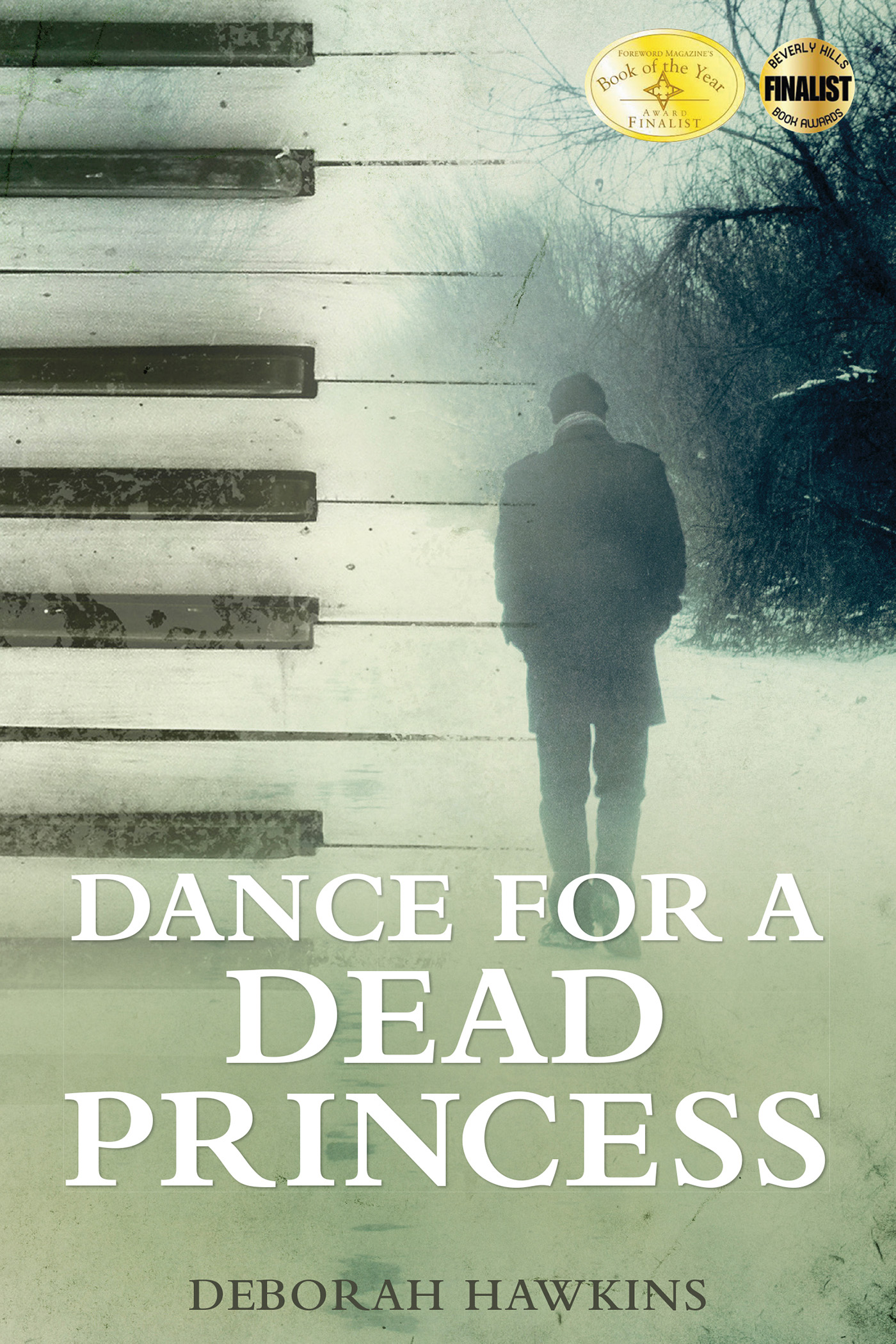
I myself hate the cult of “perfectionism” because it creates a myth that victimizes the rest of us who are just trying to do our best work. Note that “ best work” is not “perfect work.” In between learning that Dance For A Dead Princess had been nominated by Foreward Reviews for its Book of the Year Award in Romance and learning Dance was the sole Finalist for the Beverly Hills Book Award in Romance, I got an e-mail one morning informing me my “review was ready” from a indie author book review service I had contacted ages ago. I scrolled down and read absolutely the nastiest, snarkiest review of my book imaginable. No, let me rephrase that. The nastiest, snarkiest review of any book imaginable. Apparently I’d unwittingly fallen into the hands of the High Priestess of Perfection. So while munching my slightly underdone egg and overdone toast, and drinking a less than perfectly brewed cup of coffee (but happy to have a warm breakfast anyway), I learned that the High Priestess found my plot “contrived,” thought the use of the diary to tell the inner story was “the oldest literary cliche” out there, and was just outraged because the word “lame” got into the text without an accent over the e. Oh, whoops, my eternal bad. High Priestess said nothing about my ability to draw a reader vividly into a scene. (A New York editor had given me that accolade years ago.) High Priestess had nothing to say about all the readers on GoodReads and Amazon who had stayed up at night to find out what happened. And, of course, she had no idea what the judges at Foreward thought of Dance for A Dead Princess. No, she was dead set in her opinion that Dance wasn’t perfect and therefore not worthy of anyone’s time of day.

Well, I agreed with her. If perfect is your bag, Dance is not for you. But, then, neither are the rest of the books out there. Wonder if High Priestess has given that much thought?

Fortunately, I’ve been a writer long enough to know what I do well, and where I can improve. I listen to honest reader feedback. I learn. I grow. But I have not one single aspiration to be Perfect. My heart was broken enough times on that wheel growing up, and I have no intention of the punched-in-the-gut feeling that comes from hours and hours of working and hoping for that “Perfect” accolade, only to find all effort wasted because the accent mark didn’t find its home over the “e.”

I think it is useless and wrong to preach the religion of “Perfectionism.” One Christmas I went to a luncheon here in San Diego that a local group of attorneys sponsored in honor of the season. We sat in a semi-dark cavern of a room, at fifty or sixty round tables covered in spotless linen (or the lights were dimmed to hide the spots, take your choice), and potted poinsettias were plopped in the center of the table (to give the proceedings that “festive” air, I guess). We ate rubbery chicken with a glob of gravy on top, dressing that I swear was made out of old newspapers, and green beans that had been run through a pot of boiling water for ten seconds flat. (I assumed those beans spoke French.)

Since I was starving, I opted to search for food value in the wilted lemon meringue pie that had probably been parked by each diner’s place around 8:30 that morning. And as I sent my blood sugar soaring on an empty stomach, I listened to the speaker, a middle-aged attorney in a bright purple suit, who was presenting a writing award to a student from one of the local law schools. What interested me was the Speaker’s awe-inspired assurance that this student was “Perfect” because she put every one of her writing projects through at least ten drafts. Had Madame Middle-Aged Purple Suit taken leave of her senses, I wondered. Which one of her clients would have paid the hourly rate of a junior attorney who couldn’t produce a fileable document (fileable, not perfect) in one draft and a final? No client on earth is going to pay for ten drafts. Nor should he or she have to. What unreasonable and unworkable standard of the cult of “Perfectionism” was Purple Suit advocating in the midst of stultifying boredom?

Perhaps Miss Ten Drafts went on to be a disciple of the High Priestess, I don’t know. I never went to another holiday luncheon. I’m not perfect, my books are perfect, my readers aren’t perfect, and I love us all just the way we are. I’m throwing my hat in the ring to stamp out the religion of Perfectionism!

The High Priestess

The High Priestess

One year ago yesterday, I pushed the publish button on Amazon and Nook Press and became a published author. I knew I’d embarked on a journey that I’d always wanted to make, but I had no idea what was coming.

At first, Dance For A Dead Prinessc was an e-book only. I didn’t realize until months later how simple and inexpensive and indeed, imperative, it was to create a paperback on Create Space.

And I started the journey with a website under construction and quickly learned not having a website made me a second-class author citizen. Thus, when I wrote one blogger who offered two-day guest spots for authors, to secure two days to guest post, she replied, “Well, ok. But you only get one day because you don’t have a website.”

But the website lesson was trivial compared to the advertising lesson. For breathtaking amounts of money, I bought ads on Kirkus Reviews, thinking their favorable review of Dance For A Dead Princess would quickly produce a readership for the book. Wrong. Expensively wrong. Ads ran. No one seemed to notice.

Then I tried an all-romance website and had the book’s cover pasted up for a month for another quite tidy sum. Again, no one noticed. My book was simply embedded in a mosaic of other books – most with far racier covers. Since I was a new and unknown author, and readers were perusing this site for their favorites that involved shirtless men, Dance For A Dead Princess wasn’t a candidate for their attention. Another lesson learned.

After a certain amount of frustration, I managed to get Dance up on GoodReads. But since Amazon does not cross-post reviews on that site, all my reviews remained on Amazon.

Then I discovered the Truly Expensive Blog tour. I wonder if I thought it would be effective because it was Truly Expensive or because the owner of the business persuaded me she knew what she was doing or because I had read how some blog tours had put Indie books on the map (and the bestseller list.) But of all the money I threw at advertising in the first year of being an author, the Truly Expensive Blog Tour was the most wasted. The owner of the business and my tour director had more excuses than you can count for why the tour dates weren’t honored and why the reviews promised were never posted. To put it mildly, I’d been scammed, big time.

About this time, I decided to do Facebook ads and Kindle Daily Nation sponsorships, although I also sat up nights hunting for websites where indie authors could post for free or nominal sums. Oddly enough, although multiple indie authors claimed Facebook ads were useless, I found them more effective than anything else I’d tried. And they were happily quite low budget. I began to think that the more money I threw at the problem, the less success I had. Whereas, when I was being cheap, I seemed to get better results.

Another example of that principle was another blog tour organizer, who appeared on top of a Google Search one day. Her rates sounded too good to be true. But this time I was careful to research her company and to ask her bluntly if she kept her promises, telling her the horror story of the Truly Expensive Blog Tour. I was delighted to learn she was everything she claimed to be. Organized, honest, efficient, and trustworthy. And she was able to produce reviews, which are the gold standard for selling books. Almost all of the reviews on GoodReads came from her blog tour (which has now continued for months for a fraction of the cost of Truly Expensive.)

And then, just as the First Year of Being An Author was ending, I received some exciting news. Dance For A Dead Princess is a finalist in the Foreward Reviews Best Book of the Year Award for 2013, with the final results to be published in June. And Dance is the Finalist for the 2014 Beverly Hills International Book Award. That award has one winner and one finalist in each category, so I’m honored to be No. 2 in Romance.

Yesterday I started the Second Year of Being An Author by writing the first press release I’d ever written in my life and sending it off to local media. Whether it gets noticed or not, just doing it felt good. And I contacted local indie bookstores I’ve been meaning to contact for months.

Most of all, so many friends have helped out during Year One. They’ve written reviews, they’ve offered encouragement, they’ve stuck up for me and the book when the inevitable Vicious Reviewers surfaced. Launching a book into the world takes friends, and I am very grateful to mine and to everyone who as read Dance for A Dead Princess. And now Year Two Begins.

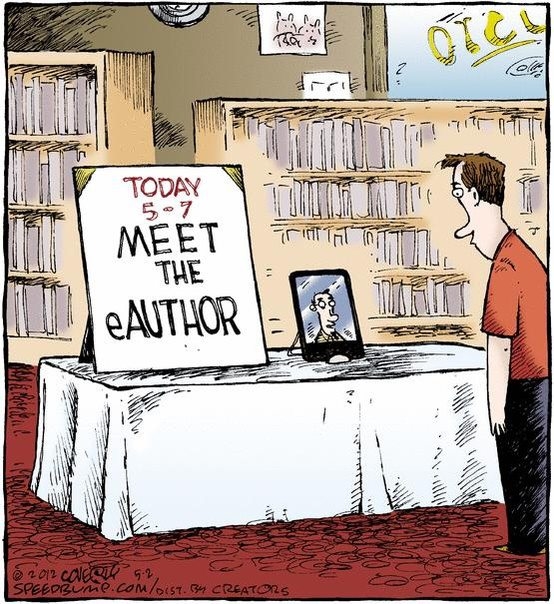
eauthor-ebook-e-book-humor

CHAPTER THIRTY-ONE

Sarah hurried to her car parked in the drive and got in. She sat behind the wheel and took a few long breaths to calm herself before she started the engine and backed out. She shouldn’t have gone to Jim’s last night. It had only made seeing him with Alexa today that much more difficult.

She decided not to drive through the heart of Pacific Beach because even on a Wednesday night at seven o’clock, the partyers would be taking over the streets. Her nerves were like frayed electrical wires, snapping and arcing, and she was not in the mood to worry about hitting jaywalking drunks.

She navigated her way back to Felspar Street which led on to Mount Soledad Road. She decided it would easier to drive over the mountain and through downtown La Jolla to go home. As she swung up the mountain’s long steep grade, she considered stopping at Trend for a drink. The bar offered half-priced appetizers on Wednesday night, and it was a big draw for businessmen in the office buildings near by. Maybe she’d pick up someone to spend the night with, and maybe he’d be interesting enough to take her mind off Jim cooking supper in Alexa’s kitchen.

But that was the trouble with Trend. She couldn’t go in now without wishing Jim were there, too. The bar had always been one of her favorite spots for picking up the men who rotated quickly through her life. She hated to think her interest in Jim had ruined that forever.

She reached the top of the mountain and began her descent. The BMW purred happily along the sharp bends and twists on the downward slope. She steered into the curves and let herself admit the truth: she wanted off this case. The emotions it conjured up in her slammed her to the ground, day after day. It brought back the dark days of Joey Menendez, a place of horror that she never wanted to revisit.

She was now on the steepest part of the descent. Her feet reached for the clutch and the brake to slow the big car into the hairpin turn. The brake depressed, but her speed didn’t change. Automatically she pumped the brake. Craig, Lewis had required its high-profile criminal lawyers to learn advanced driving techniques. She felt confident even in the emergency.

But the brakes remained unresponsive. She still had the clutch engaged, so she pulled the stick back to third gear. But nothing happened. Suddenly she was covered in cold sweat without time to think. The brakes and her clutch were gone, and she was hurtling toward a hairpin turn at sixty miles an hour. She frantically pumped the brakes and tried to steer away from the stone wall directly in her path. At the last minute, the car somehow made it around the turn without flipping over. Another lay just ahead.

She continued to hold the wheel as she reached for her last hope, the emergency brake. But, it too, was gone. The car continued to pick up speed, and she braced herself for the coming turn. And then nothing.

* * *
Jim Mitchell left Alexa’s around 10:00 that evening. The long day of waiting and wondering if Alexa would really get to go home had left him exhausted. The tension of not having anything to use for her defense was wearing him down, inch by inch. He needed to find that nanny.

He hurried home, downed a fast tumbler of scotch, and fell into bed at 10:30. When his phone went off at 1 a.m., he opened his eyes long enough to see the call wasn’t from Alexa. He didn’t recognize the number, so he pushed the dismiss button and went back to sleep. But the phone shrilled again, determined not to let him rest.

“Hello.”

“This is Scripps Memorial Hospital in La Jolla. Someone whom we believe is a friend or relative was in a car crash tonight. The police found your name among her things. She’s here in the hospital. Sarah Knight.”

Panic seized him. How badly was she hurt?

* * *

She was sitting on the side of her bed, trying to sign something with her left hand. She had a white gauze bandage wrapped around her forehead and her right arm was in a sling. She looked angry and annoyed.

“What are you doing here?”

“Making sure you’re ok.”

“How’d you find out I was here?”

“The hospital called. My name was the only one they could find in the car. Apparently you don’t carry the names of your next-of-kin on you.”

“That’s because I don’t have any.”

“Well, I’m filling in tonight. Get back in bed. What are you trying to do?”

“I’m signing myself out and going home.”

At that moment the door whooshed open, and Jim remembered all the recent nights with Alexa in the hospital. He’d had enough of them, but he knew Sarah should stay put.

“I’m Tom Barrett,” the forty-something, square-jawed, salt and pepper haired doctor in the white coat strode in with a smile and an out-stretched hand. No wedding ring, Jim noticed, and the kind of George Clooney face women find irresistible.

“You must be Mr. Knight?”

“No, a professional colleague.”

Was that a spark of relief in the good doctor’s eyes? Jim didn’t want to think about it.

“Well, Sarah here has had quite a blow to the head. She’s lucky to be alive at all. Very lucky. She’s sprained her right arm; but more importantly, she’s got a mild concussion and shouldn’t go home tonight. Maybe you can get her to see reason.”

Tom Barrett turned to Sarah, who was frowning at his handsome face. “Put that down and let me take a look at you.”

“I’m fine.”

“You are not fine. Any nausea or dizziness? Double vision? How’s that headache?” He proceeded to shine a light in her eyes, in the face of her silence. He smiled, “You aren’t going to tell me, are you?”

“I’m going home.”

“You are not going home. You can’t drive.”

“I’ll call a cab. I’m going home.”

Tom Barrett sighed and turned to Jim. “See if you can talk some sense into her.”

Jim sat down on the chair beside her bed as the door closed behind the doctor.

“Hand me the paperwork.”

“Not, yet. Tell me what happened.”

“The car hit a wall going over Mount Soledad on my way home.”

“Were you drinking?”

“No, I’d just left Alexa’s.”

“So why did the car go out of control?”

“Don’t know. The BMW people took it to the shop. Ask them.”

“I will. But you know what happened. Tell me.”

“Hand me the papers.”

“Not until you tell me.”

“Ok, ok. The brakes failed.”

“And you have a manual transmission. Why didn’t you down shift?”

“I did.”

“So no clutch, either?”

“Right.”

“Someone just tried to kill you.”

“I’m aware of that.”

“And now you want to sign yourself out of the hospital and go home in the middle of the night?”

“Don’t argue with me. Hand me those papers.”

Jim studied her wiry determined form, swallowed by the white tent of the hospital gown. He watched her try to scribble with her left hand.

“Come to my place instead. I’d rather know you were in my guest room.”

“Nope. Going home.”

“So there’s nothing I can say to change your mind?”

“Nothing.”

“Okay. Then I’ll drive you.”

* * *

She was fading, Jim noticed, as they turned into her drive. Her fierceness was no match for the medications Dr. Barrett had given her. He wondered if she’d fall deeply enough asleep to let him take her home with him. She had not been able to get her clothes on alone, so the hospital had let him wrap a blanket over the cavernous hospital gown.

She seemed to read his mind about taking her back to his place. Her eyes popped open. “Don’t even think about not letting me go inside.”

“You just seemed to have passed out here in the car.”

With a mighty effort, she heaved open the passenger side door with her left hand.

“Wait. Let me. Where’s you key?”

“In my purse.”

“Come on, then. Lean on me. If you don’t, you’re going to fall and send yourself right back to Dr. Barrett.”

She gave him a small, mischievous drunken smile. “I think he’d like to have me back.”

“He definitely would like to have you back. He knows you need to be in the hospital.”

“No, he liked me. I could tell. He liked me.”

“You’re on a lot of medication right now.”

“Doesn’t mean I don’t know when an attractive man likes me.”

“Okay, okay. He liked you. Why don’t you let me take you straight back to the hospital then?”

“Because I’m tired, and I want to sleep in my own bed. He’ll call me tomorrow. He has to find out how I am.”

Jim suppressed his annoyance and helped her make her way up the walk in the chilly October morning dark. He realized the drugs were talking and exposing the lonely, vulnerable side of her life, something she kept expertly hidden.

She leaned on him while he turned the key in the lock. He stepped into the hall, drew her inside, and closed the door behind them. She smelled of antiseptic and her usual gardenia perfume. He put his arms around her and thought of a bird’s small bones as she sagged against him.

“Come on, then, let’s get you into bed.” He reached out and flipped the switch for the hall light.

“Oh, my God!” Sarah lurched toward the living room, which had been turned upside down. Lamps lay smashed on the floor. The end tables had been overturned. Someone had used a knife to rip open all the sofa cushions and scatter down everywhere.

Jim tried to grab her before she got beyond arm’s reach but was not successful. She stopped in the doorway, and Jim saw her legs sag as she grabbed the door frame.

He hurried to put his arms around her before she could fall.

“Turn on the light,” she commanded.

“No, don’t look.”

“I want to see.”

Reluctantly Jim reached out and switched on the overhead recessed lighting.

She shook her head in disbelief. He saw tears in her eyes. But his training immediately made him pull her close.

“We have to get out of here,” he whispered close to her ear.

“No.”

“Sh-h-h. We don’t’ know who did this. And we don’t know who might still be here.”

She opened her mouth to say something, but he picked her up and hurried out to the car. He didn’t have time to go back and clear the scene, and it would be dangerous to do that alone, anyway.

He bundled her into the car, and backed out of the drive quickly, still afraid someone might yet be in the house. Shock on top of the medications had silenced Sarah. She slumped against the passenger’s door and closed her eyes.

Jim’s mind raced through the possibilities of who could be responsible. Had the same person who’d cut her brakes been the one who’d gone through her house? And what about Alexa? He’d left her ready to sleep. Had they gone after her, too?

He drove through the dark, deserted streets wondering if he should swing by Alexa’s. But it was 2:30 in the morning, and she’d been instructed to call if anything seemed amiss. Right now getting Sarah to rest had to be his top priority.

He pulled into his garage, closed the roll-up door behind him, and got out of the car. Fatigue and fear had finally done gotten the best of her. He carried her into his guest room, pulled back the sheets and tucked her in. She smiled in her sleep but never woke up.

download (11)