Feeds:
Posts
Comments

So in the fall of 1986, alone in a tiny rented cottage on an island in San Diego Bay, I set off on the journey of motherhood. My lawyer suits, one gray, one beige, one black, one navy, one brown, hung listlessly in the closet of the bedroom I shared with the husband I never saw. My black, tan, and navy four-inched heeled pumps remained in their shoe boxes. For the first three months of the journey, I rarely got out of my bathrobe. After that, it was elastic waist pants and frantic dieting until, finally at my daughter’s first birthday, I could sigh with relief and zip my jeans.

The task of dealing with a constantly crying infant wiped my memory clean of what it had been like to be a lawyer, pulling twelve and fourteen-hour days in major law firms back east. I truly wanted children when I finally decided to have them, but I also think I was on the run from a profession I hated and that I had never intended to join.

When I was eleven years old, I decided I wanted to be a writer. I read constantly even before I went to school, and I began to write stories in third grade. I had no doubt in my child mind that I was born to be a creative artist until the night I announced my intended destiny at the family dinner table. My rational, linear father went crazy, outlining the impossibility and stupidity of trying to reach that goal. I slunk back to my bedroom, full of shame for aspiring to be something so outrageous and totally WRONG.

The trouble was, the dream of writing stories would not go away. I realized it was safer to hide my identity underground, as I went on writing. By age thirteen, I had finished a three-hundred page novel.

I thought by going to graduate school and getting a Ph.D. in English, I would move forward with my dream of being a writer. But by the time I had my Masters in English, I could see the reality of every graduate student’s situation: THERE WERE NO JOBS IN UNIVERSITIES TEACHING ENGLISH. And graduate school, like all the other forms of school I had encountered, did not foster creativity.

In the 1970’s, disappointed liberal arts majors of all kinds were going to law school, including, for the first time a significant number of women. I went to talk to the Assistant Dean at the University of Tennessee College of Law about enrolling. She said, “The law is only words. You’re good at words, right?”

Good at words, yes. Good at nit picking trivialities, no. I graduated second in my class; I was admitted to the Order of the Coif, the Phi Beta Kappa for lawyers. I was wooed by major law firms in New York, Dallas, Houston, Atlanta, and Richmond, Virginia. I studied for and passed the Virginia bar in 1981.

But as soon as I sat down at my new associate desk in Richmond, the overwhelming lack of creativity that is THE LAW began to choke me. I had never been so bored in my life.

Next: Driving the wrong way down a one-way street (my perilous adventures as a baby lawyer) and how I was nearly gobbled alive by a female partner with a penchant for hats

Image

Autumn has come to Southern California. Trouble is, the change is so subtle you have to know what to look for to realize the seasons are turning. Suddenly the air seems very focused and sharp, even though the temperature is still 81º. Crows caw, sounding ominous and lonely in the late afternoon heat. Fewer mallards, and now no ducklings, swim circles among the dry reeds in the  pond close to our house. Trees grow brown, and their leaves shrivel, but hang on. Here and there, a few liquid amber trees – a relative of the Eastern maple – change color, some turn dry gold, others dusty red. But autumn here looks more like summer drying up than a season of breathtaking color and bountiful harvest.

I know because I am an ex-pat Southern girl. People hear my accent and ask how I got from Tennessee to Southern California. The answer is simple: in 1985, I agreed to a too hasty marriage to the wrong person, who had taken a job here. Without even one prior visit, I arrived in San Diego in November 1985 and realized at once I was living in a foreign country. I hadn’t bargained for that. But I hadn’t bargained for much of what was to come.

Autumn in the South, is a deep, lush season. It begins in September with crisp, cool mornings warming to sharp, golden noons, and cooling to vermillion sunsets. The trees go from green to brilliant gold and flaming orange and red almost overnight. Then the leaves fall, covering the grass in deep pools of vibrant color. When I was a child, my parents paid me a minuscule wage to rake them into piles to be carted away to compost. I couldn’t resist the temptation to build leaf forts first and jump into them, scattering red and gold in all directions.

Autumn in the South means FOOTBALL. (Not football.) When I couldn’t be bribed into raking, my father would take over the chore, wearing a soft plaid flannel shirt, transistor radio in his breast pocket. The long golden afternoons marched to the steady cadence of the announcer’s voice, punctuated by my father’s sharp cries of joy or dismay at Tennessee’s progress.

Autumn was bittersweet for me because it meant back to school. On one hand, school was my forte: I was an excellent student. On the other, school was the place I began to perfect the art of covering my true identity from the world. Good little Debbie Hawkins with her pigtails who sat up straight in her desk, did her homework, and never gave the teacher any trouble was not the real me. The real me was hiding underground.

Autumn always brought new clothes. In those days, mothers sewed. Late August meant sitting on high stools in department stores, looking at pattern books, and picking out new school dresses. I wasn’t a fan of figuring out which patterns to buy. You could never tell until they were sewn up if the dress was going to flatter or make you want to hide forever. But I loved walking between the tables that held the bolts of fabric, fingering the soft wools, the supple jerseys, and the crisp cottons. I wanted one of each. School was rarely a creative exercise. It involved regurgitating long lists of facts the teachers thought our lives depended upon. But holding and draping fabric in autumn grays and tans and browns – ah, that was pure magic!

My first child was born during the beginning of the second autumn that I lived here in exile. She was a September baby, coming at just the moment when the lazy summer air focused sharply on turning the corner into fall. The man whom I had married had vanished back to his twelve-hour days at the office. I had thought we would at least share parenthood. But I was wrong. Alone in a tiny rented cottage, I struggled to learn the ways of new motherhood with a child who cried twenty hours of every day. One morning, I saw a group of children from the local preschool pause in front of the liquid amber tree in the cottage’s front yard. They were picking up the dusty gold leaves that had fallen. That poor lonely liquid amber was the only tree of its kind in our tiny community. The rest were palm trees and evergreens. No wonder the children had journeyed from their school to see a phenomenon that in the South was as common as breathing autumn air. Alone and exhausted, I began to cry for all the autumns my California children would never have.

Since that day, I have traveled a long journey, coming to love this strange, raw land that is home to my three amazing children. I have decide this blog is going to become the story of that journey; and how I, perpetually an ex-pat, came to terms with largely foreign ways. Once upon a long time ago, I was a graduate English student, studying Irish literature. Somewhere during those days, I read that if you are born Irish, you are always Irish, no matter where life takes you. And now, after more than twenty years in exile, I can say, if you are born Southern, you are always Southern, even if you marry the wrong person and raise children in a foreign land. But I can also say, that leaving and looking back teaches you so very, very much about who you are and how to appreciate the place that created you. If I had never left, I would never have learned who was hiding inside of me.

Stay tuned for more of the journey. And happy autumn wherever you are.

Fall in San Diego

Southern California autumn

In Tennessee

Tennessee autumn

Some content on this page was disabled on March 24, 2021 as a result of a DMCA takedown notice from Dennis Flaherty. You can learn more about the DMCA here:

https://wordpress.com/support/copyright-and-the-dmca/

Single life has many advantages. No problems with toilet seats up or down. No one to say you didn’t need yet another pair of killer heels. No one to steal the covers on a cold night. No one to complain if you would rather Zumba at supper time instead of cook. And you can’t fight with yourself over who takes out the trash. (Well, you can, just to stay in practice, I guess.)
But despite these advantages, I recently overheard a fellow single complaining about her single life. She had visited her neighborhood restaurant for the first time alone, and the hospitality was not the same as when she’d come paired. She’d decided to take herself out solo on a busy weekend night; and instead of being given the table she’d requested, she’d been asked to sit at the bar. Insulted, she left, vowing never to return. And cursing singledom.

Many years ago, I had exactly the same experience in a small neighborhood restaurant in Richmond Virginia’s Fan District. On a Friday night, having just come back from a business trip to Washington, D.C, and still in regulation lawyer gear, I encountered the same choice: the bar or the door. I chose the door. But since then, I have discovered that was the wrong choice.

Here’s the thing. The joy of going out alone is the opportunity to observe the world on your own. Sometimes you meet new people; sometimes you don’t. But the information you gather while out alone is entertaining and enriching.

The bar is not a bad place to eat when you are alone. Why? Watch people eating at the bar sometime. They chat and interact with each other. If you are there with your friends, you enjoy the evening; but you don’t hear a new story from a new potential friend or silently watch a drama played out between strangers while being happy you aren’t on that stage. When you’re out in pairs or groups, it’s same old, same old.

Last weekend, for example, I headed up to Los Angeles to hear jazz at Vitello’s on Friday night. Alone. Now, downstairs at Vitello’s is strictly a restaurant. But the room upstairs, quaintly named “Upstairs at Vitello’s,” is a jazz and supper club. Those of us with tickets for the show were waiting downstairs while the band finished its sound check. An elderly couple were waiting with the rest of us to go upstairs. The man had a bandage over one eye. The woman used a cane. Suddenly a small woman, around my age, got up from one of the chairs along the wall and offered them her seat. Impressed with her good manners, I complimented her. She laughed and said with twinkling eyes, “It’s karma. I hope someone will give me a seat when I’m their age.” Petite, with short dark hair and laughing brown eyes, she looked like an elf that had just materialized from another, more magical world.

Soon we learned we were expat daughters of the South. She was originally from Richmond, Virginia, but had traveled widely since then. We compared notes on adapting to life in SoCal and why we finally came to love it here. But the most touching part of her story was her description of her marriage. “I’m a widow,” she said but with a smile. “My husband died seven years ago. He was the only man for me. My soulmate. It was wonderful, and I could never replace him. I’m happy on my own. I miss him, but I’m so very grateful for those years we had.” Not a trace of bitterness in her voice. Just joy and exuberance and gratitude. She was obviously a very happy person. Happy in her life right at that moment. And her happiness was contagious.

I wanted to sit with her, but Vitello’s had other plans. So I went on to hear other stories that night from the people around me as I listened to the music. None were as interesting as hers, but I had a fabulous time solo, entertained by not only the music, but by the people who had come to hear it.

So single life is quite fabulous when you stop telling yourself you have to be validated by the presence of someone else. You are wonderful company for yourself. And perfect just the way you are. Love yourself right where you are, and the world will love you, too. That’s what I learned from my elf friend that night.


The Irish and Southerners are born storytellers. Think James Joyce or William Faulkner, or John Grisham. When I was a child in Tennessee and we visited the extended family, the women sat in the kitchen telling stories about their lives as wives, and the men sat in livingroom telling stories about sports and jobs and politics.

By accident I became a lawyer. But by birth I am a storyteller. Fortunately, lawyers tell stories, so I got it half right.

In California people do not like to wait. Show Californians a line, and they will begin to complain. This annoys me because growing up Southern, I learned it is polite to take your turn. Even if that means waiting. And polite waiting is not grumbling about it.

As you can imagine, as an appellate attorney who essentially writes legal term papers for a living, I am a huge patron of FedEx. They make all my briefs ready to go to the court of appeal. So one of the places, I am often in line is my local, favorite FedEx.

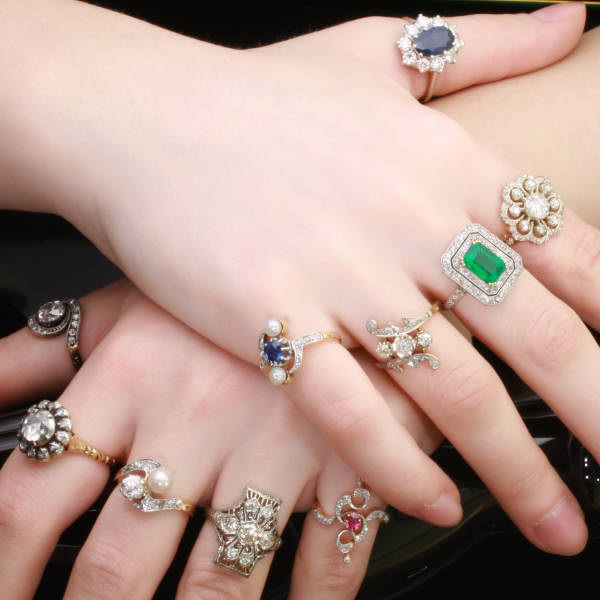
On Sunday morning I bopped in wearing my workout attire because I was on my way to the gym. (And no makeup, by the way. A real switch up for a daughter of the South who wouldn’t leave the house without mascara for most of her life. I am certain I will die with my mascara ON.) Before the guy working the counter could find my latest legal gem, now copied and bound and looking oh so All Pro, he had to wait on the customer ahead of me. She was involved in directing him in some sort of copying job. I immediately switched into “waiting mode” and studied my counter companion. She was a middled aged woman, wearing sweat pants, t-shirt, and jeans jacket. I could tell she had spent at least ten seconds pulling this outfit together. She was definitely not thesartorialist.com material. But what set her apart was the plethora of gold and diamond jewelry on her hands. Literally a ring on each finger. A BIG one with a BIG diamond in each.

Now, it was a bit much. And I wouldn’t do it. But it worked on her for some odd reason. So I complimented her jewelry.

She broke into a huge smile as people often do when they know you are interested in their story. She explained the rings were gifts from her children although she had chosen them herself. “I ask them to give me money throughout the year for birthday and Christmas and Mother’s Day. And I save up in a special account, and I buy something I want.” Then I realized she now carried with her every day on every finger a visible reminder of her children’s love. So her jewelry wasn’t too much, after all. It was just right for her. It’s amazing how you enrich your own life when you give away a compliment and receive a story in return.

In 2004, Russell Shedd took over the music program at Scripps Ranch High. My first contact with Russ was when he called our house looking for my oldest child, Catherine, who was a rising senior at Scripps. A percussionist, she had organized the percussion cabinet at the end of the year and had left a note taped to the door with her phone number, threatening death or great bodily injury to anyone who put anything on top of the timpani. In that era, parents and students alike thought the timpani were convenient way stations for books, hoodies, and backpacks. Never mind the concept of tuning.

I had to tell Russ that Catherine was at Tanglewood in Massachusetts and wouldn’t be back for a couple of weeks. Right away I realized I’d given him the wrong impression of the Scripps music program. In those days the kids took band because it wasn’t Phys. Ed. Catherine’s trip to Tanglewood was the product of her own drive to become a musician and our family’s deep reverence for all things musical. I have studied clarinet since I was nine. We were the exception, not the rule.

But Russ had a vision for that program. He wanted to make it his own. And he wanted to teach kids MUSIC. He fought his way past the parents who didn’t understand what a music education from Interlochen and the University of Cincinnati meant. A fine clarinet player, he took the time to actually give recitals, so the unbelievers could become believers. And they did.

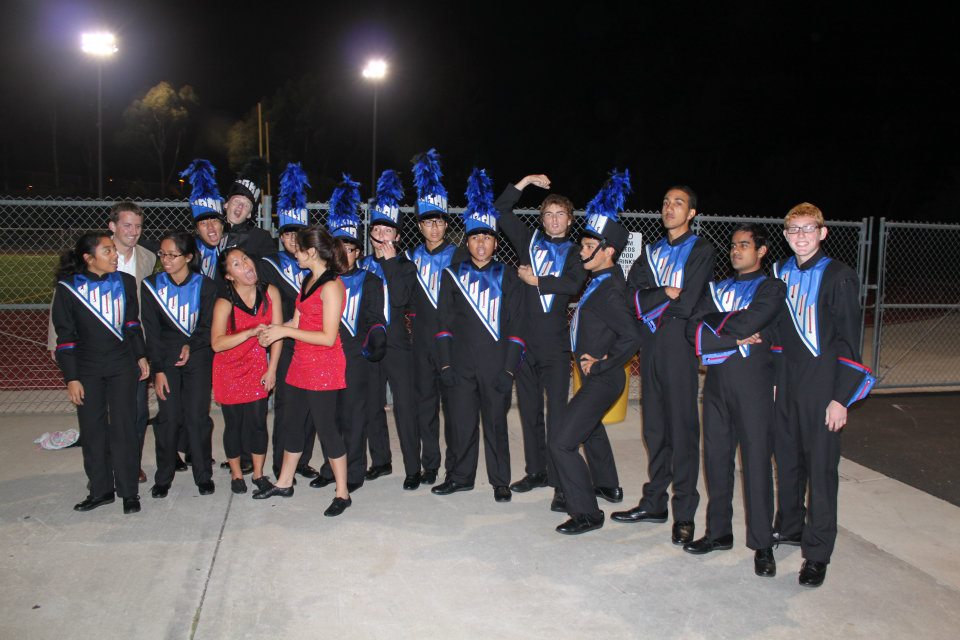
And because band can be fun, he thought of ways to encourage the kids to work hard but to have fun. Responding to his enthusiasm and joy for teaching music, the good kids began to come. One by one, including my youngest child, Michael. Little by little, the program grew. The marching band might be small, but everyone on the field was playing. No horn holders. And the depth of sound that Russ could create with fifty kids rivaled the big bands where half the kids weren’t playing because they were just there for the Phys. Ed. credit. And when he wanted new uniforms for the band, he led the fund raising drive by training for and entering a 50-mile run to get money for the uniforms.

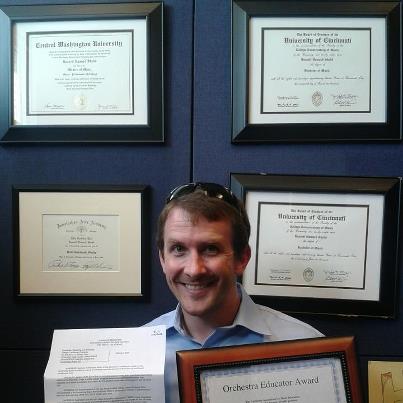
Meanwhile, back at the ranch, the orchestra grew and thrived. It went from four violins, a viola, and a cello – none of whom had a clue about tuning – to seventy amazing musicians. So amazing, in fact, that in April, Russ won the California Association for Music Education’s Award as Orchestral Music Educator of the Year for Southern California. Oh, and in his spare time, he became the full-time choir teacher and the AP music theory teacher, too. In other words, he became the entire music department.

So how does this story of great talent, perseverance, and love for teaching end? With a pink slip. That’s right, dear reader. For all his hard work and dedication, the school district sent Russ a pink slip in May. Raises to more senior teachers – even though Russ has tenure – required the district to let some teachers go. And hire date was the determining factor – not achievement.

In my attorney life, I hear a lot about injustice. And I see some, too. But not nearly as much as you’d think. But this injustice tops the record books. No wonder qualified dedicated people don’t want to be teachers. I left that field many years ago, heartbroken because I couldn’t find a job doing what I loved, teaching writing. And watching Russ’s efforts, achievement, and education be discounted this way, hurts me to the core. And tells me I made the right decision all those years ago.

Children and their education are our future. The study of music will teach a child everything he or she needs to be succeed in life even if he or she doesn’t become a musician. We need to stand up for our outstanding teachers because the school district doesn’t appreciate them. If Russ does finally have to move on, I know there is a school district out there that will highly value his dedication and talent. It’s just that it should be the one here, right now, where he has worked so hard for the past eight years. As a local TV commentator says every night, “It ain’t right!”

About two mornings a week, a former FBI agent drops an e-mail into my in-box offering to teach me how to tell when someone is lying to me. For a large fee. Now, my father was an FBI agent for 30 years, and I am in favor of retired agents earning a good living. But do I really want to know when someone is lying?

Image

Well, yes. Sometimes I do. The man who tells me he’s available and who has three girlfriends on the hook and wants to me make me number four. Yeah, I’d like to know what he’s up to. But honestly, a little research on Facebook (at no cost) answered THAT question.

Image

Then as an attorney there are my clients. Who are convicted of various crimes by the time they get to me, the appellate attorney. But I do the same job for them, regardless of guilt or innocence. In fact, knowing positively they are guilty would be a real downer. So, no. I don’t care about learning how to decipher their perfidy (don’t you love English majors who write blogs?) by analyzing their handwriting. Besides, the law’s “truth” and everyone else’s “truth” are two different things. (Think Casey Anthony and OJ Simpson.) But we’ll leave that explanation for another blog.

I do wonder what the former FBI agent would teach me as the signs of being lied to. Not making eye contact? Shifting from one foot to another? Nervous tick? Elaborate story that does not stand up under my cross-examination? I’m not sure I need to pay a lot of money to learn that stuff. It’s kind of obvious.

And then there are the “nose growers.” You know. The Pinnochios whose noses grow when they lie. Well, not literally. But with some people if you swallow their story the first time knowing even as you listen it can’t be right, eventually they will fess up to the truth. You just have to wait long enough. I’ve known a number of these people. Patience pays off.

ImageI admit that being lied to makes me angry. It violates my sense of what is right in the world. I don’t encourage it, and I don’t like to encounter it. And I avoid engaging in it. But some social lies grease the wheels of life. Like not telling new parents their baby isn’t beautiful – yet. Or the poor man trapped by the dreaded question, “Do these pants make me look fat?” Or the dinner guest faced with “Don’t you want seconds?” when firsts were nearly impossible to hide under the mashed potatoes. Some social lies just have to be, no matter how we feel morally about the entire subject of lying.

So, even if the former FBI agent could make me an infallible human lie detector, I’m not sure I’d want that skill. And I’m glad noses don’t grow when we lie. Then, too, as Adrienne Rich said, “Lying is done with words, and also with silence.” And those, I think, are the most powerful lies of all.

I never knew his name although he was my neighbor. I saw him every afternoon around four o’clock when I went by his condo, walking my Golden Retrievers, Melody and Rhythm. He would be standing by the plastic pot that held his rose bush, smoking a cigarette, and tending the rose. Usually he was tweaking the black irrigation tube that had been jerry-rigged from the main irrigation system to the pot. In the California desert, nothing grows that isn’t watered. So, he had to really love that rose because he had gone to so much trouble for it.

He looked like the Santa Claus figure that adorned his Christmas display every year. He and Santa were short, round, and bald. Fiftyish or sixtyish. He always wore a plaid shirt, and khaki pants that wrinkled over the tops of his tennys because they were too long. Even in the dead of winter, he never spoiled his rumpled look with a jacket.

As I came along the street with my dogs, he would look up from fussing with the rose and waive and smile. Sometimes he said, “Beautiful dogs.” I never said, “Beautiful rose.” Now I wish I had.

Every winter I wondered where he had grown up because at Christmas he covered the handkerchief-sized patch of ground in front of his condo with sheets of cotton, stretched out to mimic snow. Although up close they looked like the forgery they were, from a distance I was always struck by the oddity of snow on the ground on a 75 degree December day in San Diego. Clearly the rose and the snow were important to him. I told him once how much I liked the snow, and he smiled.

I never saw his wife, but I’m sure he had one. He looked like the sort of man who’d have a wife. I expect she was inside cooking dinner in the afternoons while he smoked and tended his rose. I bet she was, after all, the reason he couldn’t smoke in the house.

And I think he had grown children, too, although I never saw them, either. A boy and a girl. And I guessed several grandchildren who called him, “Grandpa.”

The garage sales began innocuously in the fall two years ago. On Saturday mornings, as Melody and Rhythm and I passed by, his drive would be filled with odd pots and pans, stacks of dishes, mismatched chairs and tables, a basket of used clothing, and, once, a sewing machine cabinet.

He averaged about one sale a month that winter. Bit by bit his life went up for sale to the bargain hunters in minivans and SUV’s. But the saddest one – the one when I should have realized something was up – was in January. One Saturday morning, not long after all the “cotton snow” had been rolled up and put away for another year, plastic five-foot Santa sat in the midst of the garage sale offerings with a $5.00 tag around his neck. Despite all his tackyness, I should have bought him for old time’s sake.

Then came the saddest day of all. In late May the dogs and I passed by one day to find the little old man tending his rose as ususal, but the pot was nearly invisible because moving boxes were stacked everywhere on the sidewalk. The man waved and smiled but didn’t invite further conversation. Where was he going? He had abandoned Santa. Would he abandon his rose?

Two days later, I saw he had left it behind. No more boxes on the walk. Empty house. And the rose still blooming in its pot, but without the old man beside it. Would it survive and thrive without him?

It did. I suppose he left it as tiny legacy of beauty for the rest of us. That corner of the world had no other ornament, and he knew his irrigation lifeline would keep it thriving, even without his gentle touch every afternoon.

I’ll never know his story, but my dogs and I still pass his rose every day, and I think of him. He didn’t look like an artist, but he created something beautiful and gave it away. So, I think, he was.

ImageImageImage

I have not visited Colonial Williamsburg in many years.  It has always been One of My Favorite Places, and it continues to be.  But today I experienced Too Much Information, Colonial Style.

The visit to the Brush-Everard House began like most of the others on our two-day tour, with a fifteen minute wait outside for admission in a group with a guide who would take us through the house.  But once inside, we were TRAPPED by DETAILS.  For example, we had to hear the excruciating story of the recovery of unused 250 year old china from the bottom of the sea.  Piece by Piece.   For my money, just saying, hey look over there in the china cabinet would have been fine.  And then, we learned it was not a china cabinet at all.  It was a “bowfat” or, as we all know now, a “buffet.”  Could have survived without that piece of trivia, too.  Then there was the history of EVERY SINGLE PIECE OF FURNITURE in the room.  Sorry, it was enough for me to know they were all period originals.

We learned the history of every print on the walls, the hue of the paint, the way wallpaper was hung, and how carpet was woven and  sewn together.  Upstairs, we heard every detail of the daughthers’ marriages and deaths.  I mean every detail.

Back downstairs, all of us were waiting for a chance to dash through the back door.  As the tour guide followed us out, wailing, “Don’t you want to hear about the outbuildings?” our group was making a break for it through the side gate, one by one.  I do love history and Williamsburg, but word to the wise:  there are only so many details that are (a) interesting and (b) pertinent and (c) that the human brain can absorb in a sitting.  Anyway, we made up for being BORED with a good lunch and a walking photo shoot this afternoon.  No more being TRAPPED inside on guided tours.ImageImageImageImageImageImageImageImage

Last week, I told you about Elvis the conch shell living in my ear. The doctor called Elvis an ear infection, but – as I told you last week – I know the sound of the sea when I hear it. Anyway, Elvis has mostly left my ear, but likes to come back every morning to check the fit of his jumpsuit before he heads for Vegas. Annoying, but better than having him full time in my ear. Bye, bye, Elvis. Leave the building for good. Thanks.

Now, as I told you last week, according to Louise Hay, whom I admire, Elvis took up residence in my ear because of the presence of arguing in my life. And, as I was quick to conclude, she can’t be right because my three children have grown up and found their own nests. And we didn’t argue much, anyway, when they lived here. And I can’t argue with my two Golden Retrievers. I mean, I could try; but they’d only lick me and love me to death in response. So it wouldn’t work.

But then I remembered what I do for a living. Truth to tell, I’m a professional arguer. My work life is just one big argument. Still, that doesn’t seem like the kind of raucous noise that would invite Elvis in. In fact, my job is largely silent, except for keyboard keys clicking.

So what do I do for a living? Well, when I meet people, I often say I’m a legal writer. That’s closer to the truth than saying, “I’m a lawyer” like the irritating guy at the end of “TMZ” every night. But I am an attorney, licensed in no less than two states and the District of Columbia. Conclusion: this chick is good at bar exams.

I’m an appellate attorney which means you have to be a bona fide loser to meet me. Sorry clients. You know who you are. If you lose your case in the trial court because your flashy flamboyant trial attorney failed to charm the jury, I am the next stop on your legal “to do” list.

Now, while I admit to a preference for flashy and flamboyant in my personal wardrobe, my work wardrobe is one black suit which I wear to the court of appeal once every two or three years for oral argument. (Although next time, I swear, I’m wearing the red suit and six inch heels.) The rest of the time, I sit at my computer surrounded by Goldens, writing scholarly, unbrief “briefs.” And these tomes of legal wisdom, gentle readers, are my “arguments.” I tell the court of appeal in polite terms how the trial court screwed the pooch and why my client simply must have a new trial. I put these gems of legal scholarship between Gamma green cardstock covers and ship them off to the court of appeal by FedEx ground. Each one is a fascinating, page-turning tale of legal woe. But the clerk of the court NEVER calls to say, WHAT A GREAT READ! (Although the guy at FedEx who copies, binds, and reads them, sees my potential as a fiction writer.) No, the clerk only calls when I forgot to sign some tacky service page. SIGH!

Several months after I launch my green guided missel into the office of opposing counsel, he or she fires back his or her own lemon-yellow hand grenade, asserting the trial court was brilliant in every way and made not one single mistake in the entire month-long trial. In fact, according to opposing counsel, His Honor is an unbiased saint, and twelve smarter, unbiased jurors could not possibly have been found on the planet. Appellant is just the sorest of losers. Twenty days later, I lob back a chicly neutral Bristol-tan reply brief that says, ever so politely, opposing counsel clearly graduated dead last in his class. He or she does not know what he is talking about.

After that, sometimes I put on my suit, go to court, and stand behind the too-high-for-short-people podium for an oral argument that lasts all of fifteen minutes. But rarely. I mean, after all that writing, who has anything new to say? And the court of appeal will offer to lynch me if I bore them with what I’ve already said.

So, upon reflection, I do have argument in my life. But not the loud kind that would invite Elvis for a week-long sleepover in my ear under Louise Hay’s view of the Universe.

While the stately, professional arguing I do for a living has a purpose – it lets disappointed litigants air their grievances in a safe, controlled environment which is kind of like releasing compressed air to clean a keyboard – I don’t have much use for argument in my personal life. Maybe that’s because I got “argued out” as a child. My parents went at it 24/7. They saw each other – or one of us – and automatically launched an attack. No wonder I grew up thinking being a champion arguer was a badge of honor. Not to mention survival. But no one ever persuaded anyone to change his or her mind. It was all just word bullets fired into our most vulnerable emotional places.

So when my own three children entered my life, I couldn’t bring myself to surround them with the hurtful, constant criticism and argument that was the only way my parents could relate to their children. I mean, when you love someone with all your heart, do you really care if they turned over their soda by accident or forgot to put the toilet seat down, or wanted an extra cookie? (Who doesn’t want an extra cookie?) Looking back, the stuff my parents thought was make or break makes me laugh because it wasn’t all that important. For example, one of my father’s favorite rants was I’d never graduate from any school whatsoever because I couldn’t spell. (Didn’t anyone tell him how English got its spelling rules? Printer’s misspellings!) But enter spell check! And I have three (count them three) post graduate degrees. Cum laude. Guess I showed him I could graduate. Over and over and over again.

But the most interesting thing about arguing is that when I let go of the rope and fail to respond, my opponent has no ammunition to continue the fight. Really, it is the funniest thing to watch in the whole world. Try it. You will die laughing inside when tough guy stares at you with nothing else to say. It is so much fun, you won’t even be tempted to argue back. Silence has enormous power.  Said by a professional arguer!

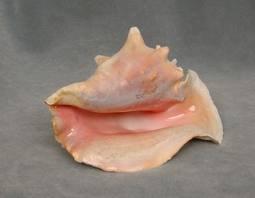
For a week or more, I have had a conch shell in my right ear. The doctor called it an ear infection and said the ear is blocked with fluid, but I know the sound of the sea in a conch shell when I hear it. Sorry doc.

Now the sound of the sea is romantic. But with a conch shell I can put it down when I’ve had enough romance and use my ear for other things. But having an actual conch shell living in my ear is not working out. Do you know how hard it is to practice clarinet with just one good ear? (Ok, never mind that I still play sharp with two good ears. Working on it.)

So this thing has to go. And soon. There are a number of theories about how to remove the conch shell. The doc favors antibiotics. Only problem: who decided all antibiotic pills have to be the actual diameter of my throat? Choking to death is not an option for getting well. So just like any pediatric victim of an ear infection, I have a brown bottle of cherry flavored liquid and a squirting teaspoon dispenser. So far the results from option one are not stellar.

Option two. Holistic healing. Being a fan of Louise Hay, when some part of my otherwise reliable physical self is on the blink, I run for You Can Heal Your Life. I admit to loving the entire story of this book. Overcoming the odds and optimism. And I met Ms. Hay once in person and was totally charmed. But, the truth is, the chart in the back of symptoms and affirmations is a hypochondriac’s dream. (Don’t I wish the conch shell in my ear were just hypochondria. I’d have it out of there in a heart beat. Or thought beat, I guess.) (Notice cool use of the subjunctive to demonstrate the conch is not hypochondria. Only English majors even remember what a subjunctive is.)

Anyway, according to the chart, I developed this annoying symptom, not to romance the sea in my ear, but because I am “Angry. Not wanting to hear. Too much turmoil and my parents are arguing.” Well, if I am angry, I have no idea why. I do want to hear. Any yes, my parents were champion arguers but one of them has been dead for more than thirty years, and I haven’t lived with the other one for even longer.  Granted she is probably is still arguing alone,  but I can’t hear her with either ear.

But a good affirmation or two can’t hurt. So I am chanting, “Harmony surrounds me. I listen with love to the pleasant and the good. I am a center for love.” I like the last one, a lot. And after chanting these at least once, the conch vanished for about three minutes. Really. Like Elvis, it left the building. But not for long. So now I am an antibiotic swigging, chanting host to a conch shell in my ear. Perks: cherry taste of the med, and feeling good when I say “I am a center for love.” Downside: well, we know that one.

Option three. The Abraham-Hicks approach: that which you dwell on gets bigger. So DON’T THINK ABOUT IT. Kind of difficult when you are trying to HEAR, but I’m game.

Option four and final option for now: Go fill up the bathroom with steam from the shower and breath it to open my sinuses and hopefully, my ear.  Hey, it’s pleasant, harmless, and tasteless, and I can chant while I don’t think about the ocean roaring in my ear! And I can light the lavender candle to banish the anger I didn’t know I had. (Still skeptical about that one.) Will let you know when Elvis leaves the building for good.

Image