Feeds:
Posts
Comments

Archive for the ‘Uncategorized’ Category

The self-growth community, which likes to clutter my inbox with fantastic offers for $10,000 worth of free life changing bonuses if only I will divulge my e-mail, vociferously insists we must all LET GO of the Past. I sometimes wonder if the induction ceremony for an authentic, card carrying self-growth guru is to have his or her memory wiped like a malfunctioning hard drive.

Personally, I would miss my Past. Not all of it, you understand. But even the terrible, terrorizing moments taught me things that, having sweated blood and endured raw fear to learn, I would not want to forget. And aren’t we doomed to repeat the Past until we finally learn what It is trying to teach us?

The thing is, what would artists make their art out of if they didn’t have their Pasts? Sylvia Plath, without her miserable, doomed love-affair with Ted Hughes, would never have become a Great Poet. Ditto for W.B. Yeats who made a highly successful poetic career out of mourning his loss of the ever elusive Maude Gonne. And then there is the mysterious woman of Shakespeare’s sonnets. No lost love, no great sonnets. Thank goodness for the rest of us Plath, Yeats, and Shakespeare lived before the onslaught of self-growth emails insisting you can’t be Anybody until you LET Go of the Past.

And in my case, wiping my personal hard drive would be a rather long affair, since I have memories back to a very, very early age. Now, I am not one of those people who can cite chapter and verse every day of every week of my life. (I think that much recall would be boring.) But let’s just say I have some vivid and accurate recollections of certain major events before age three. And I’d miss them like I’d miss an arm or a leg if they vanished.

On the other hand, Too Much Past is the equivalent of those hoarding reality TV shows that I never watch. You know the ones, where some poor soul stills owns every McDonald’s wrapper and styrofoam Big Mac container that ever came into his or her life? The literary equivalent is poor Miss Havisham in Great Expectations.

I began to meditate upon the proper balance for The Past in my life this weekend when I finally rebelled against another Saturday and Sunday spent writing unbrief briefs and invited the sky to fall if it wanted to because I was LEAVING MY COMPUTER for the weekend. Something about rebelling against the lawyer’s code which says “real men work weekends” (note, I know I’m not a man and maybe I’m not real), always brings out the Tidy Up, Throw It Out impulse in me.

After tackling my guest room, which needed considerable tidying and spiffing, my eyes lit upon my garage floor, covered in boxes of files in pending, but not currently active cases, which were supposed to go to offsite storage weeks ago. My MiniCooper had been complaining that His garage was too full of things besides Himself. And he was right. So after bribing my Stronger-Than-Me son to move the boxes, I suddenly spied a shelf filled with old calenders dating back ten years.

When I retired from law practice and became full-time Mommy in 1986, I used to order those calenders from the Smithsonian and National Geographic that came as little coil bound books, week on one side, breathtaking photo on the other. I scribbled things like pediatrician appointments, play dates, and my few-and-far-between babysitter relief afternoons in them. But mostly I loved the ever changing artwork.

But then, the divorce settled like ash from Vesuvius over our world. My beautiful little calendars became part of my family law attorney’s files – alibis to prove what I’d been up to for the last eight years. And I had to once again put on the great grey mantle of law practice. In place of my lithe little photographic calendars, I had to order those big clunky green-striped DayTimers, six inches thick, which arrived each year with their own grey coffin of a box to store them in. Forever, apparently.

Then on Saturday afternoon I looked at those boxes as they sat on my garage shelf, neatly labeled like Old Father Time with the year of his reign on the spine, and I asked myself when was the last time I’d opened any of them. Answer: on December 31 of the year they had passed into oblivion. In fact, all the briefs’ due dates they had chronicled were long past. The cases were closed out, and I could barely remember the clients’ names. Here was my chance, I realized, to throw out a cumbersome Past that really was THE PAST. Here was a hard drive that had long needed wiping. Joyfully I seized each and every one and gleefully threw them away.

Green-Lined Day Timer

Green-Lined Day Timer

They come with their own coffins

They come with their own coffins

Smthsonian Engagement Calendar

Smthsonian Engagement Calendar

Smithsonian Calendar

Smithsonian Calendar

Read Full Post »

My lower back has not been happy with me for sometime. I try to take excellent care of it, but I do sit at a computer for a living. And sometimes the lower back says ENOUGH!

I have a series of stretches that I learned from Peter Egoscue’s book, Pain Free at Your PC that my lower back and I just adore. They have kept us out of the company of orthopedic surgeons, physical therapists, and cortisone injections for years. My back and I swear by them.

But last August, after walking around hilly Seattle one afternoon while vising my youngest child who was interning for Microsoft, my lower back said I HATE YOU by shooting pain spasms through my left hip and left leg. Not wanting to be a kill joy (I hate to travel with complainers) I said nothing to Michael, but did my magic stretches as soon as I was back at the hotel. Only this time, they didn’t seem to work against my back’s Major Rebellion. No amount of cajoling and reminding my back of the dangers of orthopedic surgeons and of the negative attitudes of physical therapists (as a breed, they tell you EVERYTHING is YOUR fault) would persuade my back to stretch itself out like a good little kitty and go on with life.

So began my five-month journey to two Orthos and to two groups of physical therapists. Ortho One said sciatica and sent me to some monumentally grumpy physical therapists. After two visits, I switched to a group of three very cheerful PT’s, who happily beat on my back and disagreed among themselves and with me about what was wrong. Like vampires sucking blood, they happily gobbled up my insurance-paid physical therapy sessions and then threw me back in the pond, not much better. Ortho Two offered cortisone injections (at the height of the injections that killed people with meningitis) and looked crestfallen when I said no, thanks, I’m not into Russian roulette.

Christmas came and I didn’t want to think about it. I zumba’ed when I could but had to give up the elliptical at the gym for the BORING treadmill that doesn’t give me much of a workout.

Then last month I hit upon the bright idea of asking my family doctor for a referral to a scoliosis specialist because I’ve always known that was the problem. No one found the curve in my back until I was quite grown up and until it had curled up and settled in nicely for life. All I had to do was look into the mirror and see how the curve was getting worse. It wasn’t rocket science. I was in pain because my left and right halves were matching less and less all the time.

Grudgingly Fam Doc gave me the names of some specialists, but he said, look, what you’re looking for is physical therapy to make it better. True. And, he said, there’s this great chiropractor. WAIT! A WHAT? No, no. Not like in chiropractor. She’s more of a physical therapist.

So that was how I came to have a two and a half hour session of pure terror last Tuesday in the chiropractor’s office. And she definitely was not a physical therapist.

She spent the first half hour telling me scoliosis horror stories and impressing upon me how I could no longer live without her. She mentioned “adjustments” and when I asked her what that meant, she said, Oh, I’ll show you later. She used two big, loud scary machines to pound my poor little back until I got off the last one and hid in the bathroom for a while. I should have just walked out the front door, but I was waiting for the physical therapy to begin.

It never came. Instead, she wrenched my poor neck around so hard she reinjured it. I fell out of a tree when I was a kid and damaged some vertebrae and the one thing I tell every massage therapist before they touch me is DON”T TOUCH MY NECK! And after she wrenched it the first time and I told her to stop, she repeated her performance.

I dashed home, grabbed the ice packs, and was upset for the a rest of the day. To win my freedom from being held hostage in her office, I had promised to come back on Thursday.

Ha! Fat chance that was going to happen.

I was so angry, I started to do the unprofessional thing, and not even call on Wednesday to cancel the appointment, but I did. How I wish I hadn’t. She clearly had some sort of major mental problem. She called me four times screaming at me on the phone because I wasn’t coming back. The fifth and sixth times she called, I just raised the receiver a notch and threw it back into the cradle.

On Thursday night I woke up in a cold sweat at 4 a.m. You know the kind that lets you know you’ve done something REALLY STUPID, but at least you are STILL ALIVE. I turned on the light and took some deep breaths and thought about it for a while. What I had encountered in the chiropractor’s office had been violence. She had been violent when she wrenched my spine this way and that. The machines had been violent when they pounded on my back. But I hate violence of all kinds. For me, healing is about being positive and gentle.

Then I kicked myself. The answer was Egoscue. They have a clinic here, and they treat scoliosis. The stretches I knew how to do had never let me down. I just needed a bigger arsenal of gentle weapons to get better. I hadn’t needed to go looking for the answer. It had been staring me in the face since Day One of my back’s Major Rebellion in Seattle.

Today I’m headed off to the Egoscue clinic. If I had listened to myself all along, I would have known that was the answer. But I let the chatter of all the other people I had seen – the two Orthos, the grumpy and cheerful PT’s – become so loud in my head that I forgot the true path to healing is always listening to what’s inside ourselves.


images

Read Full Post »

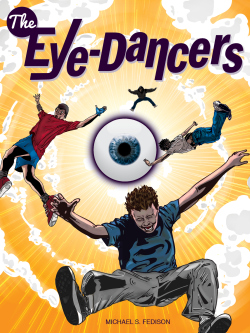
Twelve year old Mitchell Brant can’t sleep. A seven-year-old “ghost girl” haunts his dreams and begs for help. Soon he learns his friends, Joe and Ryan, are having the same dream. But for the three, what they see in sleep seems much more than a dream. When they wake up, the scraped knee is still scraped, the hurt wrist still hurts.

They turn to their friend Marc, who scoffs at their belief in the reality of the supernatural. He takes it upon himself to watch over Mitchell, Joe, and Ryan as they sleep in Mitchell’s basement. Only that night, the four wake up in an entirely different world. Cars, money, food, history are eerily the same but different. And the “ghost girl’s” picture is all over town; she’s Monica Tisdale and she’s been kidnapped. She has brought them to her world to be her rescuers.

As the boys work to solve the mystery of their new surroundings and to figure out how to help their new friend, each is faced with his own personal challenges and lessons. For Marc, the rationalist, the challenge is to accept the unexplainable. For Mitchell, his family problems and speech difficulties present hurdles. For Joe, his unstable temper is his enemy. Ryan realizes what his social isolation costs him.

The Eye-Dancers taps into the best and most entertaining archetypes of Young Adult Fiction. Like the Wizard of Oz, the four heroes are suddenly transported to a strange land and presented with a villain who must be stopped. Like Dorothy and her friends, each main character emerges transformed by his experiences. And like Dorothy and Toto, the four heroes of Eye Dancers long for home and wonder if they will ever return.

Michael Fedison has lovingly crafted a Young Adult sci-fic/fantasy/mystery novel with wide appeal. His prose is thoughtful and elegant. Not only will young readers, middle school and older, love this book, but adults will enjoy it, too. In her bestselling book, The Happiness Project, Gretchen Rubin talks about her love for juvenile literature; and she forms a book club with some adult friends to read and discuss juvenile fiction. The Eye-Dancers would be just the book for them. It keeps you on the edge of your seat as you root for Ryan, Mitchell, Joe, and Marc. Will they save Monica? Will they return home? But, at the same time, The Eye-Dancers also poses some deeper and very satisfying philosophical questions. What role do our thoughts play in creating our world? Can everything be explained? I highly recommend it.

The Eye-Dancers by Michael S. Fedison

The Eye-Dancers by Michael S. Fedison

Read Full Post »

Last Saturday began as an exceptional day for me. I normally have to work at least part of every weekend, but last Saturday, in honor of the Memorial Day weekend, I decided to give myself the day off.

I got up early anyway because I wanted to enjoy as many waking hours away from law practice as humanly possible. I fed my two Golden Retrievers, Melody and Rhythm, and headed out for our usual morning walk. As I’ve mentioned in previous posts, we walk to the nearby duck pond night and morning, to sniff the sniffs, walk up and down the hill, and see what the ducks are up to. Usually it’s relaxing to stand under the eucalyptus trees and watch the mallards paddle around while we look for ducklings. (Well, I look for ducklings. Melody and Rhythm are more interested in finding road kill.)

And for the first fifteen minutes of our Saturday morning walk, all was serene. But then, Controversy struck like lightning in the form of a Thin Blonde in one of those black velour track suits attributable to Paris Hilton and Nicole Ritchie before Rachel Zoe got hold of them. Thin Blonde came sauntering down the hill with a Starbuck’s cup in one hand and a dog leash in the other. Only the leash was not attached to her dog, a portly little brown and white bulldog. He was toddling along on his too-short-for-his body legs completely unleashed. He looked as if he was fixing to light out for the territory on his own.

Now, the pond is not set aside by the city fathers as a dog park. Dogs are welcome but only when they are on leashes, and there are at least two signs prominently displayed informing all of us of that requirement. Thin Blonde had just sauntered past the one at the top of the hill. Obviously oblivious.

Now as you’ve probably guessed, Melody and Rhythm obey the law. They are leashed at all times at the pond. There are lots of reasons for that decision, not the least of which is their safety. We have rattlesnakes in our area, and I want them close by me whenever we are in off-path, brushy country. But having them leashed is also courteous to everyone else who visits the pond. They can’t bound up to strangers (as they would love to do) and plant two big paws on their shoulders and give them a big dog kiss. They also can’t treat small children like puppies they can play with. Being leashed means they are required to have good manners when they are at the pond, and it also means we aren’t arrogantly occupying more space than we are entitled to. Other people can have their fair share of the pond and its surroundings dog-free when we are there. And off-leash dogs present problems for the rest of us who are obeying the law. Some of them are aggressive and pose a danger to other dogs. Some are just very playful so that Melody and Rhythm pull my arms out of the sockets trying to run after them. No matter what, an off-leash dog at the pond spells discomfort and trouble. And I try to avoid them and their humans whenever I can.

But no such luck on Saturday.

Thin Blonde looked at me and Melody and Rhythm as if we were creatures from Outer Space and drawled sarcastically (ok, Stephen King, it’s an adverb and you hate them BUT she was sarcastic), “Oh, do I need a leash?”

“Yes,” I said. “The ordinance is posted at the top and bottom of the hill.” And I pointed in the direction she had come and in the direction she was going.

“Well, you don’t have to be rude!”

And that’s when the morning was no longer exceptional. I hadn’t been rude; she had been because she’d gotten an answer she didn’t like. I’d been sucked instantly into a vortex of bad feeling where I didn’t want to be. I wanted to get out of there as quickly as possible and get myself back into my exceptional Saturday mood.

But as I was about to turn and walk away with Melody and Rhythm, leaving her to mutter as she tried to attach the leash to Bulldog who clearly wasn’t having any of it, the situation escalated.

There are several regulars at the pond who make it a point of honor not to leash their dogs. They are quite aggressive about their right to ignore the city’s posted requirements. I avoid them whenever I can, but there are times when their dogs get too close to me or to mine, and I have to suggest politely that they get their pet under control. And of course that is the last thing one of them wants to hear because they are determined not to do that very thing. They usually launch the kind of ad hominum missiles Thin Blonde had just launched.

So just as I was preparing to leave Thin Blonde to her own devices, a large, large woman with perpetually greasy gray hair who lives in one of the houses that backs up to one side of the pond appeared with her Golden Retriever. Her Golden has never, ever visited the pond on the leash, and she is one of the more outspoken advocates of unleashed dogs. She proceeded, predictably, to attack me verbally and to tell Thin Blonde not to leash her dog.

It is silly to get invested in moments like that. I walked home trying to shake it off. None of us had gotten hurt. I’d done the right thing by my dogs who are very precious to me. And eventually the city will be out to enforce its ordinance. I understand they write pretty hefty tickets for off-leash dogs at the pond. Greasy hair lady will reap the karma she’s sown in the form of big fine. And more than likely Thin Blonde will probably never be back. She didn’t look as if she was from these parts. Or if she is, maybe the city will catch her eventually and make her take a crash course in READING. Or the fashion police might find her and sentence her to a reality TV session with Rachel Zoe, who would force her to give up the velour.

Rhythm is thinking about swimming.

Rhythm is thinking about swimming.

Our Goldens, Melody and Rhythm behaving themselves

Our Goldens, Melody and Rhythm behaving themselves

Read Full Post »

He died forty-two years ago in Quang Tin Province, South Vietnam on July 11, 1971. He, and his six crew mates, were mortally injured when their booby trapped helicopter blew up on the runway on June 16, 1971.

Army helicopters in Vietnam

Army helicopters in Vietnam

He was twenty-three years old, one year short of the age my oldest son turned on Saturday. His mother made it to the Army hospital in Vietnam in time to say good bye. Since the day my first son was born, I have been forever haunted by what Mrs. Workman must have felt on that military transport as she flew across the world to her dying son.

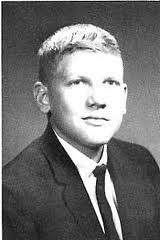
His eyes weren’t good enough to pilot the Army helicopters he dreamed of, but U.S. Army First Lieutenant Lance Davis Workman still made the flight crew. He never married. He didn’t have time.

Lance Davis Workman

Lance Davis Workman

Lance was slightly ahead of me in high school. He was one of the “cool kids” while I was a high school band geek. I only knew of him, really, because he left City High just as I was entering.

But in college, I dated a number of his fraternity brothers. I guess to him I was the “cute” freshman who hung out with the pledges. The Greek life for us was not the modern-day drunken brawls that make the news. The majority of us still lived with our parents in order to afford college. So hanging out at the fraternity house was a way to connect with friends. Lance wasn’t there a lot. He had been ROTC in high school, and he was ROTC in college. He wanted only one thing: to fly those helicopters in Vietnam.

Tennessee earned its nickname “The Volunteer State” during the war of 1812 when Tennessee volunteers, serving under Gen. Andrew Jackson, displayed marked valor in the Battle of New Orleans. They had already been fighting Indians under “Old Hickory” so they moseyed on down the Mississippi to fight the British. Later, some of them would join Tennesseans Sam Houston and Davy Crockett at the Alamo. Tennessee also supplied more soldiers for the Confederate Army than any other state, and more soldiers for the Union Army than any other Southern state. In short, Tennesseans are not afraid to fight. And Lance was a Tennessean.

The Vietnam War is a difficult subject. Later, after Lance had died and I knew more about how he and others like him were dying in vain a world away and after I had seen my generation turn guns on itself at Kent State, I would come to have strong feelings about ending that war. But my only feeling in the hot summer of 1971 was grief for the first of my friends to die. In fact, we were all so committed to the war at the time that when the only peacenik on campus tried to organize a protest by offering free doughnuts, no one showed up to eat a single Krispy Kreme. Not one.

Lance was laid to rest at Chattanooga Memorial Park on July 17, 1971, at 10 a.m. It was a hot, sunny Southern summer day. We all stood under the pines on the side of that impossibly perfect green hill to say goodbye with the old blue Appalachians looking down at us. The Army honor guard came from Fort McPherson, Georgia, to carry his flag-covered coffin. I cried when the bugler played taps, and they folded the flag, and presented it to Lance’s mother and father.

Chattanooga Memorial Park

Chattanooga Memorial Park

We know so little about how long our lives will be. I have had forty-two years since that hot July day. I’ve raised three souls entrusted into my care and have told them the stories of Lance and the others who had so little time. Southerners always honor the dead by telling their stories. What none of us knew on the morning of July 17, 1971, as the sharp July sun beat down on our tears, was that by September, we would all assemble again, just a few yards away to say goodby to Lance’s close friend Cissy, who, at barely twenty-one, would die of a blood clot from the early birth control bills. And within two more years, I would be standing under the same pines, burying my father, who didn’t quite make sixty-three.

My last memory of Lance, however, is not of his coffin under the flag surrounded by the honor guard. No. My last memory of Lance is seeing him dance at probably the last fraternity party he went to before he entered the Army. It was a Western-themed party, and he was wearing a kid’s cowboy hat and cap pistols in a plastic holster. He was dancing and laughing and was probably slightly drunk because we had a big keg that night. He was having the time of his life. That is the memory I will always have of him.

Lance's red hat

Lance’s red hat

He is a true American hero and today is his day and the day of all like him who have died for us. I wish we had been real friends, Lance; but I admire you and cherish your memory.

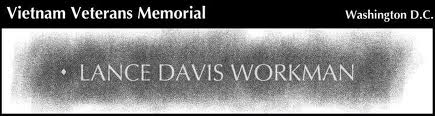
You can find LANCE DAVIS WORKMAN honored on the Vietnam Veterans Memorial on Panel 3W, Row 106.

The Vietnam Memorial

The Vietnam Memorial

Read Full Post »

Last Thursday, the newspaper did not arrive. The newspaper always arrives. At least, until lately.

A few years back, I gave up the San Diego Union Tribune because it was the least informative piece of journalism ever to enter my world. I’m not sure if it actually contained any national news at all. If it did, it was hidden for more than the ten years I subscribed to it.

One of the odd quirks of my job is that I actually receive all of my work from Los Angles and Sacramento. (I just live in San Diego.) The Sacramento Bee screams and yells about everything wrong with California politics. And since I already know all those gory details because I am a California taxpayer, I decided to go for the LA Times.

The LA Times is a mix of national news, LA news which includes the latest police corruption scandal and gang bust (both essential pieces of information in my job), and business and entertainment news. Now, remember, entertainment is a BUSINESS in L.A., so the business page of the L.A. times has all the gossip on the studios such as which movie did well, which went straight to DVD (and why) and which celebrity is unloading his or her mega million dollar mansion. Honestly, under the guise of straight journalism, the L.A. times can be better than Extra! Extra!

So on Thursday morning, mine did not arrive. I called the annoying L.A. Times phone tree which guarantees you cannot speak to a human. The computer voice agreed to bring my replacement paper withing forty-five minutes. But that wasn’t enough for me. For years and years, the paper arrived as regularly as a ticking clock. I used to see the little Vietnamese woman in her battered white Toyota truck throwing them out every morning when I walked my retrievers. Somehow, we had a sort of relationship without knowing each other. Then, THEY FIRED HER! I don’t know why. She didn’t say in the note she sent asking for one last tip.

As soon as she was out of sight, IT BEGAN TO HAPPEN. The worse than useless San Diego paper began showing up in place of my L.A.Times. I would call the humanoid computer. A replacement would appear. A few days later, the L.A. Times and I would dance this dance all over again.

Last Thursday, however, beat all former delivery mistakes. I received a New York Times, a Wall Street Journal, and a San Diego paper. The carrier seemed to think if he just kept tossing them out there, something would make me happy. Or maybe he was going for volume over filling my order correctly. The logic seemed to be, the more newsprint she gets, the less she will care about WHAT she receives.

WRONG.

After a certain amount of effort, I reached a human voice in customer service. I pointed out that, by going digital, I could save a lot of money every month and make sure to get the right paper every day. I know print papers are struggling to stay in business. Was it too much to ask, since I was a loyal print customer, to BRING ME THE RIGHT ONE?

That question remains to be answered. I haven’t cancelled the print subscription yet. The lady who eventually brought me the paper was very apologetic, and I’m always won over by people who don’t tell me their mistake is MY FAULT. She told me the carrier is a college kid who gets paid nearly nothing to do the job.

I have two sons in college. They need the income from the side jobs they can find. And, above all, I am not perfect. I can’t ask anyone else to be. I do miss my little Vietnamese carrier who always got it right. I don’t know why they sacked her. But I am big on multiple chances. For everyone. It’s a matter of your point of view

Read Full Post »

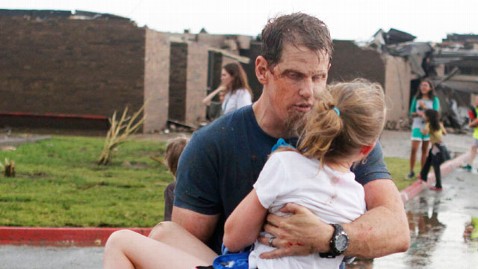
I wasn’t over Boston, and then the tornado hit Moore, Oklahoma. Actually that isn’t right. I wasn’t over Newtown when Boston happened, and then the tornado hit Moore, Oklahoma. There was the little glimmer of light that finding those three missing women in Cleveland brought. But, you have to admit, the Universe has been handing out a triple dose of disaster since December.

What would it be like to rush off to help shovel debris in Moore, to help find lost loved ones and pets, to put an arm around the injured and give them a hug? I thought about it tonight as I watched the extended news casts and listened to the stories. I’ve been witness to so much grief in the last few months that suddenly I wanted to stand up and shake my fist at the Universe and say, Enough, Already! Somehow, it seemed for a fleeting second as if I could put my finger in the dike of suffering and stop the tidal wave if I could just run across the country to help.

Silly thought. But watching people hurt, hurts.

Of course, like most of us, I can’t abandon my responsibilities. I can pull out the credit card and send a contribution, and since I’m not a trained disaster worker that act is probably a lot more valuable. And, true to my Southern religious upbringing now slightly skewed by my attraction to Eastern spiritual traditions, I can pray. Prayer is powerful and healing, whether you are doing the praying or are the one prayed for.

In these moments when I’m hurting for those who hurt, the opening words of a favorite movie always come back to me. The Hugh Grant character opens Love Actually by musing that the world isn’t really about hatred and evil but about love. He points out that the last messages from loved ones on 911 were all about love. Over and over today, when I’ve heard the Moore survivors in their interviews, they’ve all said the same thing: I have my loved ones, and that is all that matters. And that, to borrow a phrase from Gretchen Rubin’s The Happiness Project, is the First and Foremost Splendid Truth.

ap_children_alive_tornado_crop_nt_130520_wblog

usa-tornadoes

Read Full Post »

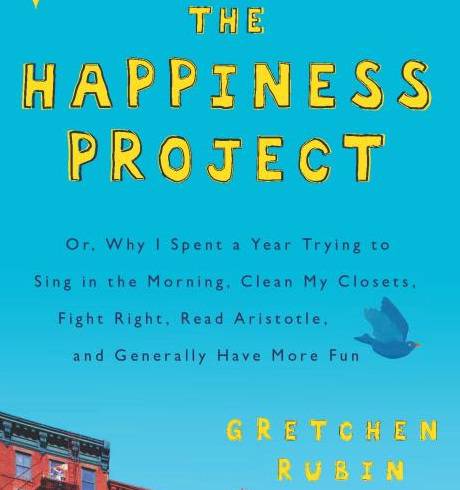
A few weeks ago, I came across Gretchen Rubin’s “The Happiness Project” in Anthropologie. One of my favorite get-away-from-the-computer afternoons involves a wander through Anthro, fingering the nubby jackets, caressing the soft sweaters, and sighing over the silk blouses. And as I wander, I inevitably become endlessly enchanted by the grown-up picture books piled next to the scented candles, the adorable JellyCat stuffed animals, and the rainbow dishes in all shapes and sizes. Like most Anthro merch, I refuse to pay full price for it. Instead I text myself the name of the latest enchanting tome and rush home to buy it on Amazon for half-price.

So a few days after I encountered “The Happiness Project” my copy arrived in the regulation Amazon.com box. I suppose part of my curiosity stemmed from the title. Some posts back, I explained my Smile Project; so, I wanted to see what a Happiness Project was all about.

Enter chapter one where Ms. Rubin is sitting on a cross-town Manhattan bus, realizing she is in her thirties, is a Yale-trained lawyer turned New York Times bestselling author, happily married with two children, and SHE’S NOT HAPPY. So she decides to (1) find out what happiness is and (2) become happy. There are many things I liked about this book, but one of its chief charms is Ms. Rubin’s determination to make small changes in her daily life to capture the elusive bird of happiness. She doesn’t want to throw everything over, run away, and join a monastery or a circus. (Kind of tough for a mother of a seven year old and a one year old.)

So she undertakes a mountain of research to see what “experts” and “researchers” have to say about happiness and then sets herself certain areas to focus on each month. For example, her overall theme for January was “Boost Energy.” Her specific actions were “Go to sleep earlier,” “Exercise better,” “Toss, restore, organize,” “Tackle a nagging task,” and “Act more energetic.”

Another thing I like about this book, is Gretchen Rubin’s honesty. She realizes the only person she can change is herself, and she is scrupulously honest about the behaviors she would like to give up and the ones she would like to cultivate. Her book has inspired a wave of Happiness Projects, which she is quick to point out are personal to everyone who undertakes one.

Gretchen Rubin’s definition of happiness turned out to be “To be happy, I need to think about feeling good, feeling bad, and feeling right in an atmosphere of growth.” I agree with her about the “atmosphere of growth,” but my own definition of happiness includes “knowing from moment to moment” what I want. That is harder than it sounds, because so much of my life has been about accomplishing tasks that have to be done whether I wanted to do them or not. Self-employment and single motherhood tend to wipe out individual preferences.

But “The Happiness Project” inspired me to set yet another goal: figure out what I want on a daily basis. So now when I get up in the morning with the laundry list of “To do’s” tap dancing across my brain like the Rockettes on stage at Radio City Music Hall, I ask myself which one or ones will make me happy if I accomplish them today. If none of them rings my happiness bell, I ask, “Are there any orphan ‘I wants’ pining for my time?” My project is not as complicated as Ms. Rubin’s. I don’t like charts and gold stars and quantifying results. I just like the good feeling that comes with accomplishing at least one or more things in a day that my real self (not my lawyer self) wants to come true.

I am glad I passed “The Happiness Project” at Anthro that day. I agree with Gretchen Rubin that small, daily changes can bring real happiness.

The Happiness Project

The Happiness Project

Read Full Post »

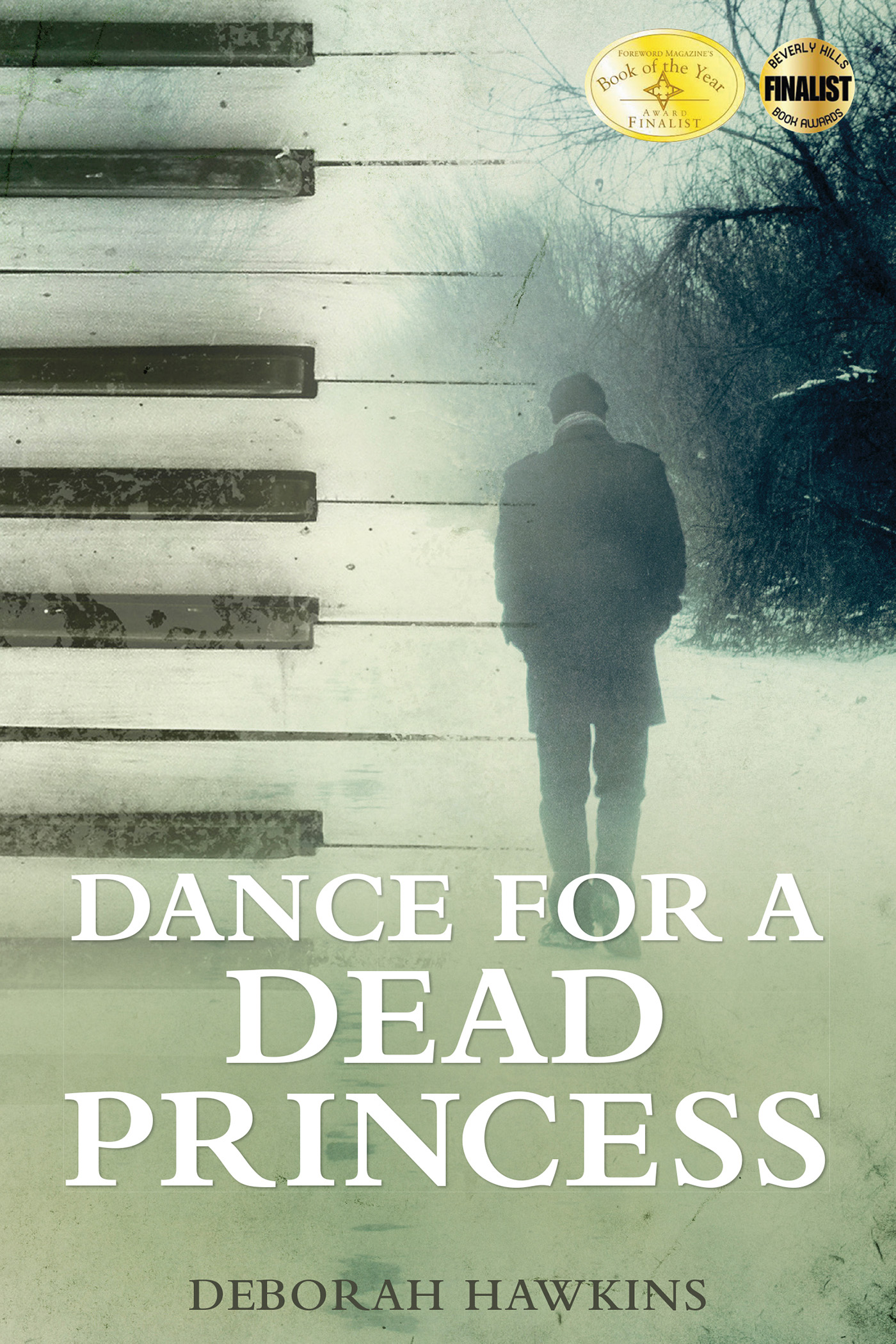
I wrote a romance novel. Or so I thought. When I published Dance For a Dead Princess on the last day of March of this year, I began to look for websites frequented by romance readers to tell them about my book. It did not take me long to find one and to sign up for an ad.

The morning my ad began to run, I hurried to the website eager to see it. Yep, there it was as promised. But I didn’t realize that my cover, which features the hero and the heroine symbolically separated by a tiara similar to Princess Diana’s and by Burnham Abbey, the fictional ancestral home of the hero’s family, would look out of place in a row of covers picturing men tearing women’s clothes off. But it did.

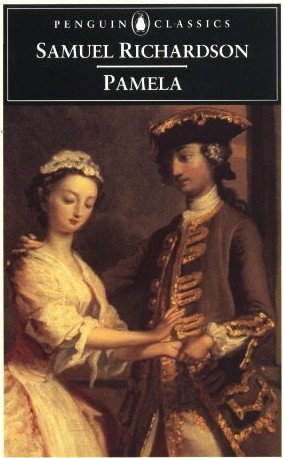
From a literary perspective, the romance novel is an interesting genre. One of the earliest ones was Samuel Richardson’s “Pamela or Virtue Rewarded,” which was published in 1740. It is the less than thrilling tale of an eighteenth century maid whose nobleman master has the hots for her. However, rather than grant his every wish (which I think a contemporary maid in a contemporary historical romance would probably do), Miss Pamela holds out (and far too long because this is a big, boring novel) until the Titled One marries her. (Whew! So glad they got that settled.)

In 1748, Richardson followed Pamela’s dry tale of Steadfast Female Virtue with an even drier tale of unending woe, “Clarissa, the Story of a Young Lady.” Whereas Pamela had the good sense to obey the rules of the eighteenth century road and force her suitor to put a ring on it, Clarissa witlessly runs off with a “rake” and is “ruined.” (Although she doesn’t go willingly into “ruindom.” She has to be drugged.) Clothes tearing might have kept me awake during this literary ordeal. I was forced to read both of Richardson’s mind numbing works in my undergraduate Eighteenth Century British Novel class, and I can say without doubt, duller literature was never created. The romance novel could have died right there and then; but fortunately, the nineteenth century brought better news.

In 1813, Jane Austin published “Pride and Prejudice,” which I love along with all the rest of her novels. Rather than the heavy handed commentary on contemporary morality Richardson used to drug his readers into coma-like states of boredom, Jane Austin used wit and irony to create characters and stories no one wants to forget.

Next up are the Bronte sisters. I appreciate Charlotte’s achievement in “Wuthering Heights,” but my own favorite is Emily’s “Jane Eyre,” which was published in 1847. “Jane” was my first experience of a mystery intertwined with a love story. I was riveted by Mr. Rochester’s attraction to “plain” Jane Eyre while fascinated with the sinister question of who or what periodically escaped from the locked room at Thornfield. Who was trying to kill Jane? And why?

Another similar brooding love story about the mystery of the ex-wife is Daphne du Maurier’s “Rebecca,” published in 1938. The narrator, who is in her twenties and is always called “the second Mrs. DeWinter,” marries forty-year-old Maxim after a two-week courtship. He takes her back to Manderley, his estate in the English West Country, where she is tormented by the sinister housekeeper, Mrs. Danvers, who believes no one can take the place of Rebecca, the first Mrs. DeWinter. As with Jane Eyre, I was hooked on the atmosphere of English country house and the dark, seemingly impenetrable mystery of what happened to Wife One.

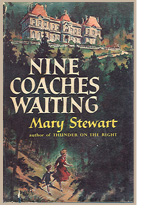
Then I discovered Mary Stewart who created the modern romantic suspense novel in the 1950’s and 1960’s before she moved on to become famous for her “Merlin” trilogy. My all-time favorite is her 1958 publication, “Nine Coaches Waiting,” another novel set in a stately house, this time a French chateaux, filled with secrets. Linda Martin, the half-French, half-English governess, is faced with the challenge of keeping her nine-year-old pupil, Philippe de Valmy alive while wondering if the man she loves, dashing Raoul de Valmy is trying to kill him and possibly herself as well.

The definition of romance novel is quite broad, and certainly the books on the site where I first attempted to advertise Dance for a Dead Princess can be called romance novels. But I think of them more as erotica because their emphasis is not as much on plot and circumstances that unite the heroine (think Jane Eyre or Pride and Prejudice) but upon lust and sex which draw them together. (Think Richardson’s Pamela.) In fact, it really is too bad Richardson wasn’t an erotica novelist because if he had been, Eighteenth Century British Novel would be a far more popular course.

Pamela - Just Looks Boring

Pamela – Just Looks Boring

My Favorite

My Favorite

Read Full Post »

Last week, Anne Lamonte posted a blog on Facebook explaining her negative opinion of Mother’s Day. Anne is famous among writers for her book Bird by Bird, which reminds us that writing a book, like so many other things in life, is done one word, one sentence, one paragraph at a time. I like most of Anne’s posts, even the ones I don’t agree with. And I enjoyed this one. But she got me thinking. Did I agree with her attack on a day that is more or less sacred because it is devoted to mothers?

Now, Anne’s post is not sour grapes. She is a mother, and she was quick to point out she did not raise her son Sam to celebrate the day. In her view, she would rather have a thank you 365 days of the year in place of just one on a day that is more or less sponsored by Hallmark and See’s Candy. (She is also not a fan of Valentine’s day, either.)

In theory, I agree with her point. And, in addition to my Smile Project (which I wrote about some posts ago), I have my own personal Thank You Project, devoted to random acts of thank you. I believe the world is too full of criticism and not full enough of letting people know what they’ve done right. Hence, I strive to use the words “Thank You” as often as possible. And you get what you give. My children are quick to thank me often. But that doesn’t mean it isn’t nice to have one special day to sit down with them at brunch (which has become our traditional celebration) and enjoy their recognition for my role in their lives. I would miss Mother’s Day if it went away.

Anne also finds the day discriminatory. She reads Mother’s Day as a message to women without children that they are second class citizens. I disagree. I had my children later on in life, after years of not wanting any. And I never, ever drew a negative inference about myself on Mother’s Day during my childless years. Of course I will not deny that for a woman who wants a child and who cannot have one, the day can be painful. But so is every other day when she sees a child and longs for one of her own, yet does not become pregnant. (A dear friend went through this and after giving up entirely found herself pregnant at last!) I don’t think Mother’s Day is a message to the childless, either by choice or by chance, they are less than.

Finally, Anne faults the inevitable commercialism that any holiday that involves gift giving creates. But that, I think, is too simplistic a view of the question. While Hallmark and See’s get their share of business, along with florists, why is it wrong to send a gift on a particular day to a special person? And Mother’s Day gifts do not have to be expensive. I was always happy with the handmade artwork, the $1.99 earrings from Walmart, or the “coupons” for dishwashing and laundry folding. (I never cashed them in, by the way. They live forever in my keepsake box.)

After thinking it over, I do see Anne Lamont’s point. Some aspects of Mother’s Day can be viewed as negative. But that is true of every other holiday I can think of. New Year’s means resolutions no one keeps. Easter is only about candy and stuffed rabbits. Halloween will rot your children’s teeth (and yours, too, if you steal their candy.) Thanksgiving in devoted to gluttony. Christmas is too stressful and commercial. And children’s birthdays are too expensive and pretentious, and your birthday is depressing because you’re getting older. So should we stamp out holidays?

No, of course, not. Nothing is perfect. Holidays are bits of magic interspersed into everyday life. They allow us to believe in magic, even if for only twenty-four hours. I would miss all of them, including Mother’s Day, if they went away.

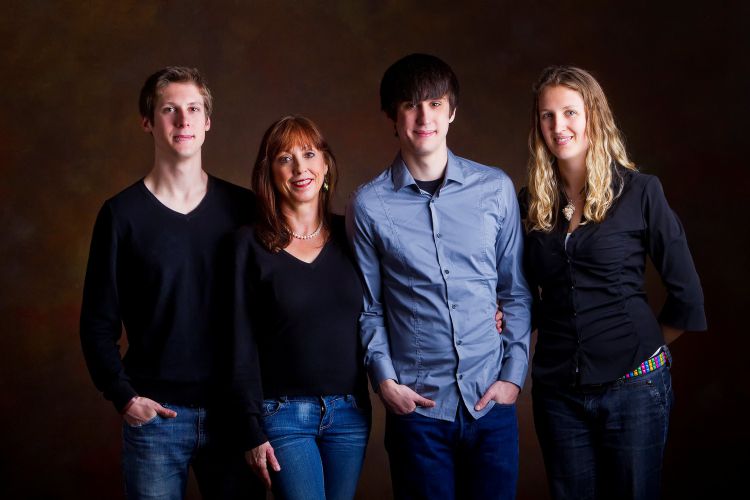
Family Portrait

Family Portrait

Read Full Post »

« Newer Posts - Older Posts »